








Functional fitness trains your body for everyday movement — and does it with maximum efficiency. Demand for functional training at home is exploding: kettlebells are currently seeing +74% sales growth, pull-up bars +51%.
The trend is driven by competition formats like HRX, but also by the desire for time-efficient, full-body workouts in your own home.
The good news: you don't need a fully equipped commercial gym. Four or five carefully chosen tools cover every movement pattern that matters — pull, push, squat, hinge and rotation. The key is combining compact, versatile equipment with a clear training structure.
German engineering, as embodied by ATLETICA's modular racks and premium accessories, delivers safety, longevity and maximum training quality — with no compromises on footprint or storage space.
The Short Answer
What equipment do you really need for functional fitness at home? Exactly five categories: (1) a kettlebell as a versatile loading tool for swings, pulls and squats, (2) resistance bands for variable pulling resistance and mobility, (3) a pull-up bar or suspension trainer for pulling movements and core stability, (4) a training mat for floor work and joint protection, and optionally (5) a cardio machine (such as an air bike) for endurance intervals. With this setup you can run complete full-body workouts — from strength endurance to HRX-specific movements to explosive HIIT sessions.
The Ideal Functional Home Gym: The Core Tools in Detail
The MVP of Functional Training: The Kettlebell
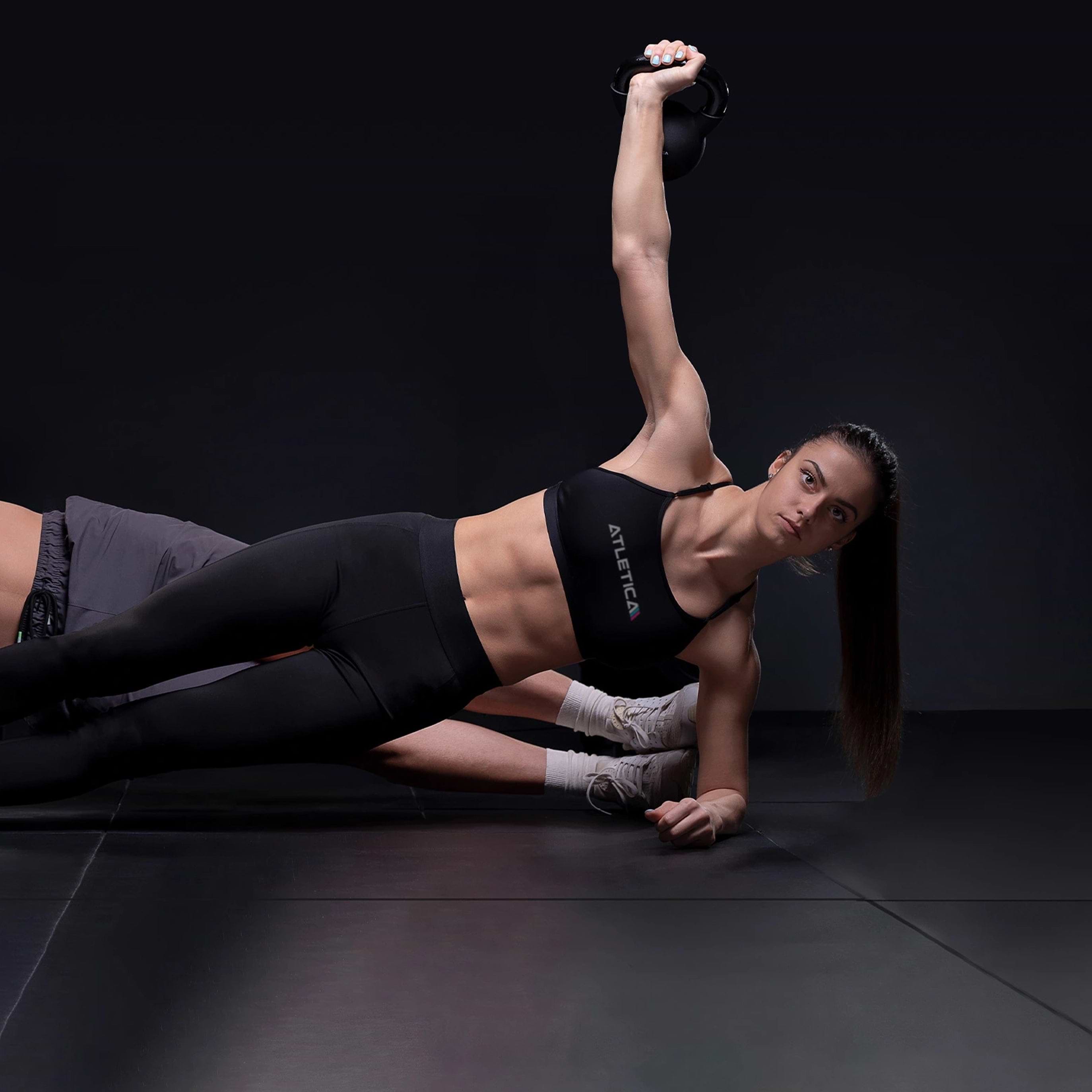
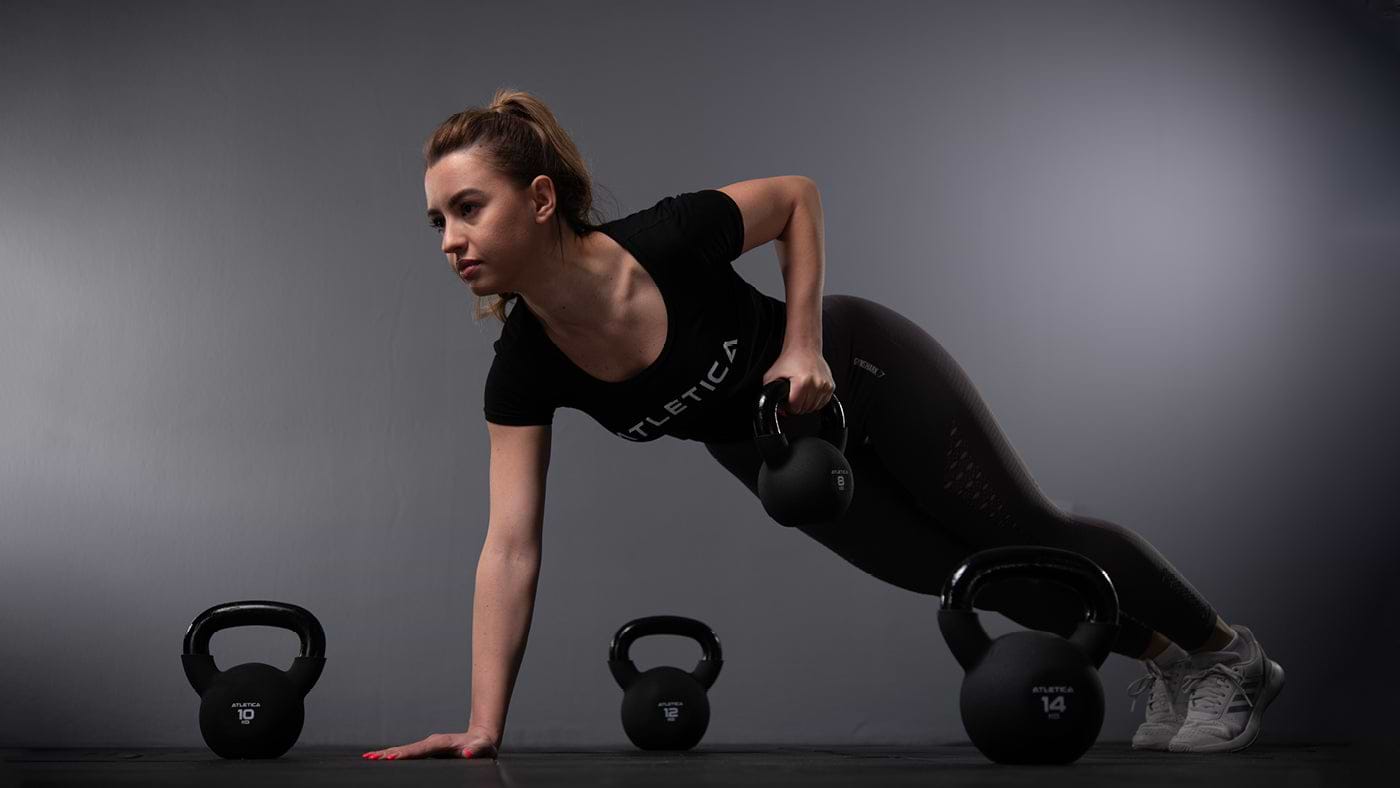
The kettlebell is the centerpiece of functional training. Unlike dumbbells, its offset center of mass allows dynamic movements like swings, Turkish get-ups or single-arm rows that challenge your entire musculoskeletal system.
Why the kettlebell:
- Activates the entire posterior chain (hamstrings, glutes, spinal erectors)
- Builds grip strength, widely regarded as a key marker of longevity
- Extremely space-saving and built to last (cast-iron construction)
- Scalable through a range of weights (4-32 kg)
A solid cast-iron kettlebell with a flat base is the best choice — it sits flat, won't crack and lets you do exercises like goblet squats without any wobble. Beginners should start with 4-8 kg (women) or 12 kg (men).
Resistance Bands: The Underrated All-Rounder
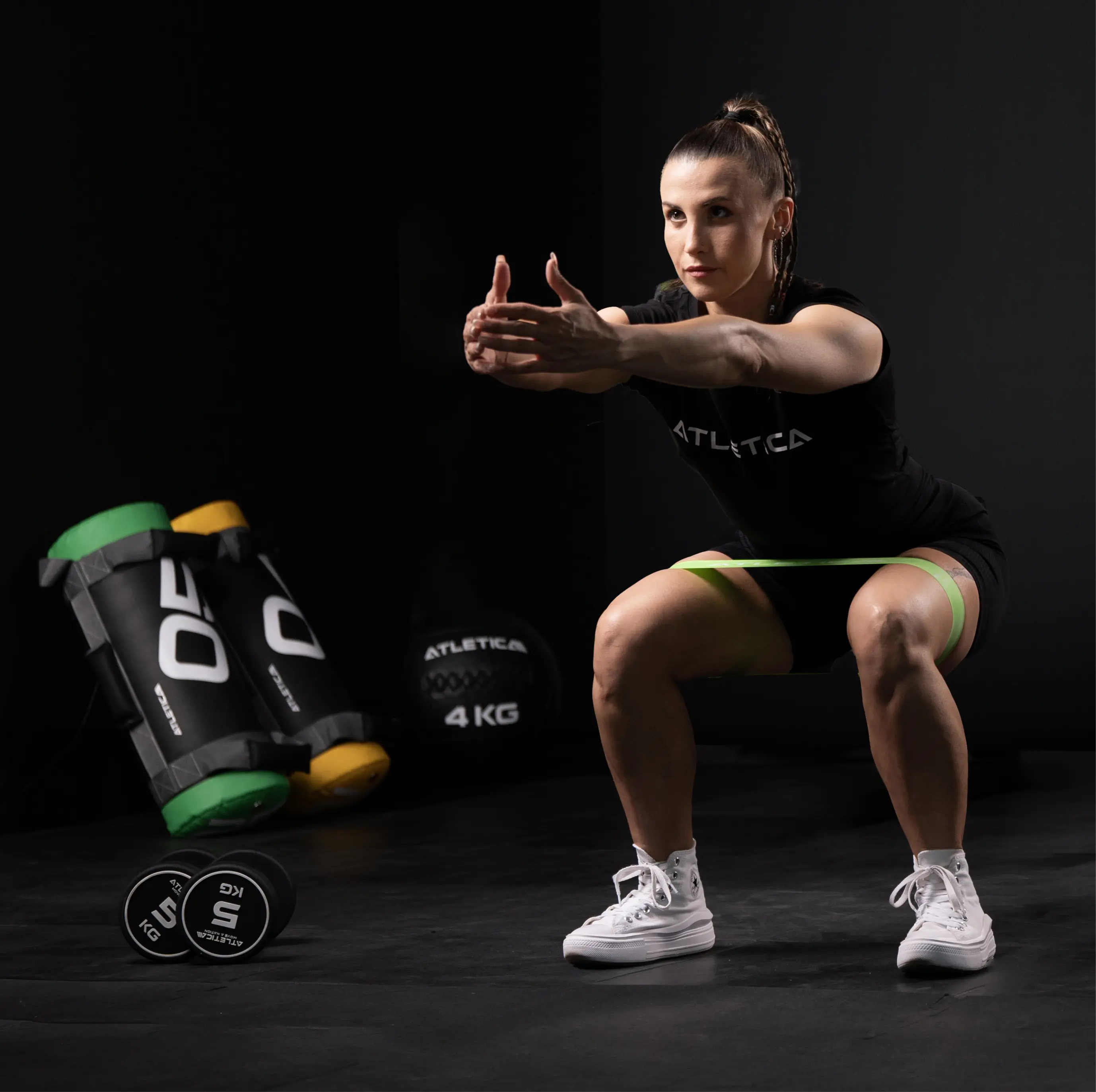
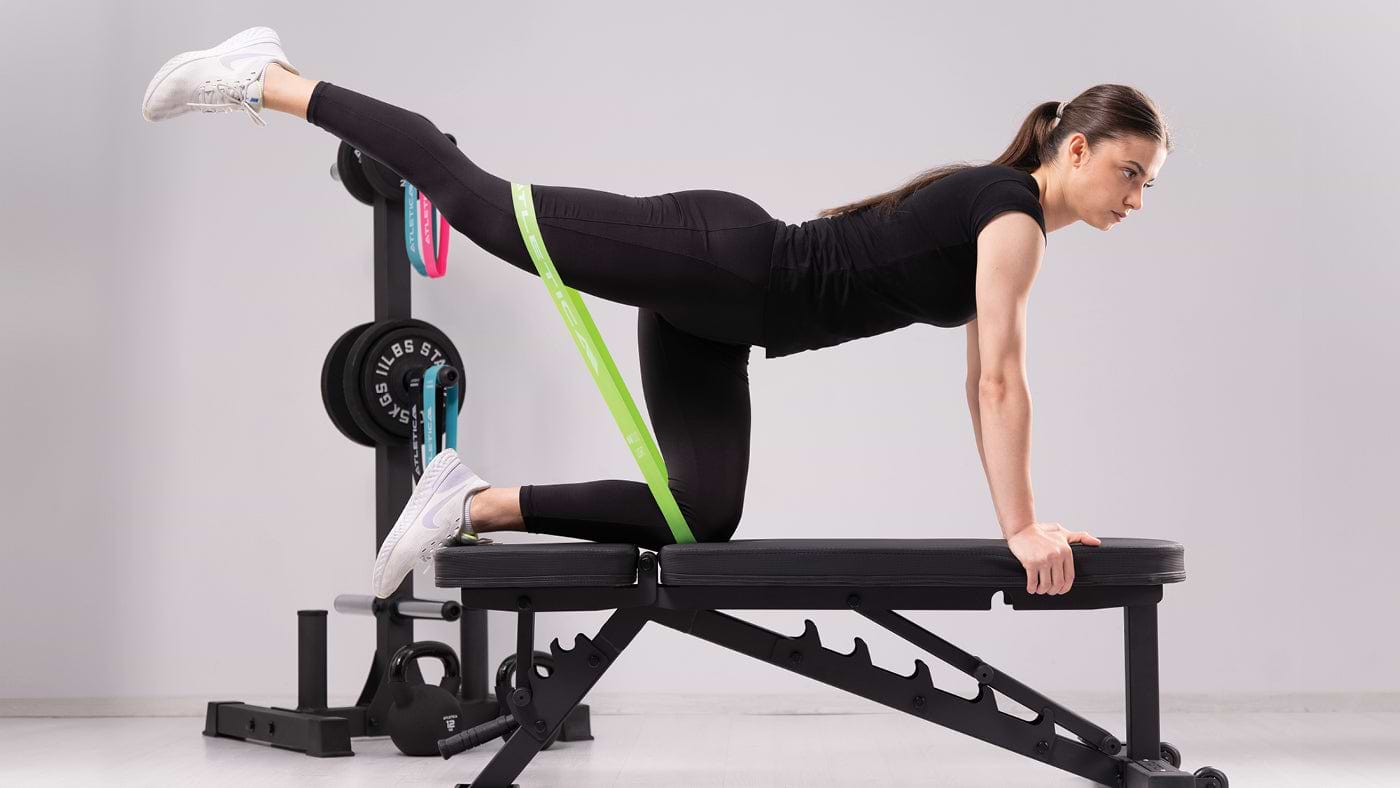
Resistance bands are the most flexible addition to your home gym. They let you do pulling movements that would otherwise require an expensive cable machine — and take up almost no storage space.
What they're good for:
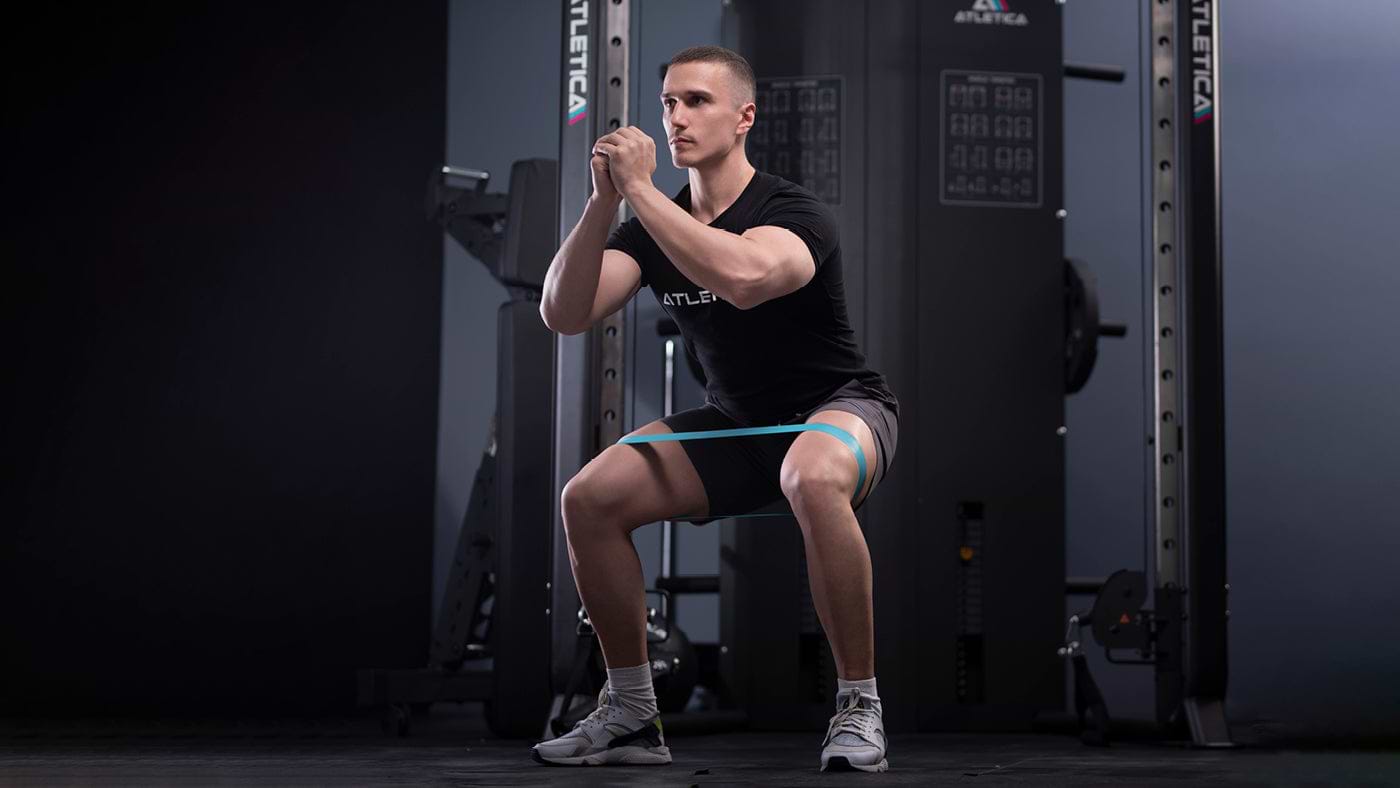
- Strength building: rows, overhead presses, squats with variable resistance
- Mobility & warm-up: dynamic stretching, rotator cuff work
- HRX simulation: replace sled pulls with lateral walks with a band around your hips
- Progression: switch easily between light, medium and heavy band sets
A set of 3-5 different resistance levels (tube bands with handles or loop bands) covers every intensity and costs under €30.
Pull-Up Bar or Suspension Trainer: Build Pulling Strength
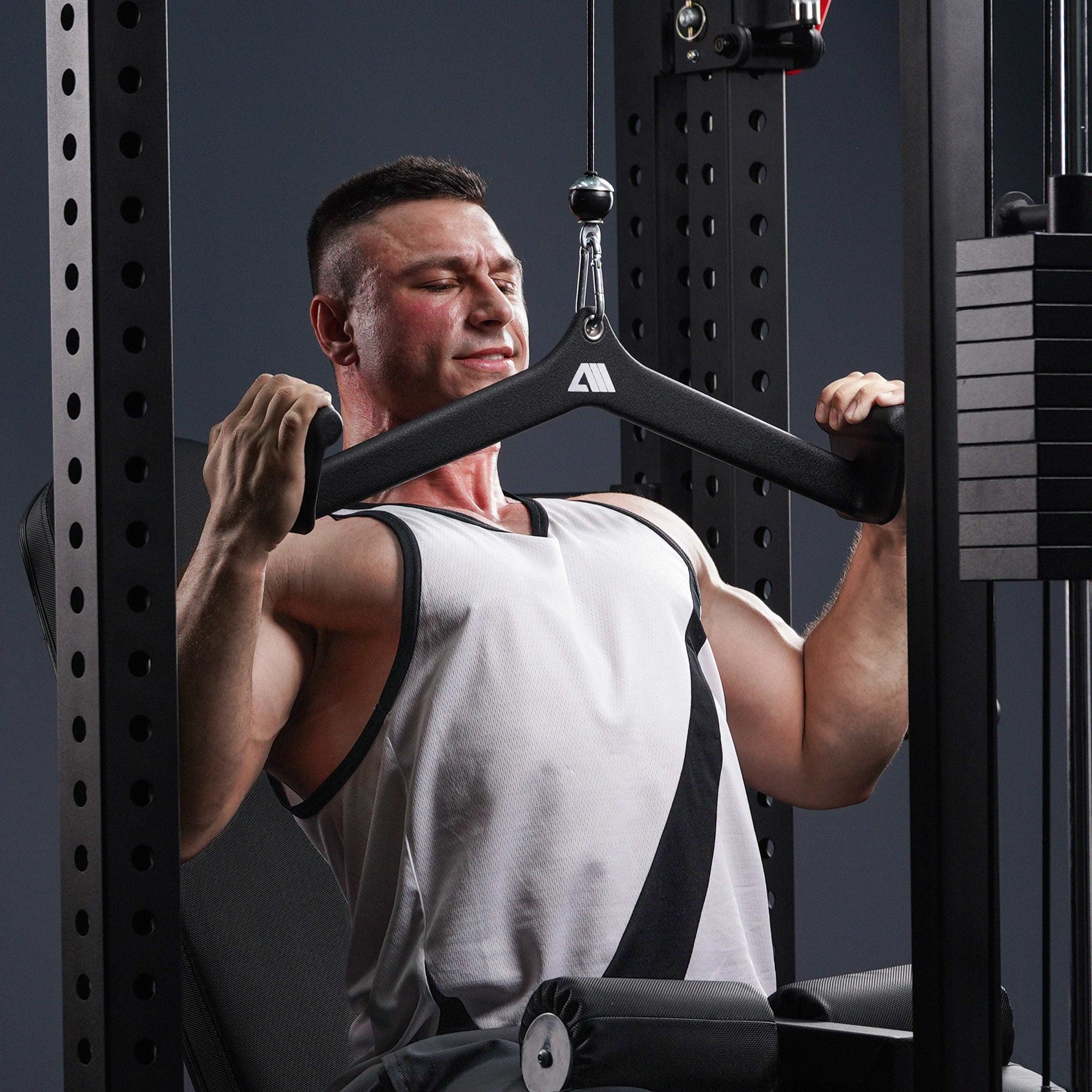
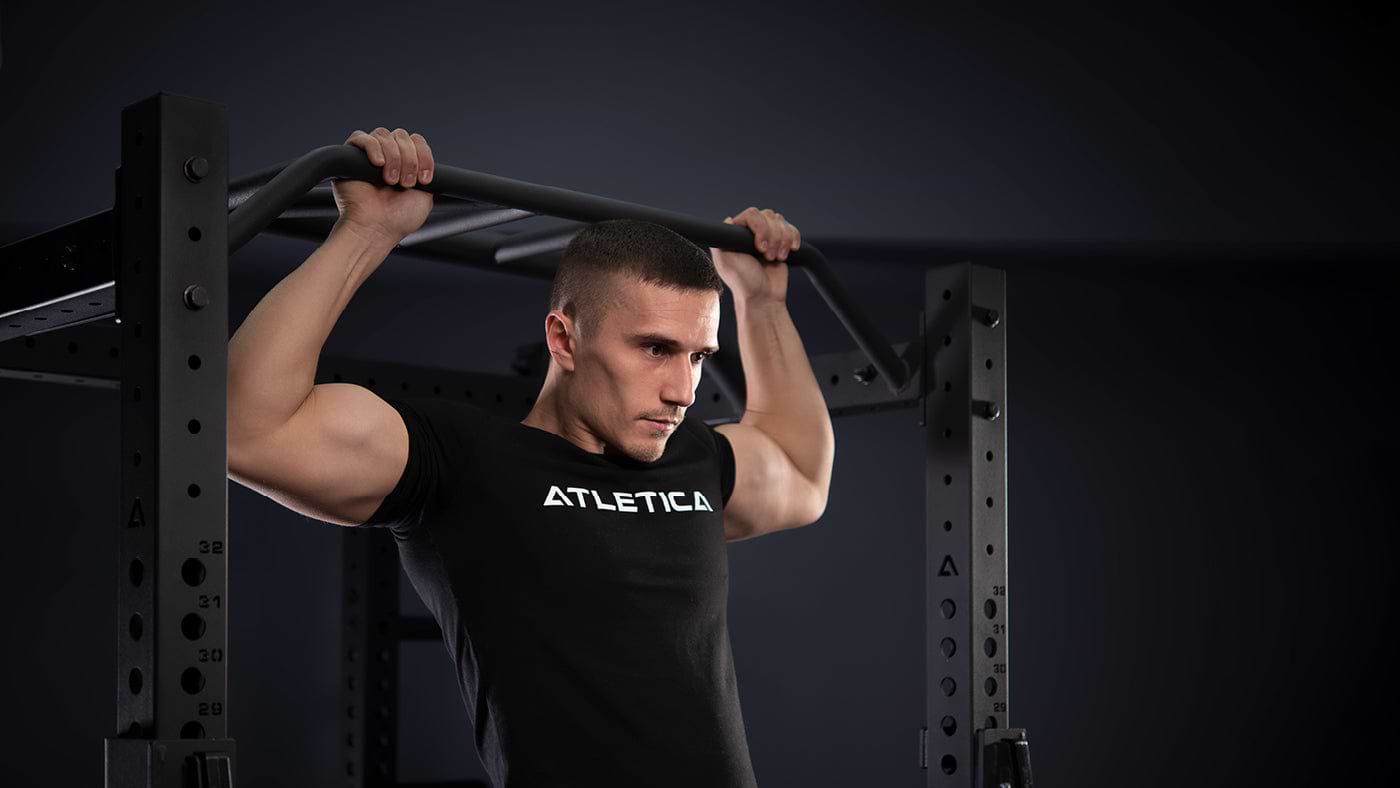
Pulling movements are essential in functional training — they're the foundation for back development, posture correction and injury prevention.
Pull-up bar (recommended):
- Lets you do pull-ups, chin-ups and dead hangs for shoulder health
- Gives you an anchor point for a suspension trainer or rings
- +51% sales growth shows the trend toward classic pulling work
Suspension trainer as an alternative:
- Mounts in a door frame (no drilling needed)
- Perfect for rows, fallouts and reverse flys
- Trains core stability at the same time thanks to the unstable anchor
The Training Mat: Protection & Hygiene
A quality mat (at least 6 mm thick) isn't a luxury, it's the foundation for injury-free training. It protects you during burpees, planks, sit-ups and push-ups — and keeps you off cold, hard floors. To find out which gym flooring suits which kind of training, check our guide Home Gym Flooring.
Optional: Cardio Machine for HRX & Endurance
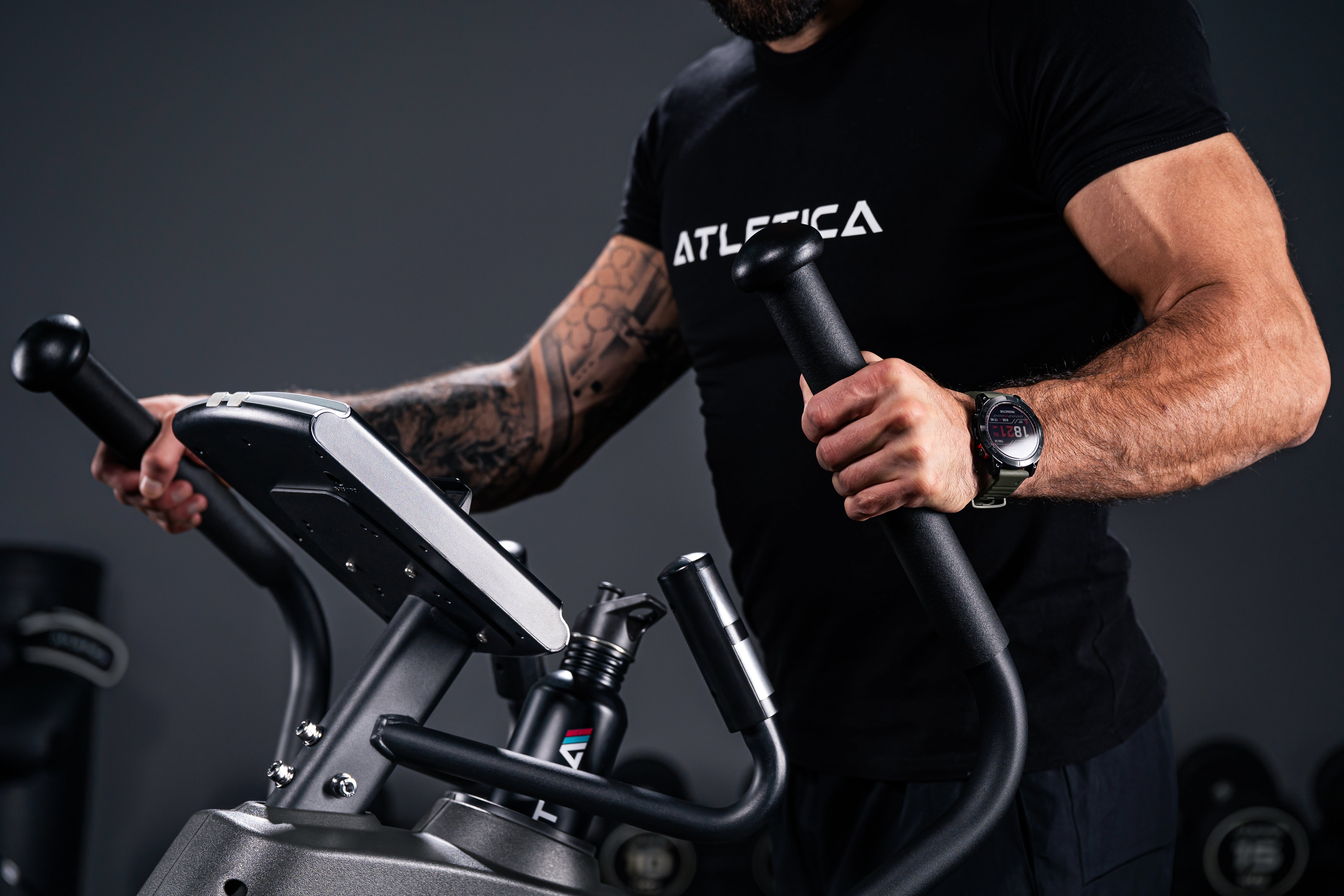
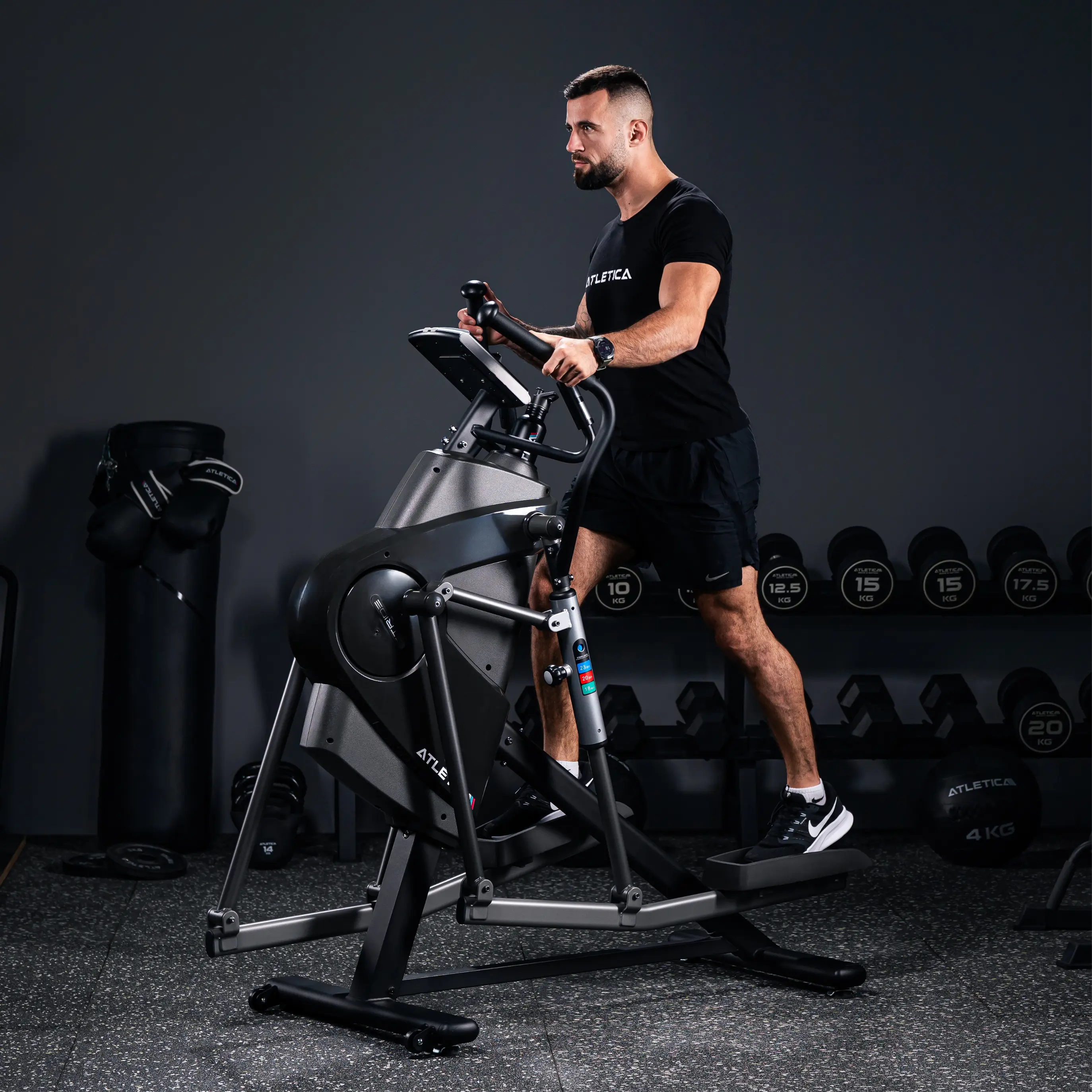
If you have HRX ambitions, a cardio machine is a smart addition. An air bike (like the ATLETICA MagnaBike) or a rowing machine lets you do targeted interval training and simulate competition conditions. Zone 2 sessions on the bike (80-90 rpm, 45-60 minutes) build the same aerobic capacity as running — with less stress on your joints. To see whether a treadmill or an elliptical is the better fit for you, read our comparison Treadmill vs. Elliptical.
What You Don't Need: 3 Wasted Purchases to Avoid
- Expensive multi-gyms with fixed movement paths: they restrict natural movement patterns and are less suited to pure functional training.
- Threaded dumbbell sets with clumsy spin-lock collars: they cost you time on every weight change and break the flow of your workout.
- Bulky treadmills with no incline: a SprintMaster or an air bike gives you more functionality in the same footprint.
Fact Sheet: The 5 Must-Have Tools Compared
| Tool | Function | Footprint | Price Range | Key Exercises |
|---|---|---|---|---|
| Kettlebell | Dynamic loading, full-body strength | Very small (30 x 30 cm) | €20-100 | Swings, goblet squats, Turkish get-ups, rows |
| Resistance bands | Variable pulling resistance, mobility | Minimal (fits in a drawer) | €15-40 (set) | Rows, face pulls, band-assisted pull-ups |
| Pull-up bar | Pulling movements, posture | Small (door frame) | €20-60 | Pull-ups, dead hangs, leg raises |
| Training mat | Floor protection, hygiene | Small (rolls up) | €15-50 | Burpees, planks, core work |
| Air bike / Rowing machine | Endurance, HIIT | Medium (1-2 m²) | €300-800 | Sprints, Zone 2 training, rowing intervals |
ATLETICA: Premium Solutions for Your Functional Home Gym
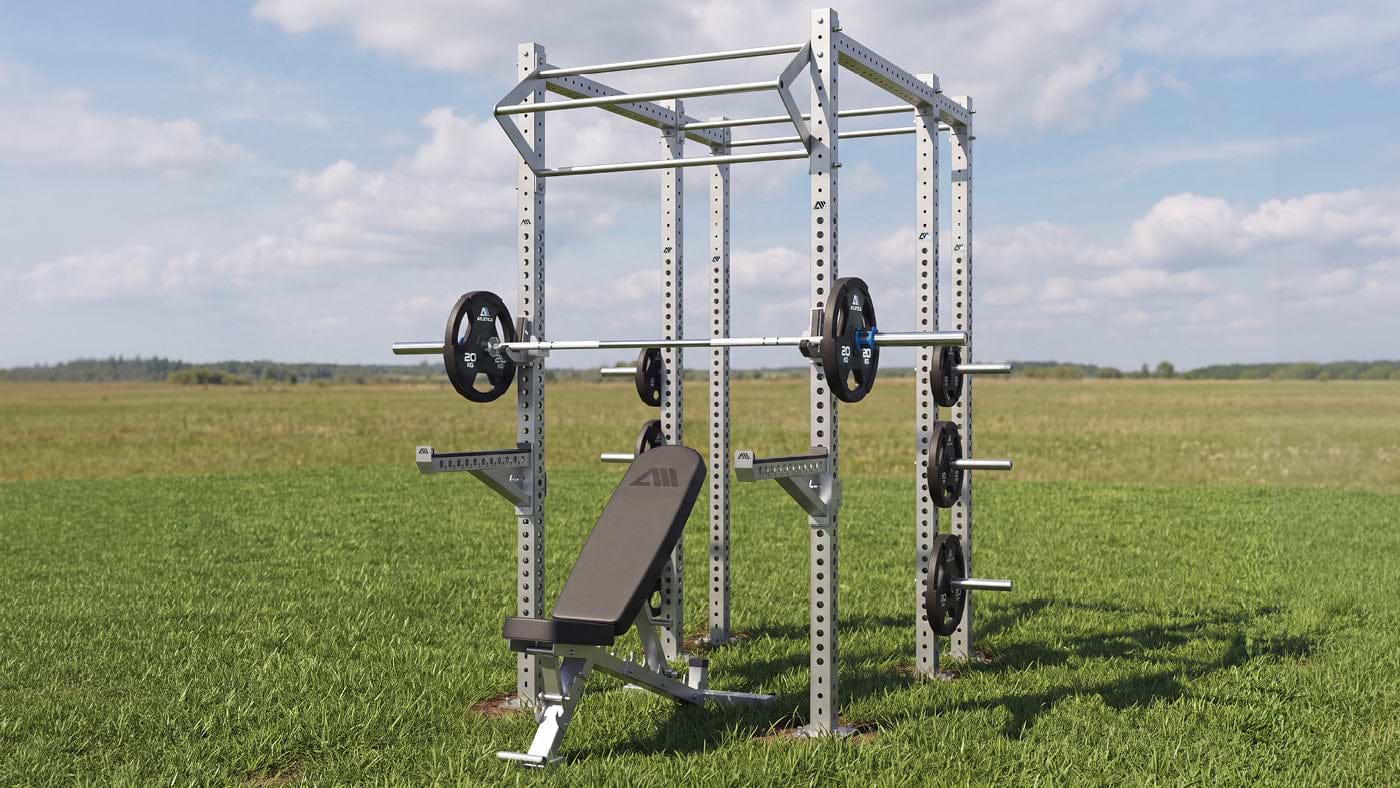
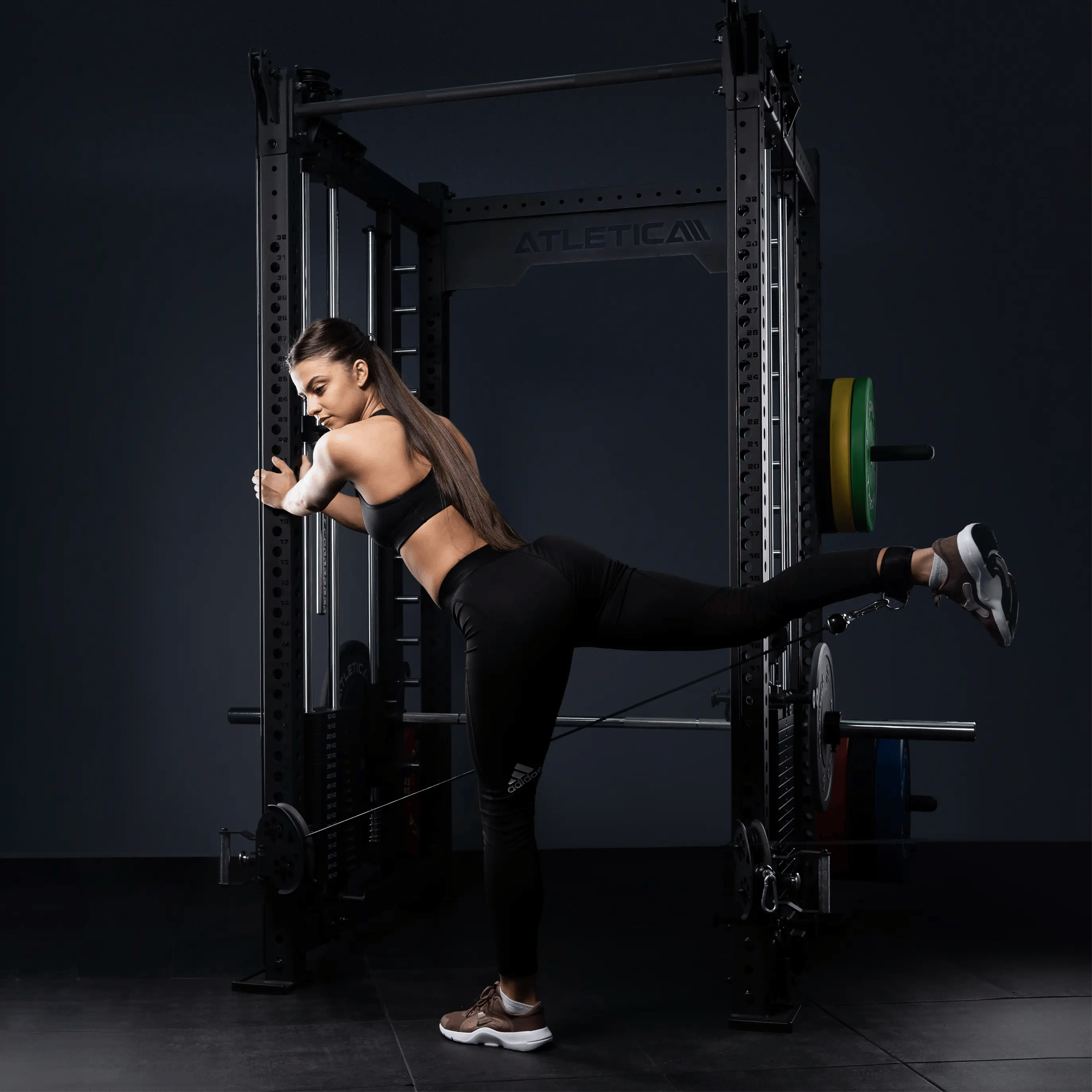
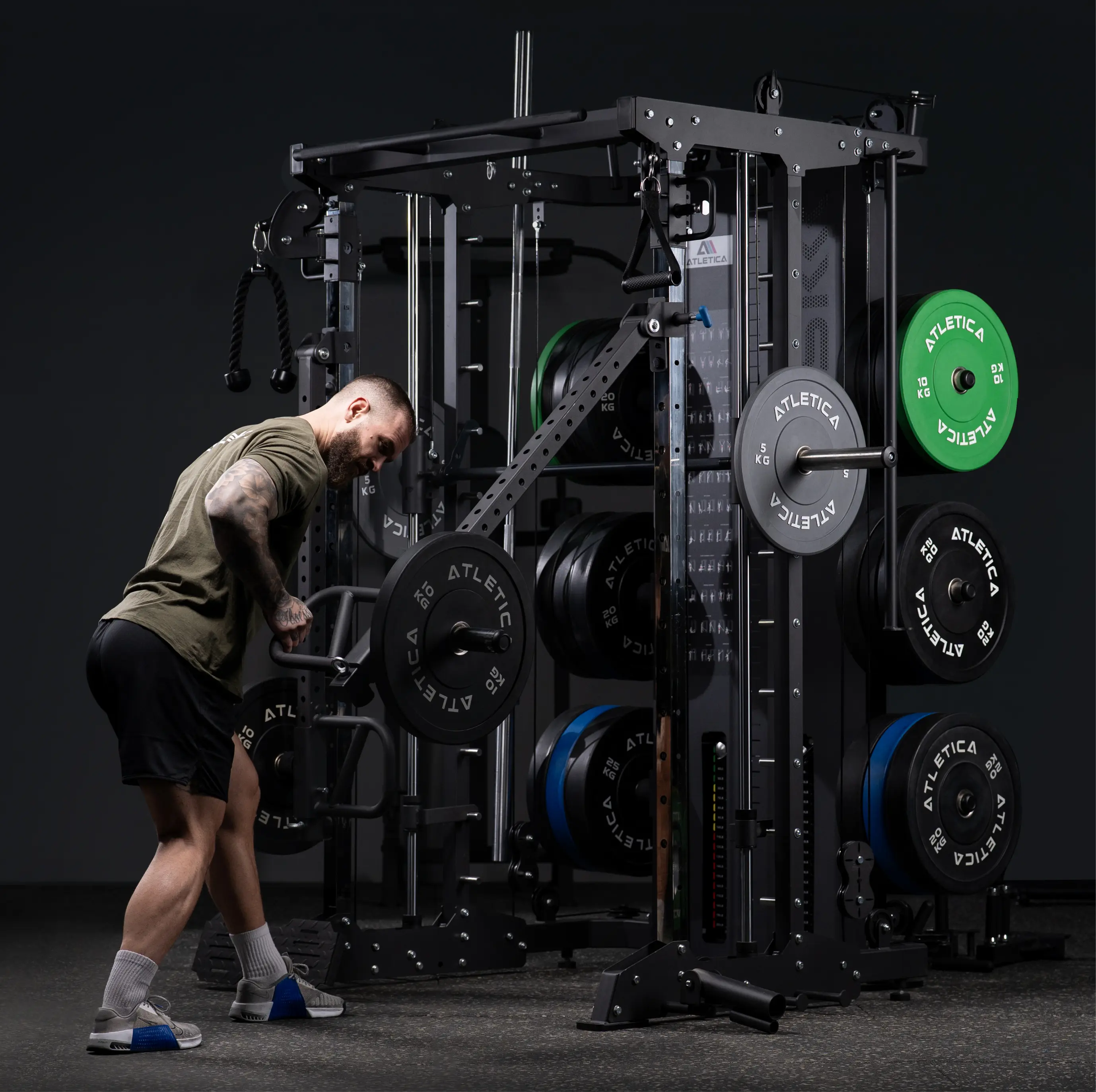
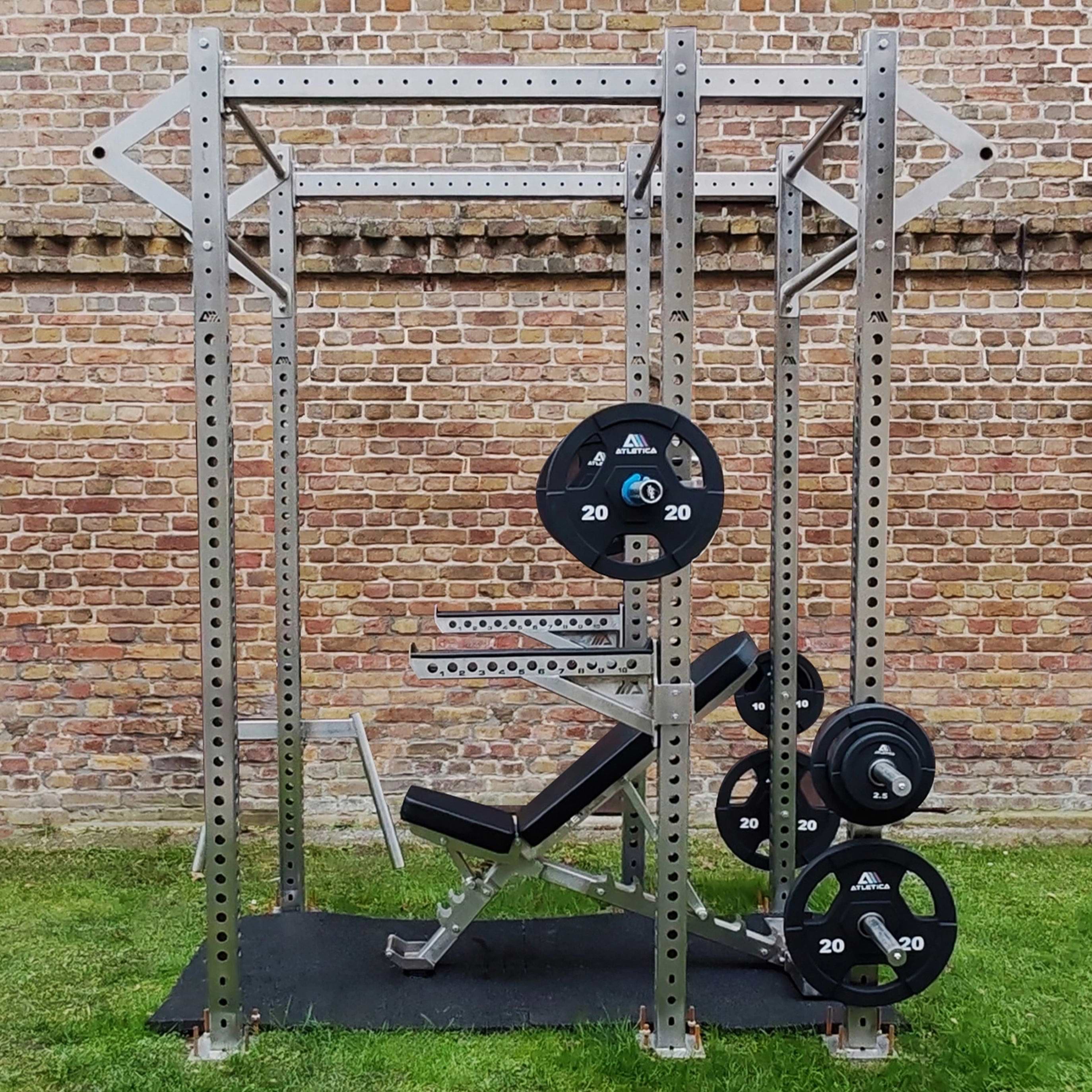
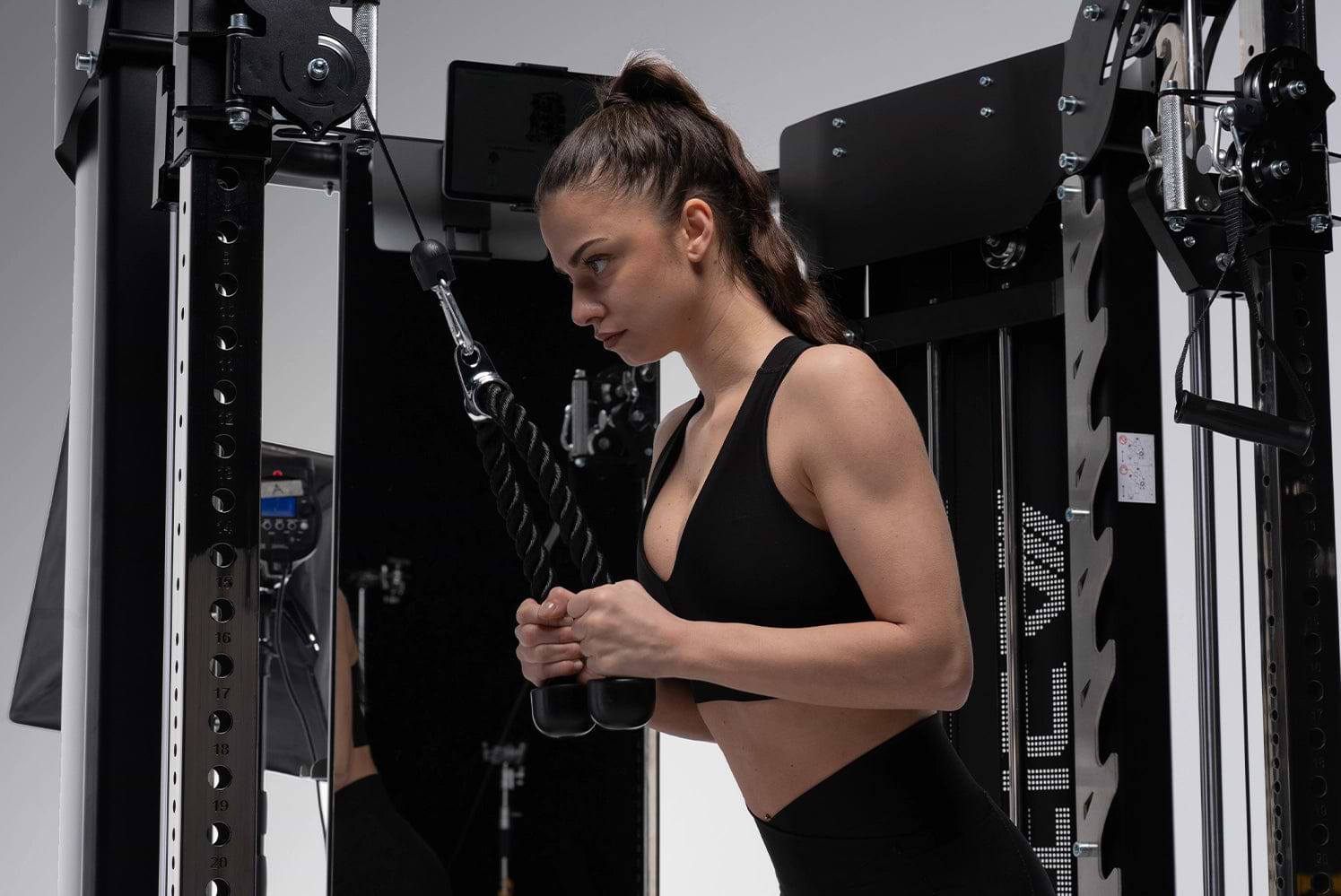
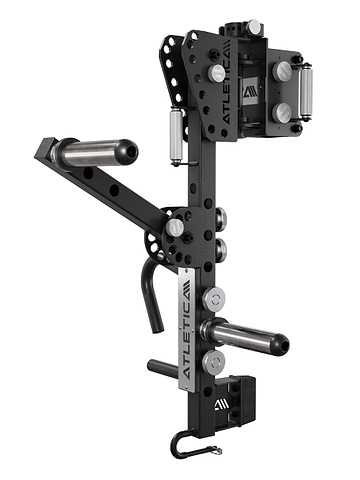
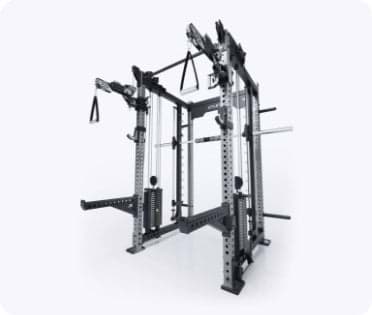
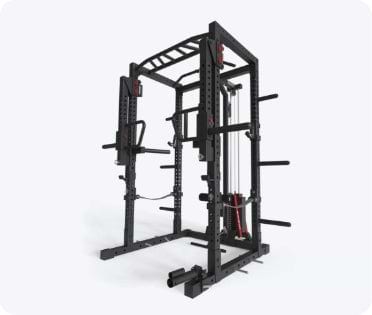
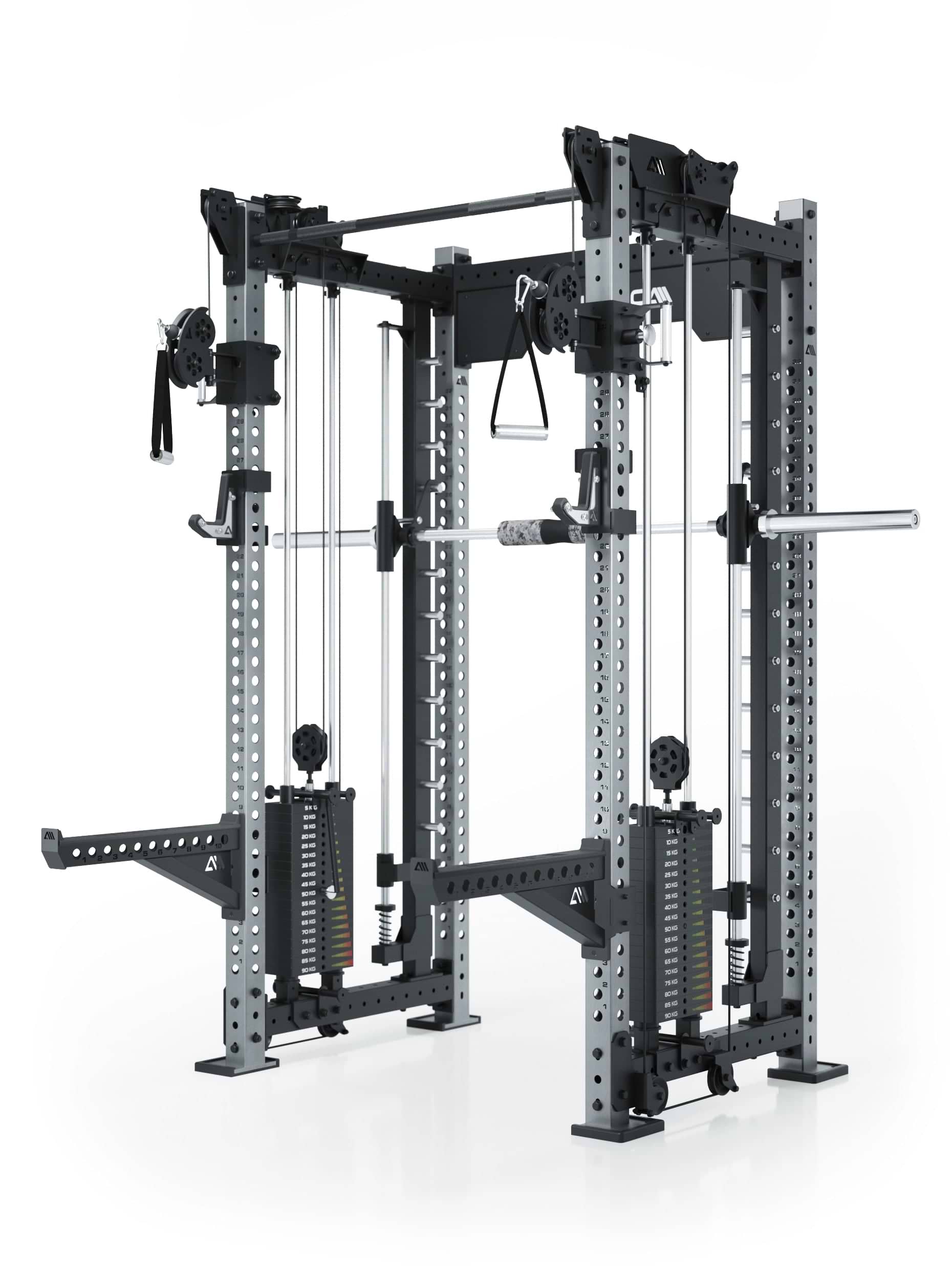
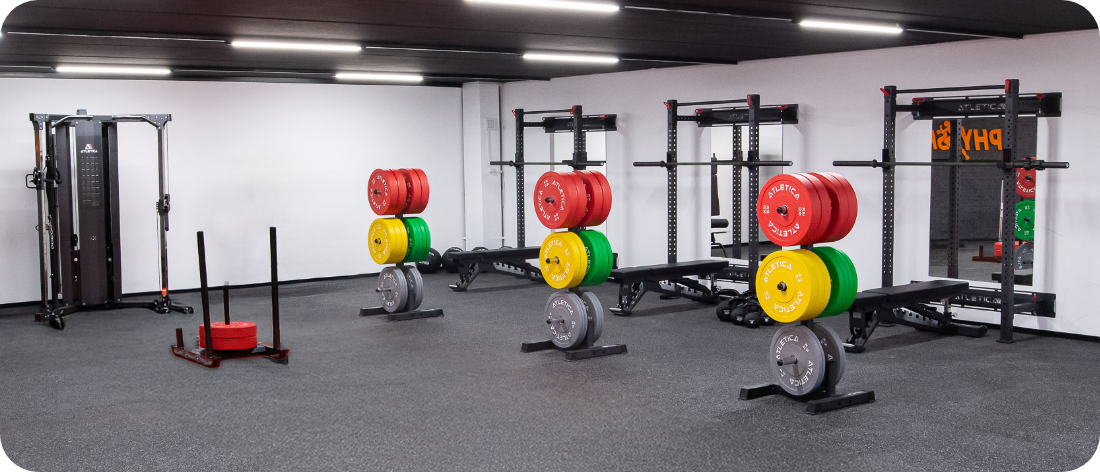
ATLETICA stands for "German Engineering" — developed in Germany for maximum performance and longevity. The modular racks of the R8 series (like the R8 Vulture) are the backbone of any serious functional home gym. The R8 Bradley Power Rack, for example, combines the stability of a squat rack with the flexibility of a cable crossover station — perfect for functional exercises with free weights and cables.
Why ATLETICA is the ideal choice:
- 75 x 75 x 3 mm steel tubing for maximum stability during explosive movements
- Modular system: expandable from 2 to 6 uprights with Jammer Arms, a Smith machine, a step-up platform and more
- German engineering quality for years of use without wear
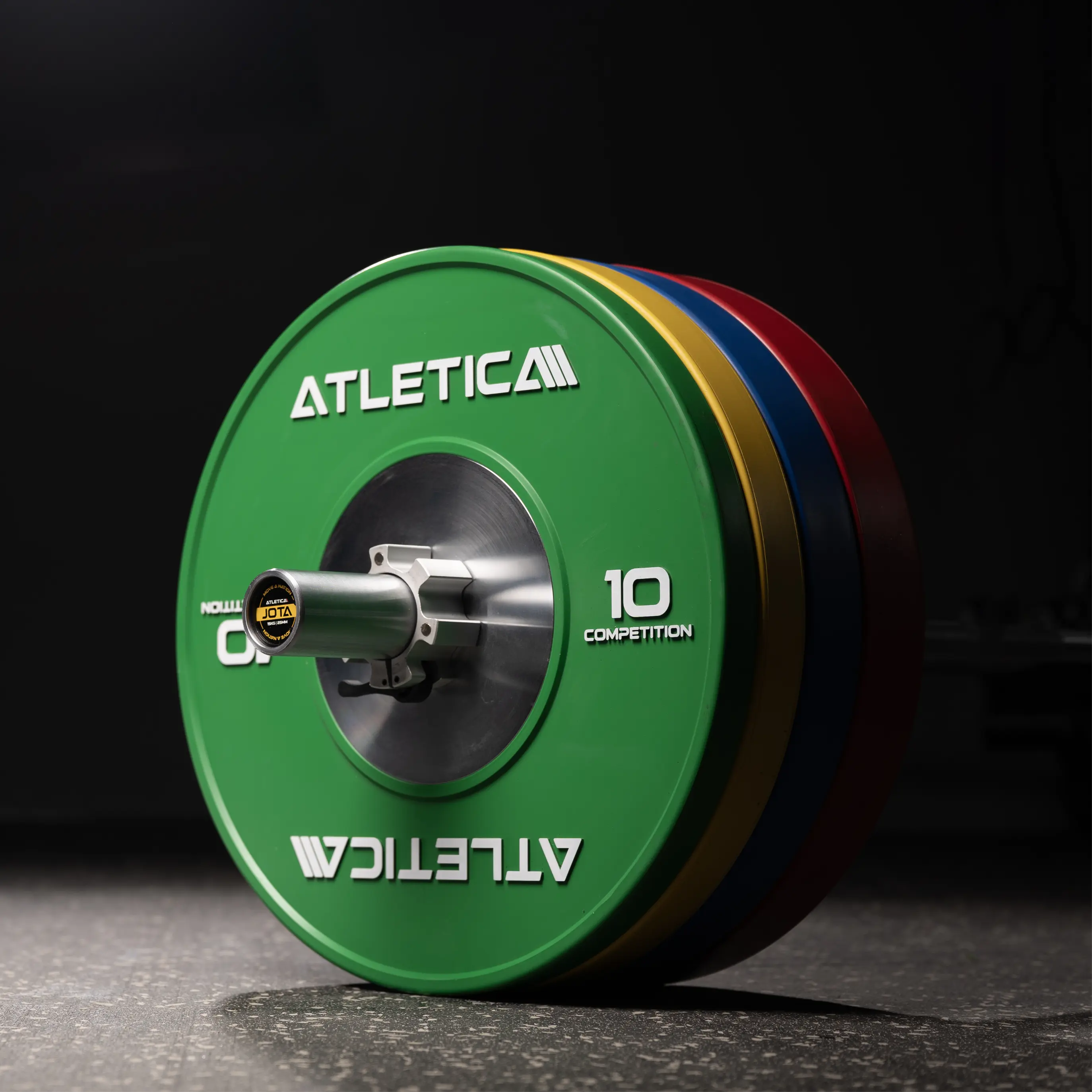
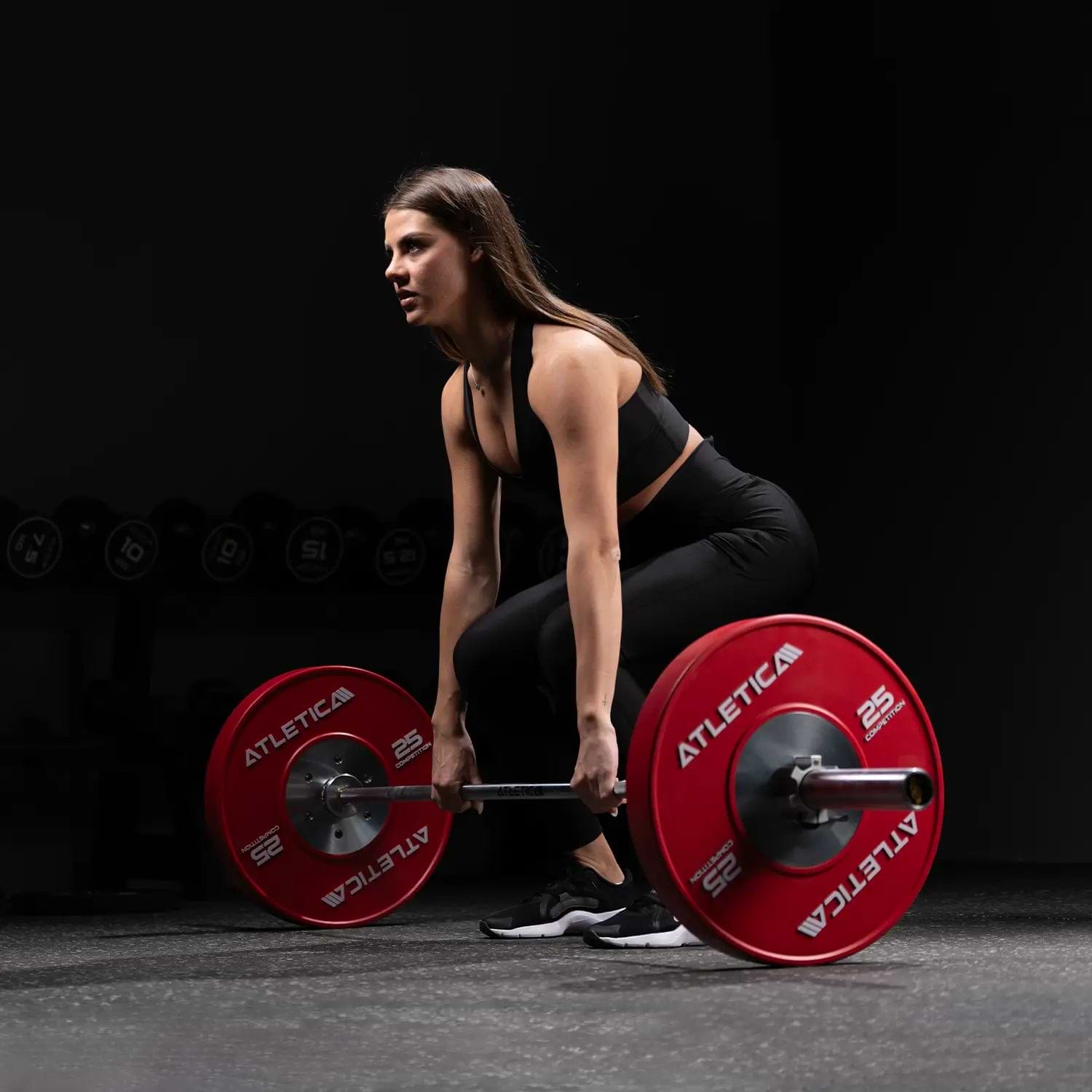
- Compatible with kettlebells, barbells and weight plates — all from one brand
For beginners who value quality and safety, ATLETICA also offers premium kettlebells, weight benches like the B10 and barbell sets — all perfectly matched to the modular rack system.
FAQ: Functional Fitness at Home
What kettlebell weight should a beginner start with?
Women start with 4-8 kg, men with 12 kg. A good test: lift it to shoulder height 10 times with your non-dominant arm — if you can do that with moderate effort, the weight is right.
Can I train for HRX entirely at home?
About 80% of it. The sled stations (sled push/pull) are hard to replace — but you can simulate them with resistance bands or weighted-backpack variations. Burpee broad jumps, farmer's carries (with kettlebells) and wall-ball alternatives (goblet squats + push presses) work perfectly at home.
What's the minimum space I need?
For core workouts, 2 x 2 m (a training mat) is enough. For HRX with burpee broad jumps, plan on 5-10 meters of running room. A power rack needs roughly 1.5 x 1.5 m of floor space. To see which series fits your room, check the ATLETICA series comparison.
Which cardio machine is the most versatile?
The air bike (like the ATLETICA MagnaBike) is unbeatable — it trains upper and lower body at the same time, is built for HIIT intervals and is easy on the joints. The rowing machine is the second-best choice for full-body cardio.
How often should I do functional fitness?
3-4 sessions per week (45-60 minutes) is ideal. Combine 2-3 strength and technique sessions with 1-2 cardio interval sessions (e.g. air bike sprints or rowing intervals).
Bottom Line and Recommendation
Functional fitness at home isn't a question of budget or square footage — it's a question of the right priorities. With a kettlebell, resistance bands, a pull-up bar and a mat, you've already covered 90% of the training stimulus that matters.
Our clear recommendation:
- Start with a quality kettlebell (e.g. from ATLETICA) and resistance bands — total cost under €100.
- After 4-6 weeks, add a pull-up bar for pulling movements.
- If you have competition ambitions, invest in an air bike or rowing machine.
- If you have the space and budget, build an ATLETICA R8 Power Rack — it's the most future-proof solution for a lifetime of premium-quality training.
Functional fitness is the most efficient path to a strong, mobile body — start today, not tomorrow. You'll find everything for your functional home gym in the ATLETICA online shop.