












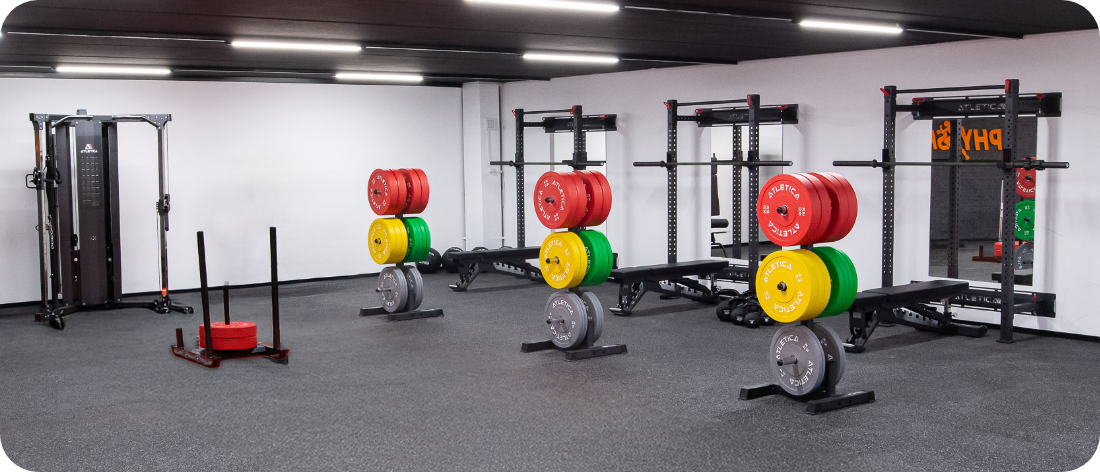
Choosing the right gym flooring for your home gym is one of the most important decisions you'll make when setting up your training space. The wrong mat means damaged floors, noise complaints and a higher risk of injury.
The right one protects your floors, reduces vibration, improves safety and goes easy on your joints. Which mat you need depends mainly on how you train, how heavy your equipment is and what kind of floor you're working with.
This guide walks you through the key things to look for in gym flooring and shows which ATLETICA options are the best fit for your specific needs.
The Short Answer: Which Gym Flooring Is Right for You?
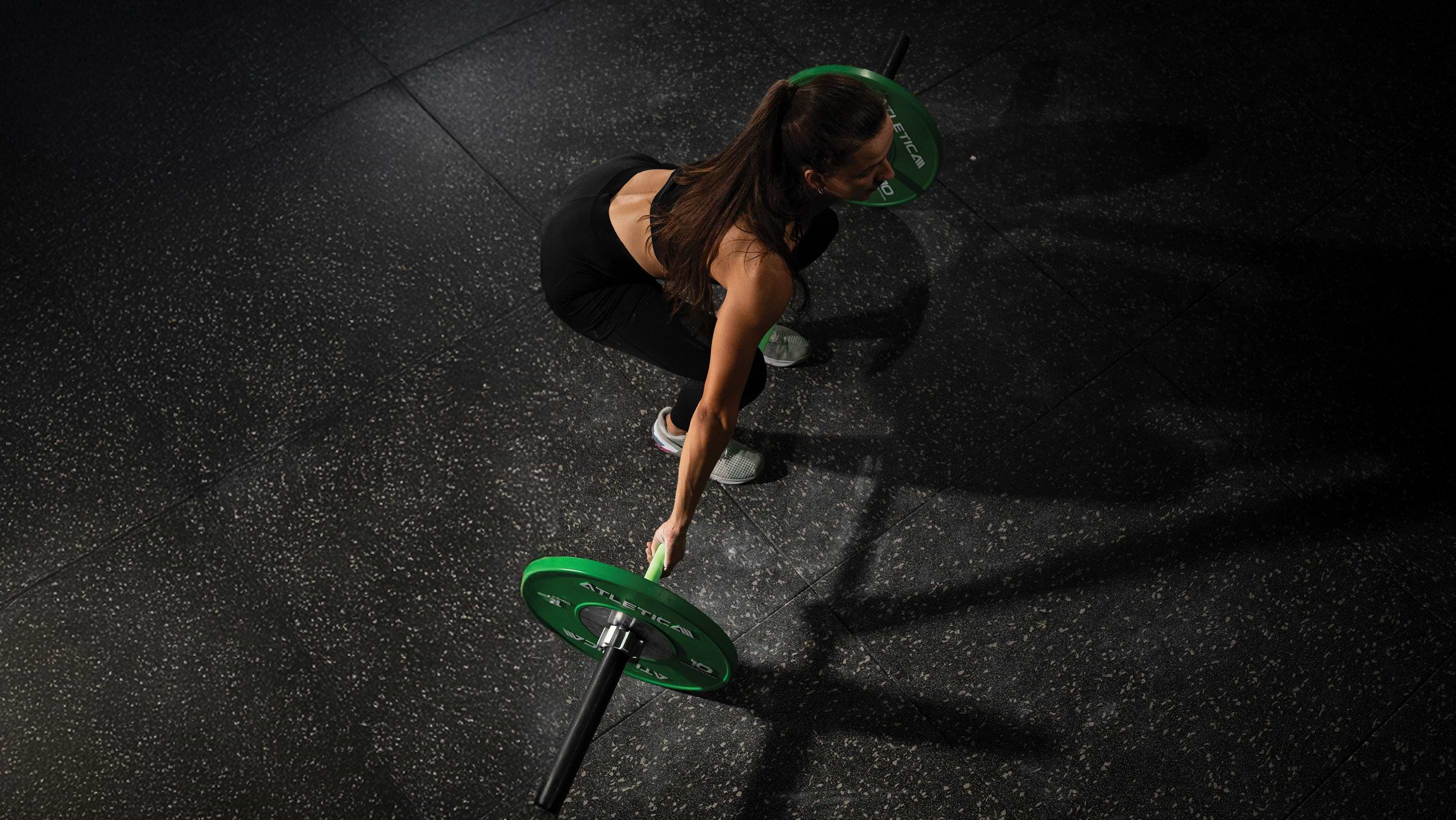
The right gym flooring depends on your training: for heavy free-weight work and power racks, you need solid rubber mats 10–20 mm thick that can handle concentrated point loads.
For cardio equipment like treadmills or rowers, 6–8 mm vinyl or rubber mats are enough to dampen noise and reduce vibration.
For floor exercises and general training areas, interlocking mats made of EVA foam or rubber are a flexible option. The ATLETICA FlexProtect interlocking mats use 6 mm of high-density rubber for a long-lasting solution in versatile training areas.
Why Gym Flooring Is a Must in Any Home Gym
Quality gym flooring isn't optional. It's a necessity for any well-planned home gym, and it does several important jobs at once:
- Floor protection: Prevents scratches, pressure marks and dents on hardwood, laminate, tile and other sensitive floors.
- Noise and vibration dampening: Cuts noise by up to 50%, which matters most in apartments and rooms with neighbors below you.
- Safety and grip: Non-slip surfaces keep you planted during intense lifts.
- Equipment protection: Absorbs impacts, extends the life of your equipment and keeps it from sliding around.
- Joint protection: A cushioned surface protects your knees, elbows and back during floor work, jumps and drops.
The Three Main Types of Gym Flooring Compared
Depending on how you train and what you need, several types of mats come into play. Here's how they stack up:
| Criteria | Rubber Mats (Solid) | Rolled Mats / Rolls | Interlocking Mats (Modular) |
|---|---|---|---|
| Material | Recycled or virgin rubber, EPDM | PVC, rubber-vinyl | EVA foam, rubber granulate |
| Recommended thickness | 10–20 mm, up to 40 mm for extreme drops | 6–8 mm | 6–12 mm |
| Load rating | Very high: ideal for power racks, barbells, drops > 30 kg/cm² | Medium: for cardio equipment (treadmill, rower) and stationary machines | Low to medium: for floor exercises, light dumbbells, play areas |
| Odor | Low to moderate (natural rubber), airs out over time | Low to strong (depends on quality) | May smell at first; higher quality means less odor |
| Pros | Extremely durable, high density, best shock absorption | Easy to install and clean, rolls up to save space | Easy to expand, can be cut to size, simple installation |
| Cons | Heavy, more expensive, less flexible in size | Fixed size, not expandable | Lower load rating, can compress under heavy equipment |
| Recommended for | Powerlifting, heavy free-weight training | Exercise bikes, steppers, treadmills, rowers | Yoga, Pilates, HIIT (without heavy drops), kids' play areas |
Thickness and Density: The Deciding Factors for Your Training Style
Material thickness is the most important criterion and determines how much protection you get. Some manufacturers also offer thinner mats with extremely high density, like ATLETICA's 6 mm FlexProtect mats made of pure rubber.
Rules of Thumb for the Right Thickness
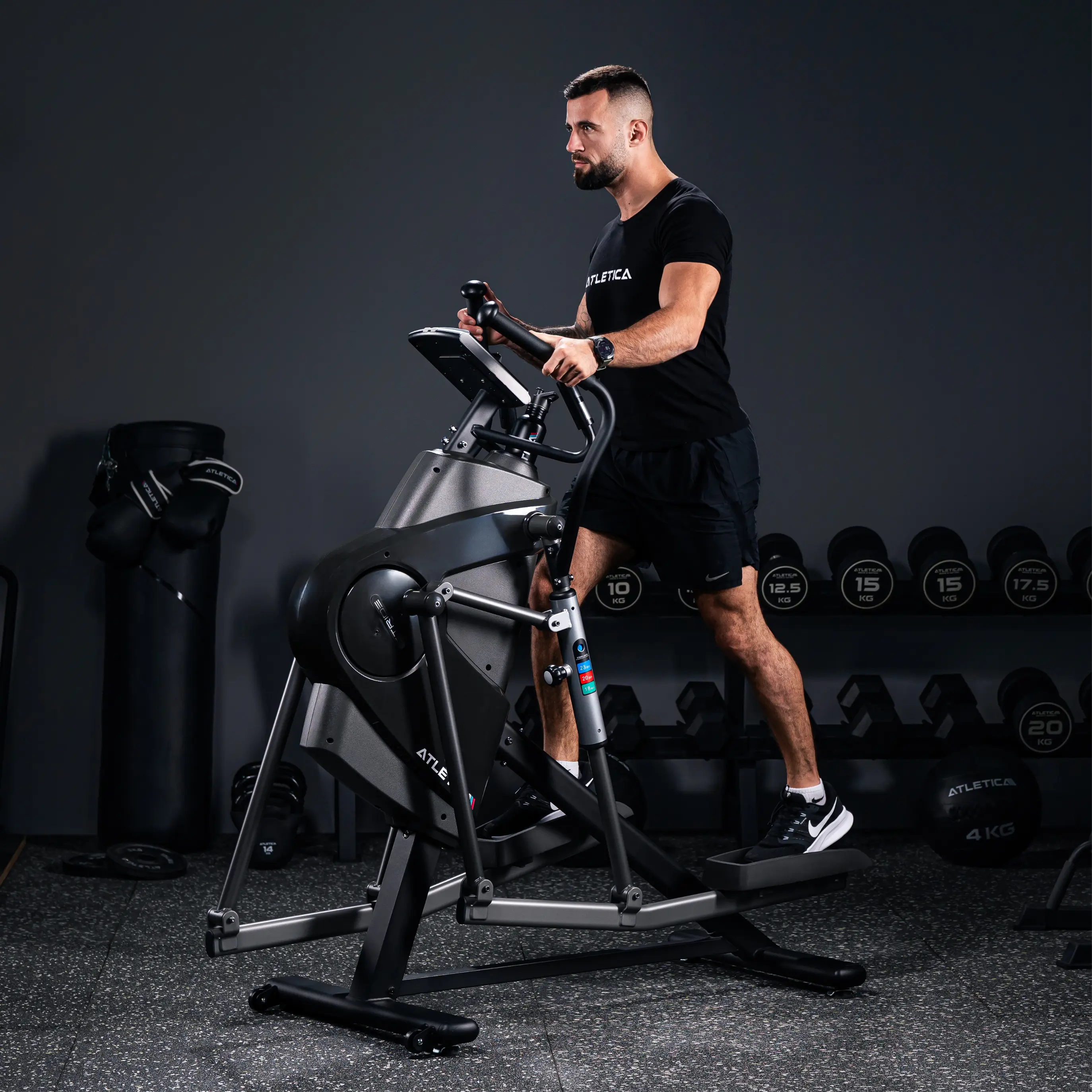
- 6–8 mm: Ideal for exercise bikes, rowers and ellipticals. These mats reduce vibration and protect against scratches.
- 8–10 mm: Suitable for lighter multi-gyms, Smith machines and weight benches with moderate loads.
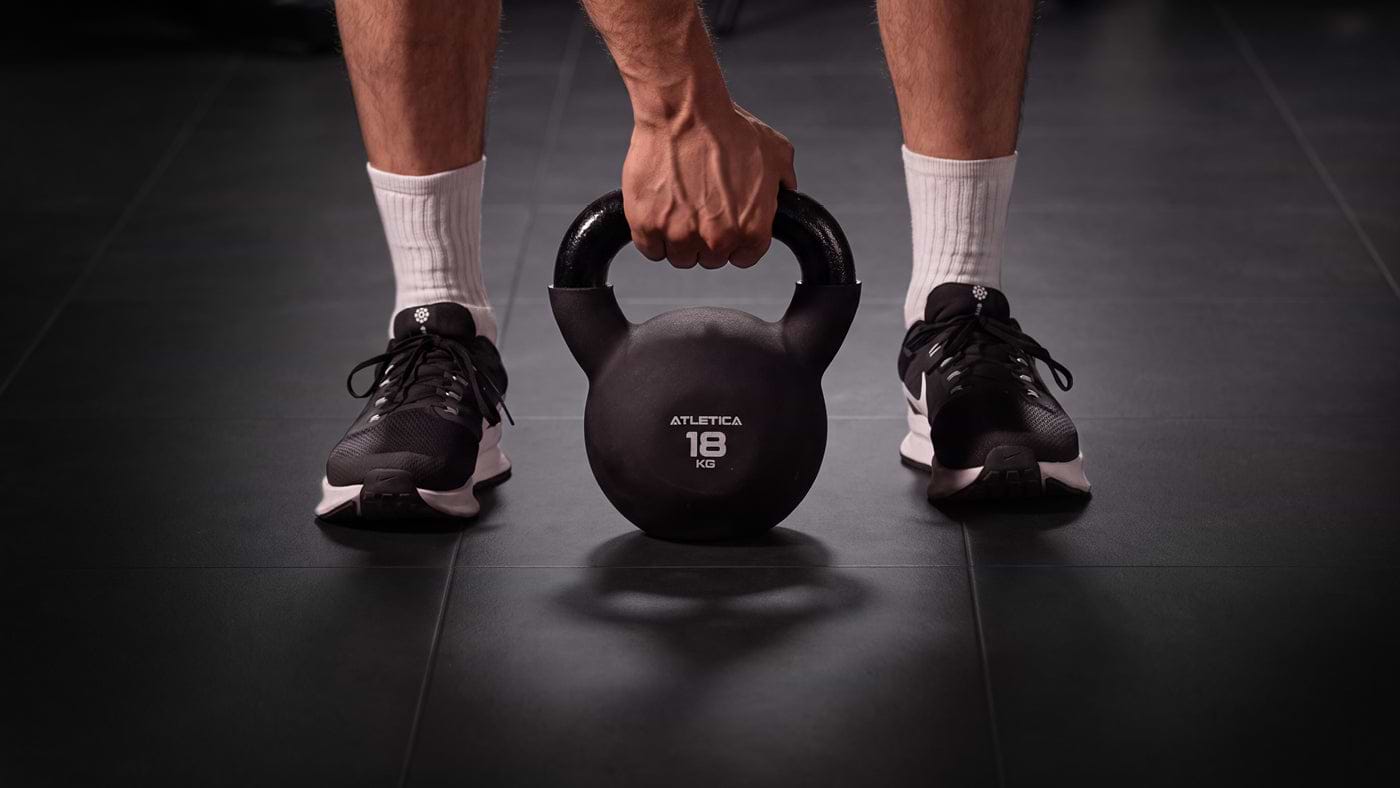
- 10–12 mm: Recommended for dumbbell and kettlebell training, barbell workouts and moderate drops from up to about 50 cm.
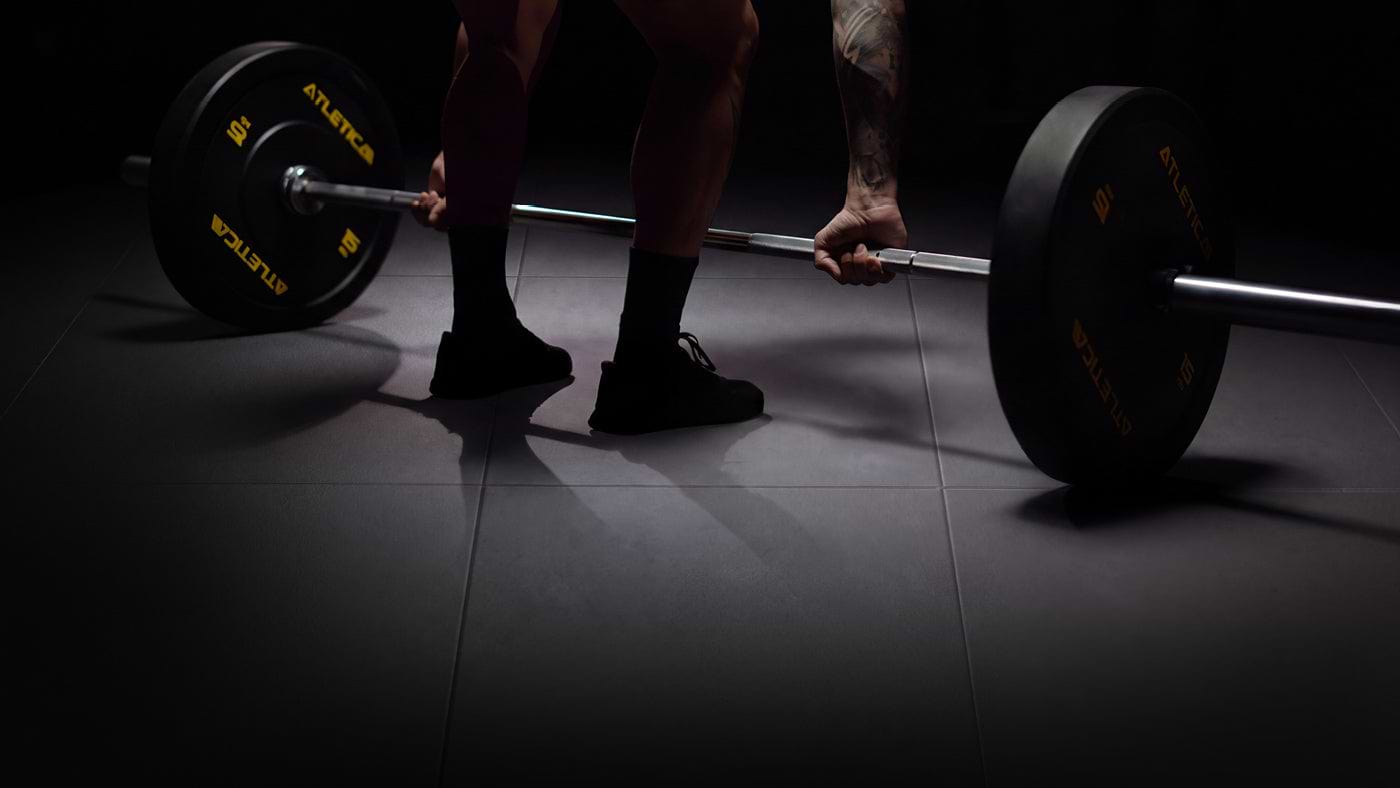
- 15–20 mm: The minimum thickness for powerlifting and functional training with regular drops from shoulder height or higher.
- 30 mm or more: For extreme loads in Olympic weightlifting and for outdoor areas (recommended: ATLETICA OutdoorProtect).
A quick note on density (kg/m³): it matters just as much as thickness. A high-density mat (rubber, for example) often protects better at a lower thickness than a soft, thicker foam mat. High density is especially critical for point loads from weights or equipment feet.
Practical Tips for Buying and Installing
Before you commit to a mat, keep these practical points in mind:
- Check the grip: Look for a textured surface so you stay planted. Smooth mats can get dangerously slippery with sweat or in socks.
- Watch out for odor: Mats made of EVA foam or recycled rubber can have a characteristic smell at first. Let them air out for several days before installing.
- Interlocking system: Interlocking mats should fit flush and lock together tightly so no gaps form and the mats don't slide apart.
- Prep the subfloor: The floor must be clean, dry, level and load-bearing.
- Edge gap: Leave 5–10 mm of clearance from the walls to avoid tension and buckling.
To learn how to factor gym flooring into your home gym layout from the start, read Building a Professional Home Gym in 2026.
FAQ: The Most Common Questions About Home Gym Flooring
1. Can I use regular fitness mats under my power rack?
No. Standard yoga or exercise mats can't handle the weight and point loads of a power rack with loaded bars. They'd get crushed and offer no protection. You need a solid rubber mat at least 10 mm thick. To find out which rack fits your space, check out the ATLETICA series comparison.
2. How much load can my mat take?
That depends on the material. A quality ATLETICA FlexProtect rubber mat is rated for drops of up to 30 kg/cm² from 50 cm. Solid rubber mats 15–20 mm thick like the ATLETICA SolidProtect can handle loads well beyond that.
3. How do I keep my interlocking mats from sliding apart?
Look for a sturdy interlocking system with precisely cut edges. Mats made of heavy rubber (like ATLETICA's) have plenty of weight to them and slide less. Lightweight EVA mats can come apart during dynamic exercises.
4. Can gym flooring be used in outdoor gyms?
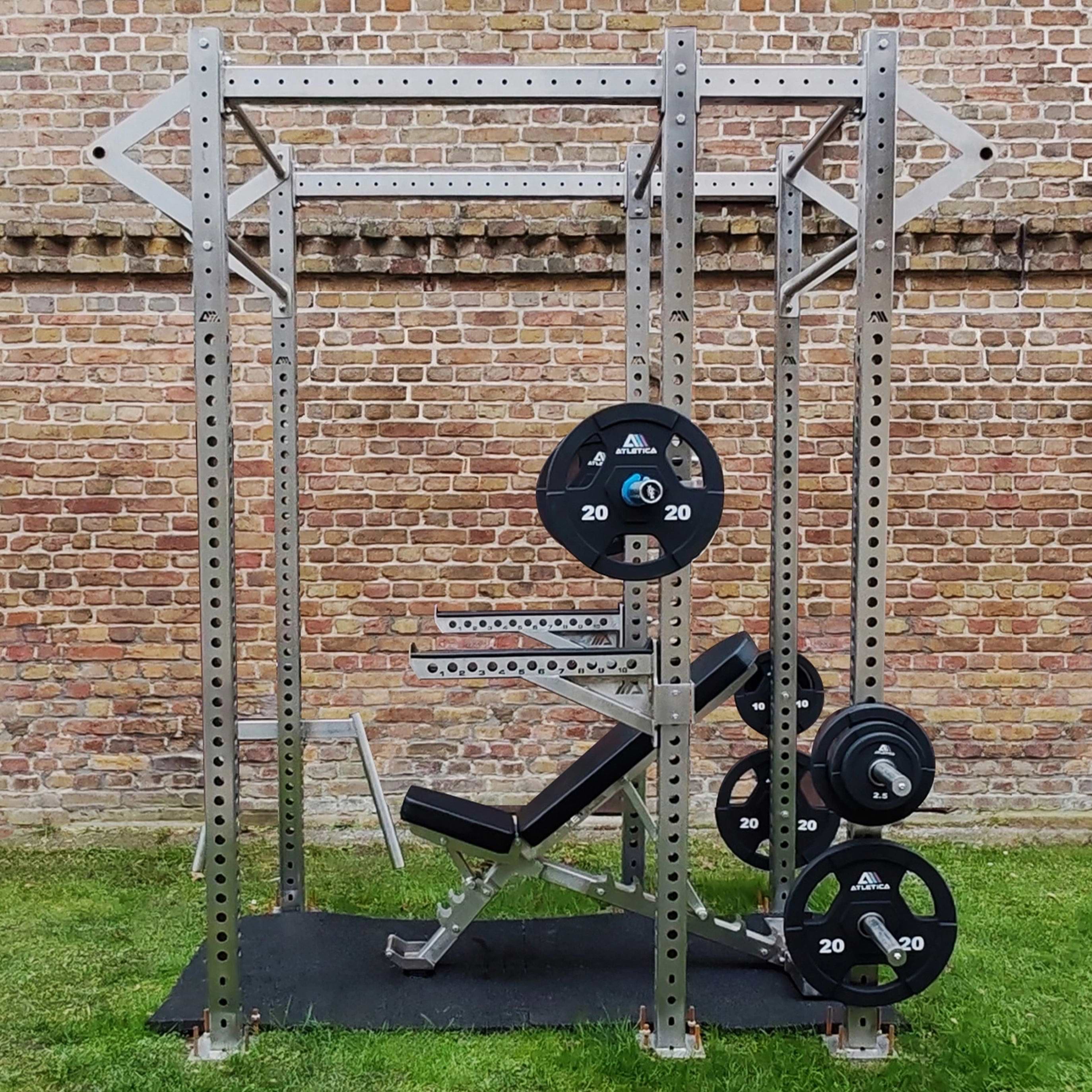
Yes, but only dedicated outdoor mats. ATLETICA's OutdoorProtect is a 40 mm thick mat made of frost-proof, odor-free natural rubber for asphalt, concrete or pavers. It's designed for drops and uneven ground.
5. What's the best way to clean my home gym flooring?
Most mats can simply be wiped down with a damp cloth and mild cleaner. Avoid harsh solvents that can attack the material. For interlocking mats with open seams, regular vacuuming is a good idea.
ATLETICA: Premium Gym Flooring for Your Home Gym
As a premium manufacturer of home fitness equipment based in Germany, ATLETICA knows what professional gym flooring has to deliver. Here's what sets the products apart:
- Top-grade materials: ATLETICA uses pure rubber, not EVA foam. The mats are made of 80% recycled and 20% virgin industrial rubber, which makes them sustainable and extremely durable.
- Outstanding density: At just 6 mm, the high-density mats deliver above-average shock and sound absorption, on par with much thicker mats of lower quality.
- Stability and safety: The interlocking system closes flush and won't buckle even under constant load. The mats don't slide and give you a secure footing.
- Low odor and certified safe: ATLETICA's rubber product is TÜV-tested and has a very low to imperceptible odor, a key advantage over many EVA mats.
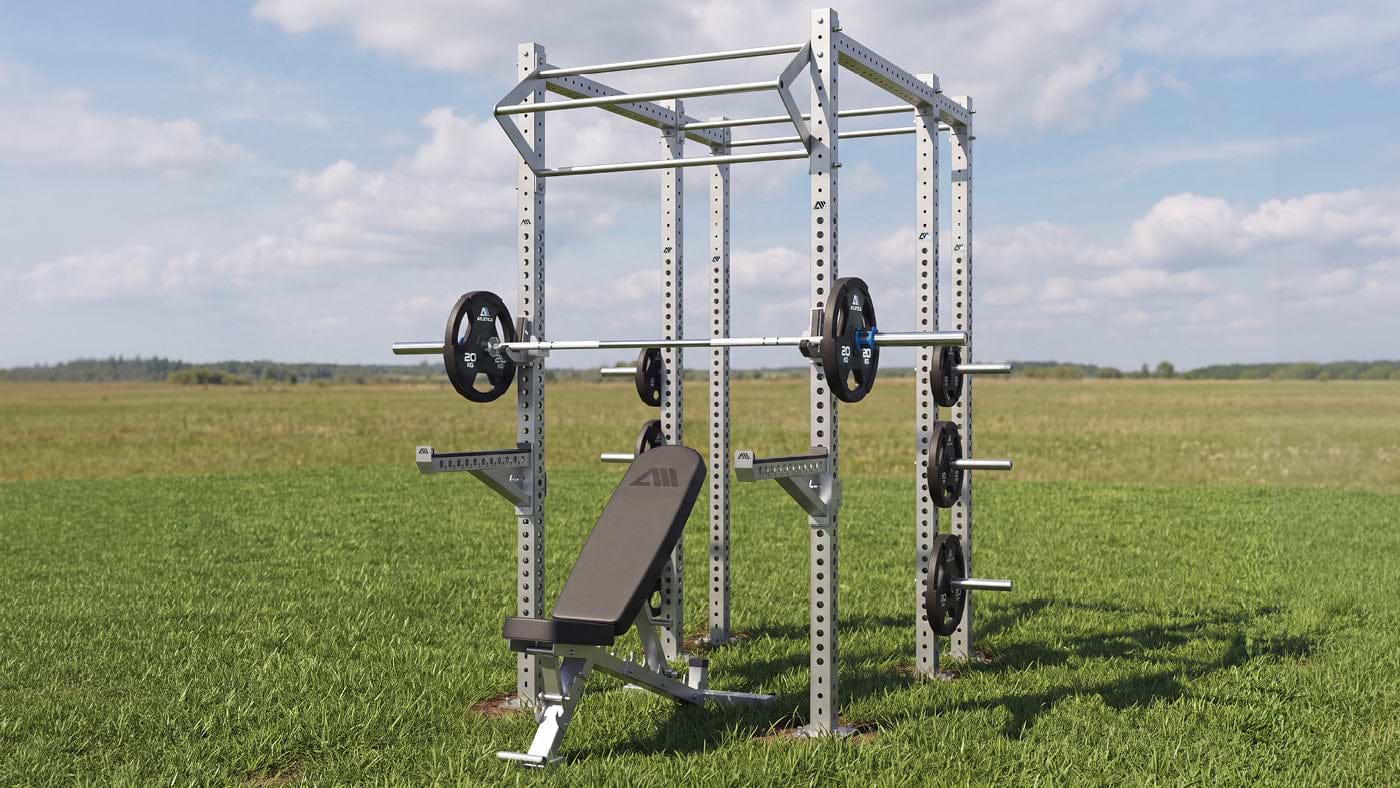
- Versatility: The FlexProtect mats are rated for drops up to 30 kg/cm², making them ideal for small to mid-size home gyms that combine strength training and cardio sessions. For extreme outdoor use, there's the OutdoorProtect, a perfect match for our outdoor power racks.
Bottom Line: The Right Mat for Safe, Effective Training
The right gym flooring for your home gym is an investment in the longevity of your floors, your equipment and your own safety. Which mat you choose depends on your training and your gear:
- For cardio equipment only: A 6 mm vinyl or rubber rolled mat.
- For versatile training with free weights and machines: High-quality rubber interlocking mats like the ATLETICA FlexProtect, which combine flexibility and stability.
- For serious powerlifting and heavy drops: Solid rubber mats 10 mm or thicker.
- For outdoor areas: Dedicated outdoor mats like the ATLETICA OutdoorProtect.
Our recommendation: take a close look at your training and your equipment. For most serious home gyms, modular rubber mats like those from ATLETICA are the best choice, offering protection, flexibility and durability at a fair price.
They're a washable, TÜV-tested premium solution that gives your training the stable foundation it deserves.