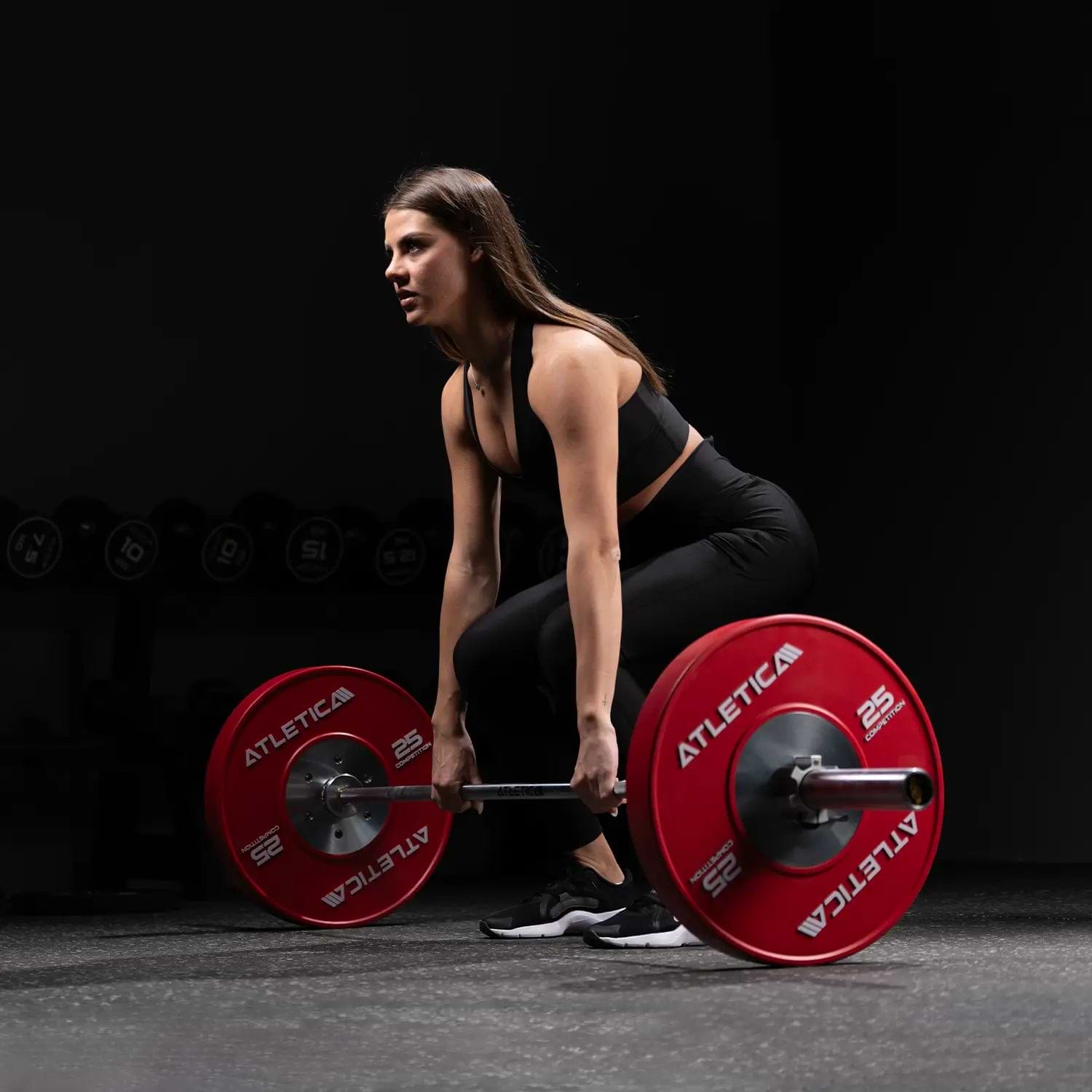
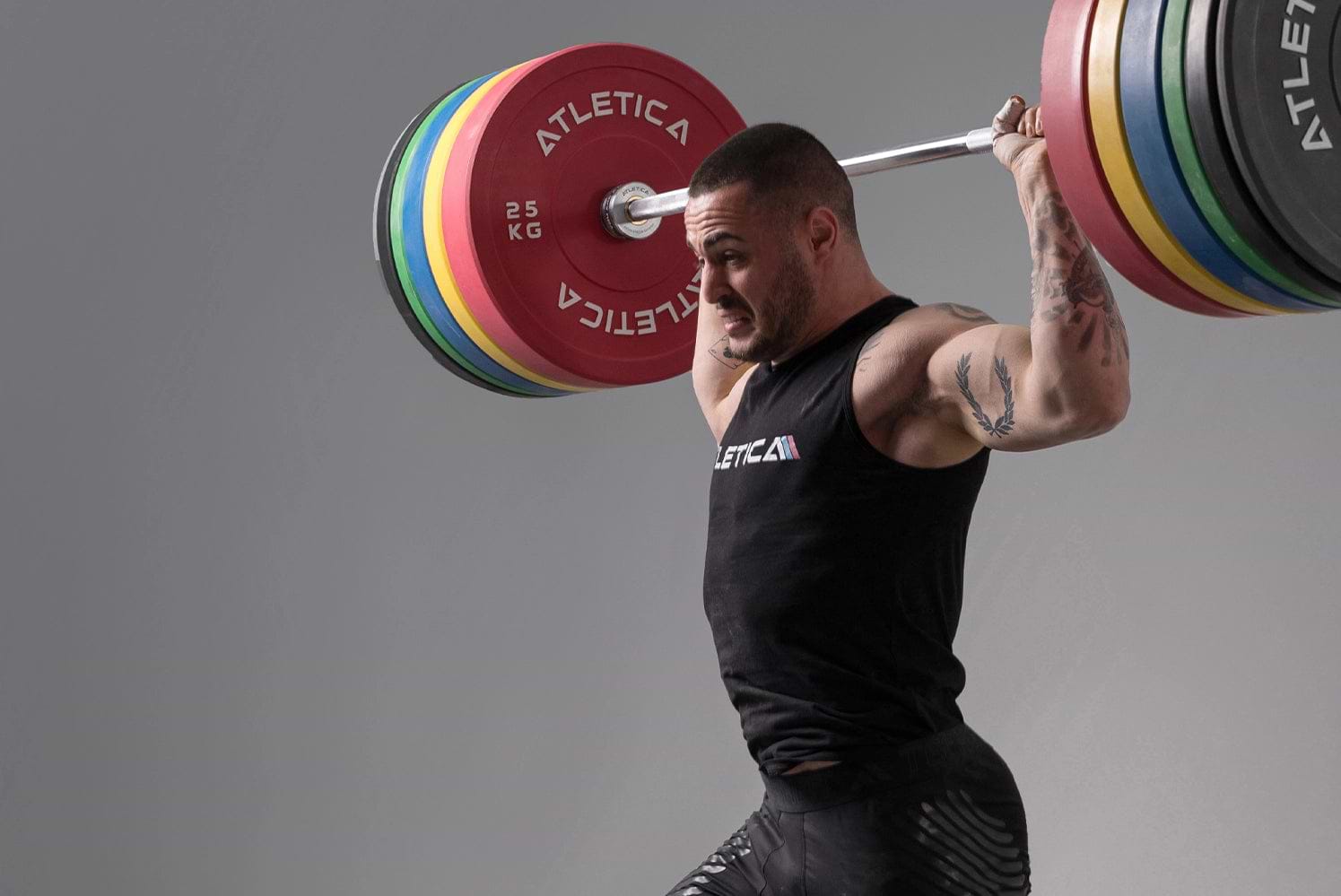









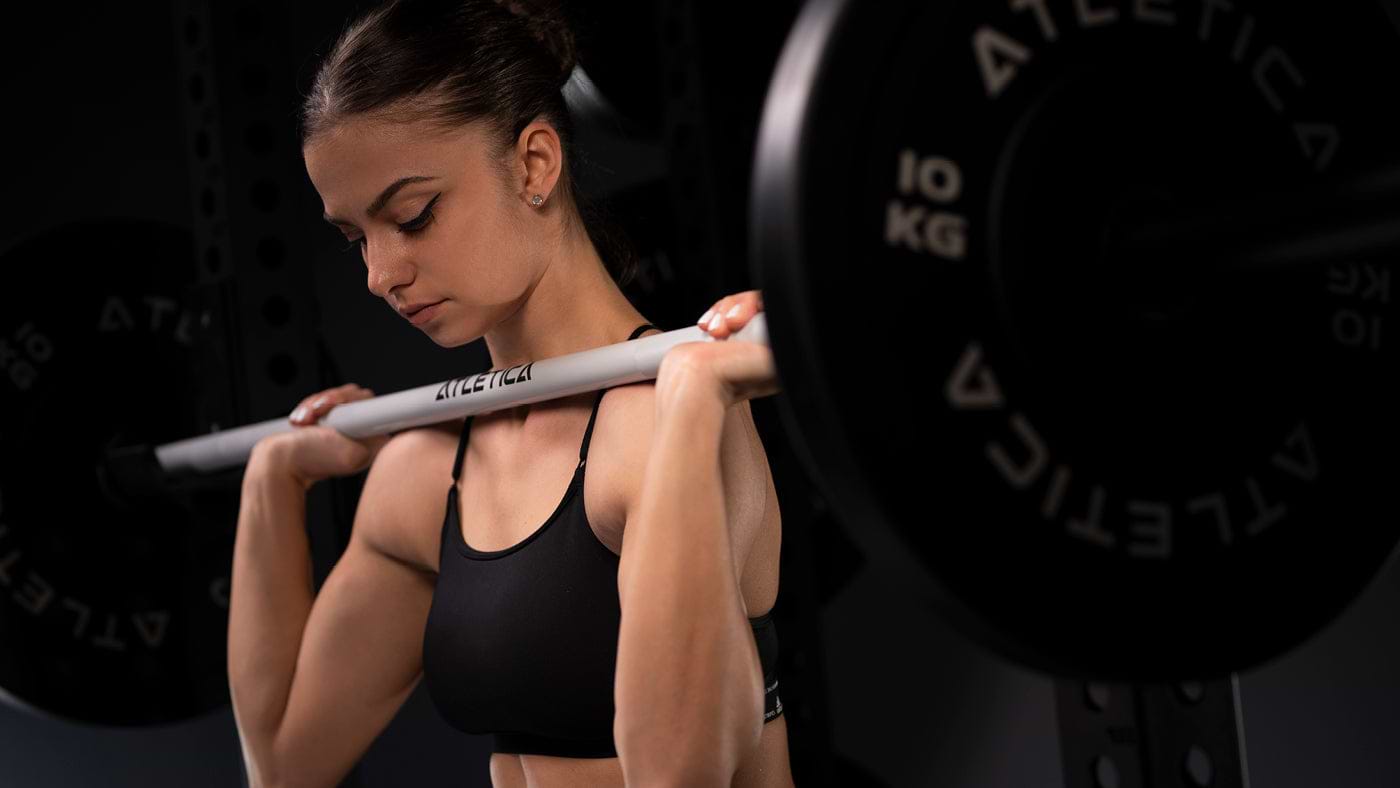
Choosing the right barbell is the most important decision you'll make for your home gym. The industry standard is the 20 kg Olympic barbell: 220 cm long with a 28 mm shaft. It fits every standard weight plate (50 mm center hole) and covers all the main lifts, from deadlifts to the bench press.
Three factors determine quality: the tensile strength of the steel (at least 190,000 PSI if you train seriously), the sleeve rotation system (bushings for powerlifting, needle bearings for dynamic Olympic lifting), and the knurling that keeps the bar locked in your hands.
For home use, a high-quality all-around bar like the ATLETICA Delta Hybrid Bar is the ideal pick: 28 mm shaft, 190,000 PSI tensile strength, and a combined bushing-and-needle-bearing design. It brings together the strengths of every discipline, and with a 1,000 kg load rating it has plenty of headroom for the progress still ahead of you.
The Short Answer: Which Barbell Is Right for You?
| Your training focus | Recommended bar | Key features |
|---|---|---|
| All-around / home gym | 20 kg Olympic bar, 28–28.5 mm shaft | Versatile, suited to every main lift |
| Powerlifting | Power bar, 29 mm shaft | Very stiff, minimal spin, high load rating |
| Olympic weightlifting | Weightlifting bar, 28 mm shaft, needle bearings | Fast spin for the snatch and clean & jerk |
| Limited space / compact | Shorter bar (e.g. ATLETICA Zeta, 187 cm) | Same quality in less space |
| Specialty training | EZ curl bar or trap bar | Easier on the wrists for curls; purpose-built for deadlifts |
The 5 Buying Criteria That Matter, in Detail
1. Dimensions and Standards: Does Your Equipment Fit Together?
Compatibility comes first. The vast majority of adult barbells follow the Olympic standard:
- Overall length: 220 cm (men's) / 201 cm (women's).
- Weight: 20 kg (men's) / 15 kg (women's).
- Shaft (grip) diameter: 28–29 mm (men's) / 25 mm (women's).
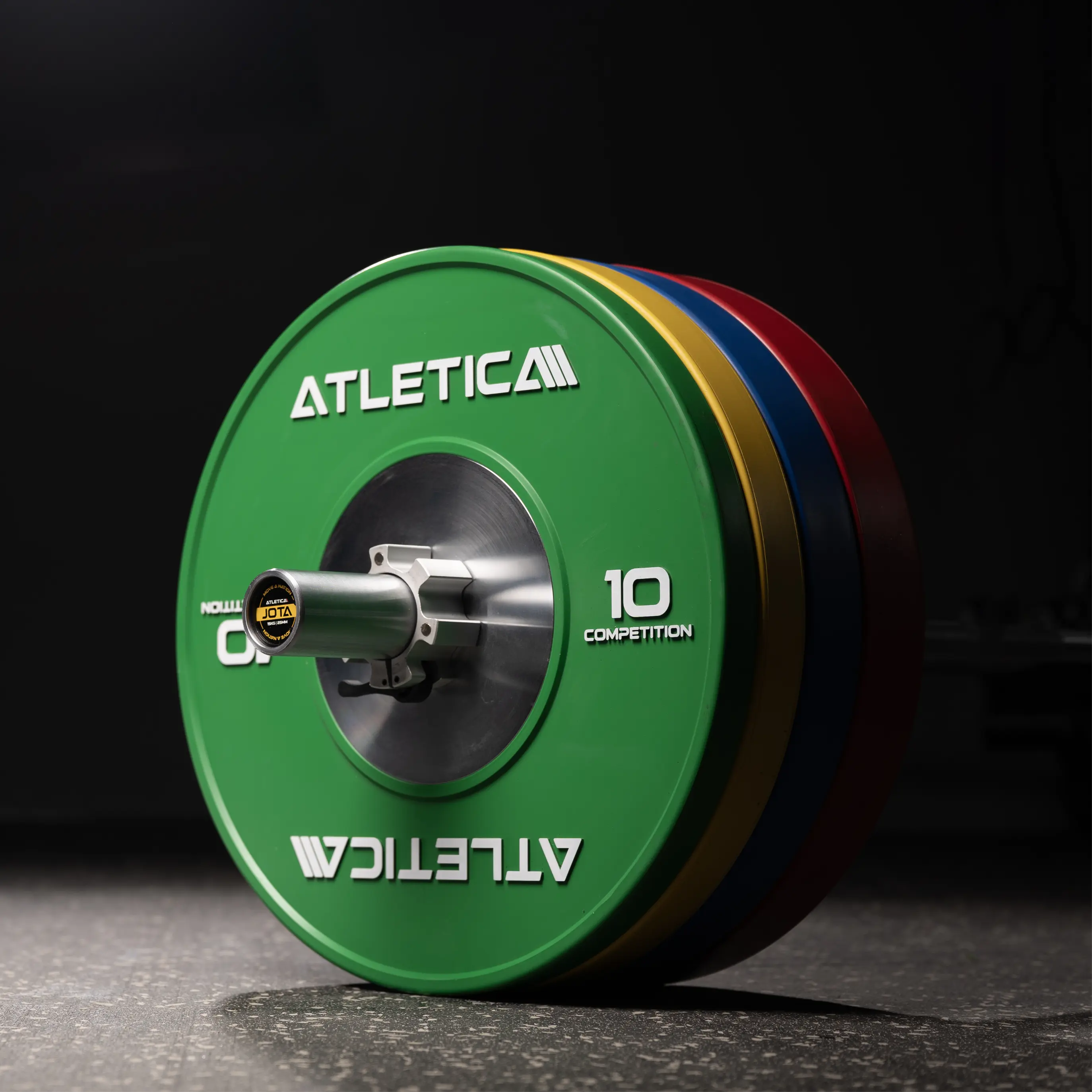
- Sleeve diameter (where the plates go): 50 mm. Make sure your weight plates have a 50 mm center hole too!
If you're short on space, ATLETICA offers the Zeta Hybrid Bar (187 cm long), which is noticeably more compact while still delivering 190,000 PSI and a 28 mm shaft.
2. Tensile Strength: The Core of Durability
Tensile strength tells you how much load the steel can take before it permanently bends. This number is critical for how long the bar lasts.
- Entry-level bars: 120,000–150,000 PSI.
- Good training bars: 190,000 PSI (this is the number to aim for).
- High-end bars: Up to 215,000 PSI.
The ATLETICA Delta Hybrid Bar and Zeta Hybrid Bar are tested to 190,000 PSI, so they're built for intense sessions with heavy weight.
3. Bearings: The "Spin" of the Bar
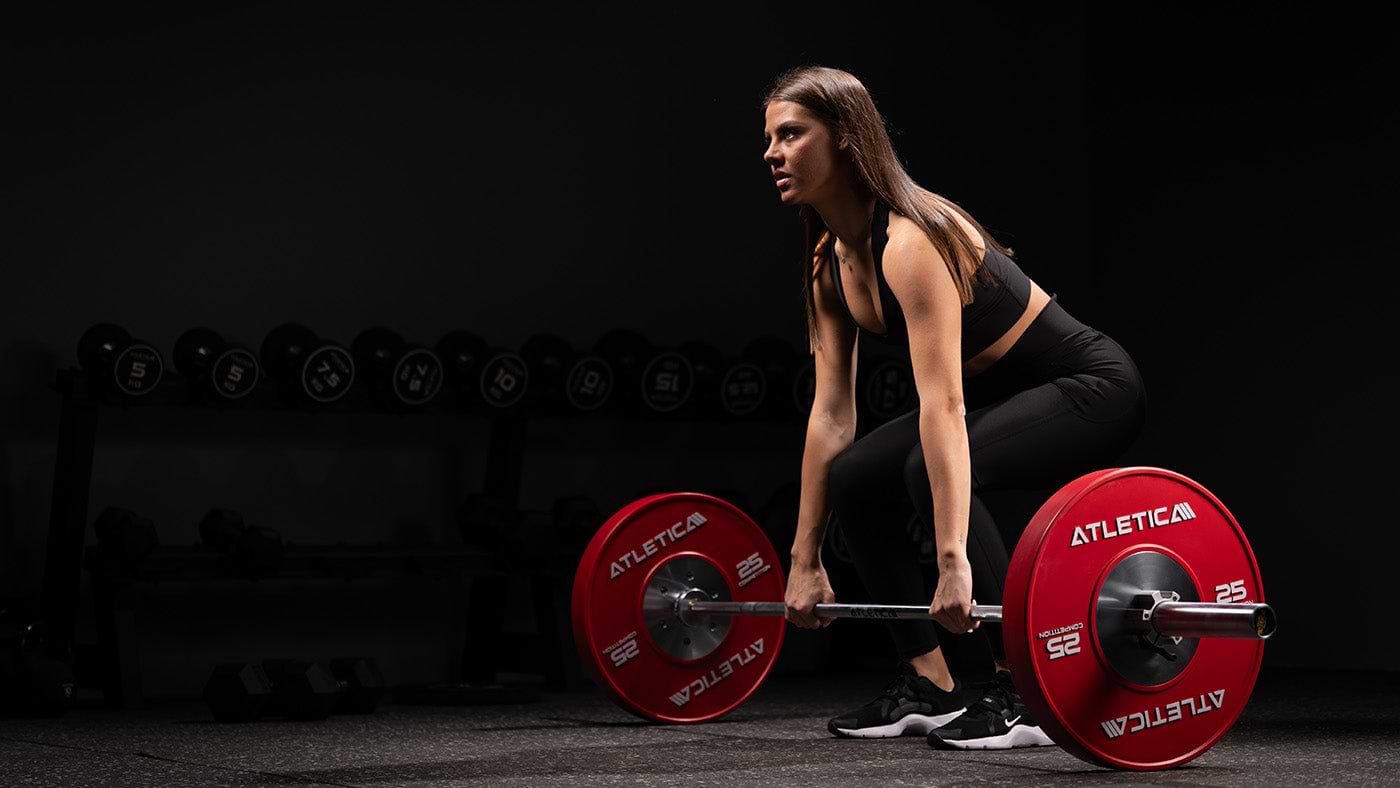
The sleeves you slide the plates onto rotate. That takes stress off your wrists, especially during dynamic lifts. There are two systems:
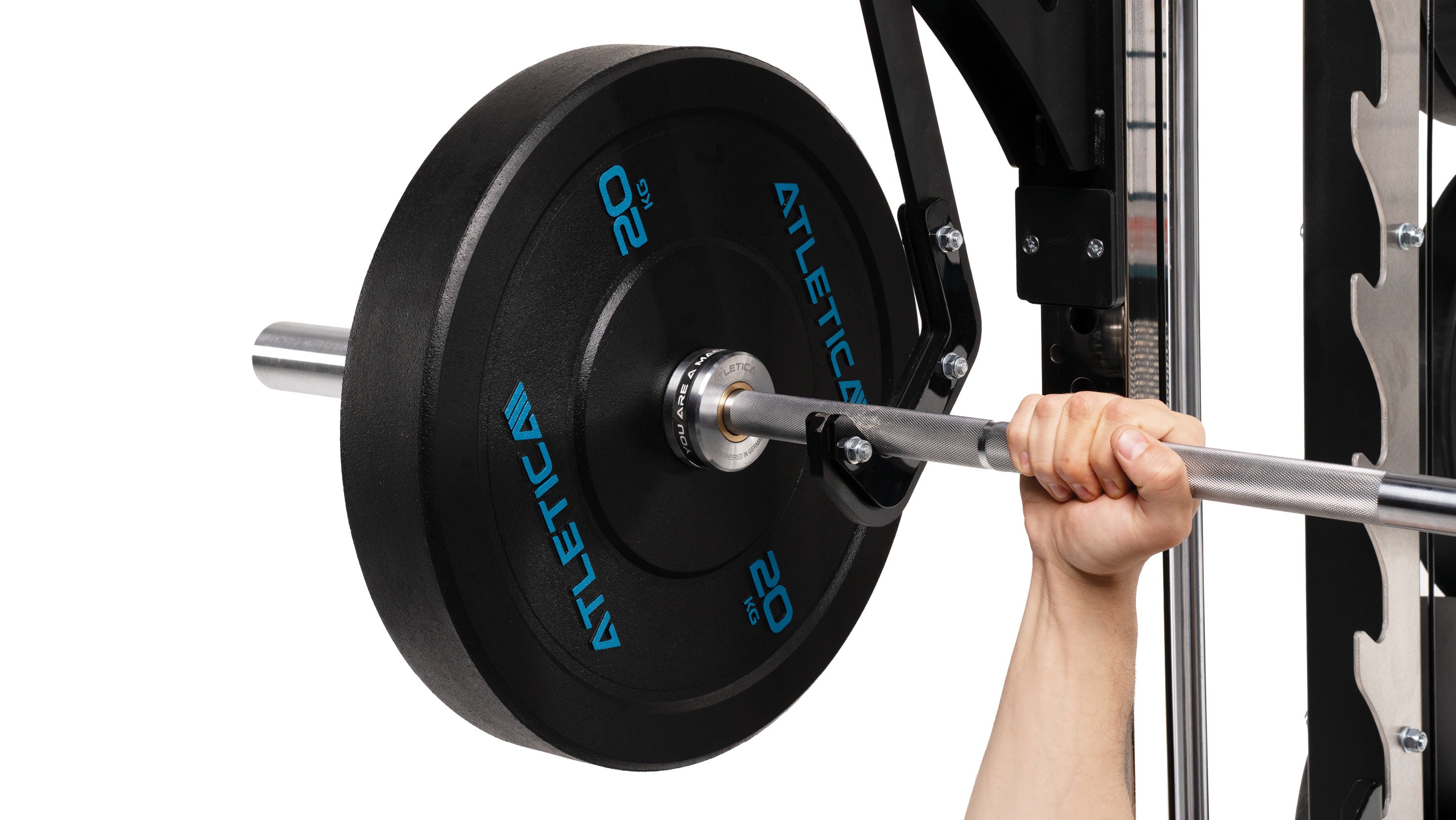
- Bushings: Usually bronze. They give you a smoother, more controlled rotation. They're extremely durable, low-maintenance, and ideal for powerlifting (deadlifts, squats, bench press) and general gym use. For 90% of home lifters, this is the sensible choice.
- Needle bearings: Deliver a faster, freer spin. They're the first choice for Olympic weightlifting, where explosiveness is everything.
The ATLETICA Delta Hybrid Bar combines both technologies: 20 mm copper bushings and 4 needle bearings guarantee a smooth, fast spin without sacrificing longevity.
4. Knurling & Grip Feel
The knurling (the rough pattern on the grip area) keeps the bar from slipping.
- Too smooth: The bar slips under heavy weight or with sweaty hands.
- Too aggressive: It tears up your skin.
- Just right: A medium knurl (ATLETICA calls it "volcano knurling") gives you a locked-in grip without punishing your hands.
IWF and IPF marks on the bar help you position your hands precisely and symmetrically for different lifts.
5. Finish & Material
The finish protects against rust and affects how the bar feels in your hands.
- Chrome: Classic, tough, and easy to care for. A real eye-catcher.
- Cerakote: An extremely resilient ceramic coating that comes in many colors and offers outstanding corrosion resistance. ATLETICA offers the Delta in chrome and a range of Cerakote colors.
- Black oxide: Great grip feel, but needs more upkeep.
Specialty Bars: The Right Bar for Your Exercise
Beyond the straight standard barbell, there are specialty bars:
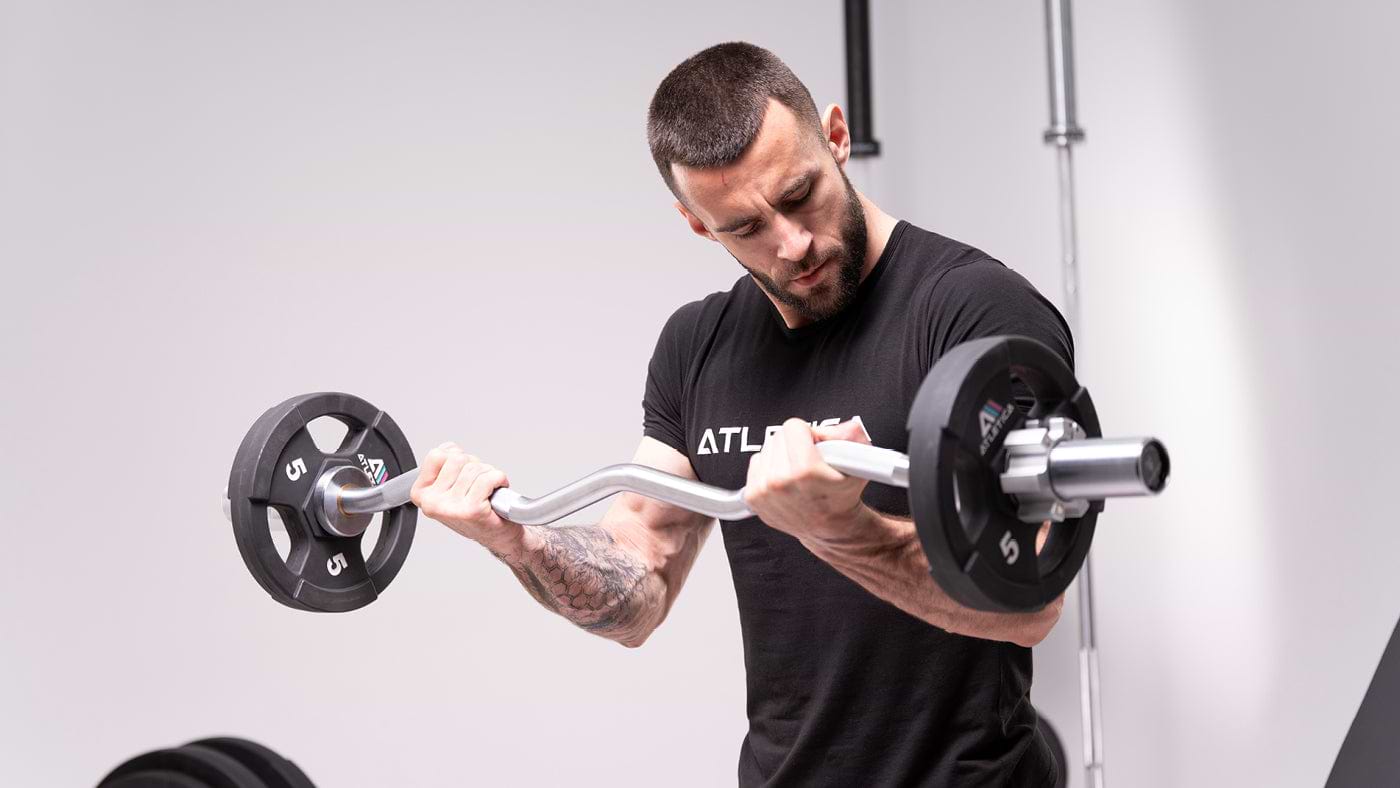
- EZ curl bar: The angled shape takes the strain off your wrists during biceps and triceps exercises.
- Trap bar / hex bar: Allows a more back-friendly deadlift, since you stand inside the bar instead of behind it.
- Dumbbell handles (like the ATLETICA L1): For single-arm work and smaller muscle groups. The L1 is 52 cm long, weighs about 6.5 kg, and is made of alloy steel with a chrome finish.
FAQ: The Most Common Barbell Questions
1. How long should my barbell be?
The standard is 220 cm (men's) and 201 cm (women's). For small spaces there are shorter, high-quality models like the ATLETICA Zeta at 187 cm. To make sure the bar also fits your rack, take a look at the ATLETICA series comparison.
2. What's the difference between a 30 mm and a 50 mm barbell?
This refers to the diameter of the sleeve that holds the weight plates. 50 mm is the Olympic standard; 30 mm is the older, narrower standard. Your plates have to match the sleeve diameter: 50 mm plates won't sit securely on a 30 mm sleeve.
3. How much weight can a barbell hold?
That depends on the quality. Good bars handle 200–300 kg, while high-end bars like the ATLETICA Delta are rated for up to 1,000 kg.
4. Are expensive barbells worth the money?
Yes. A high-quality bar with high tensile strength and good bearings won't bend, spins more smoothly, and lasts a very long time. It's one of the smartest single investments you can make in your home gym. To see why quality pays off in the long run, read Quality or Price?.
5. What do the IPF and IWF marks on the bar mean?
They're marks in the knurling that show you standardized grip positions for competition lifts like the squat (IPF) or the snatch (IWF).
Bottom Line: Your Perfect Barbell for Maximum Gains
Choosing the right barbell is a decision that will stay with you for years and thousands of reps. The go-to standard for your home gym is a 20 kg Olympic bar with 50 mm sleeves. You'll find all models compared side by side in our barbell comparison.
For the serious lifter who doesn't want to compromise, the ATLETICA Delta Hybrid Bar is the ultimate answer. It pairs German engineering with the demands of every strength discipline. The combination of 190,000 PSI tensile strength, a 1,000 kg load rating, and the hybrid bearing system (copper bushings plus needle bearings) makes it the perfect, future-proof training partner.
If space is tight, the ATLETICA Zeta Hybrid Bar delivers premium quality in a compact 187 cm package. As a dumbbell alternative, the chrome ATLETICA L1 with its high-quality ball bearings is an excellent choice for precise single-arm training.
Invest in quality. Your body and your progress will thank you. You'll find every barbell in the ATLETICA online shop.