





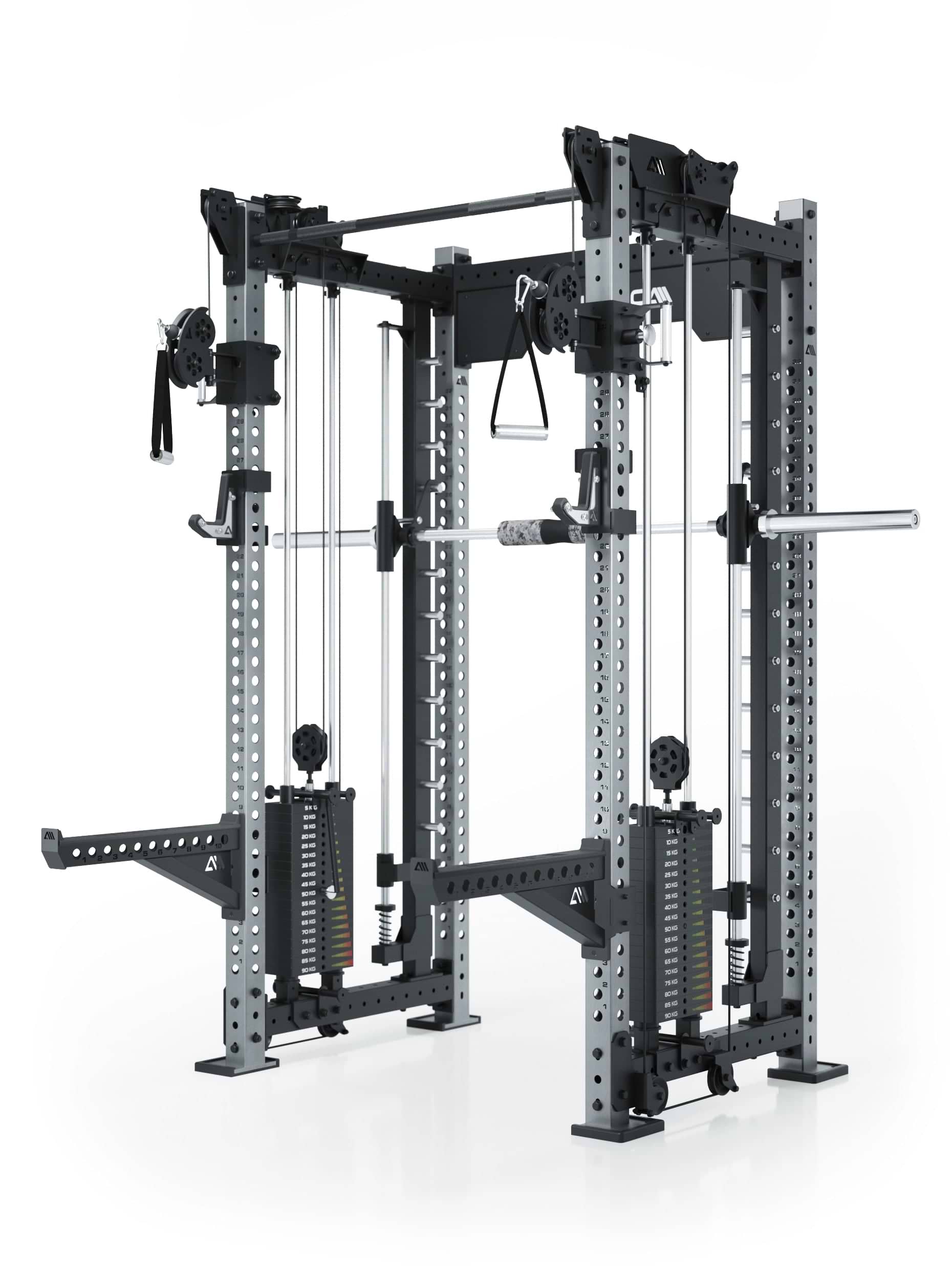







A Power Rack is the most expensive and most important single purchase in most Home Gyms. Get this decision wrong and you'll spend years being annoyed by wobble, dead-end upgrade paths or safety shortcomings. In 2026 there are clear criteria that decide quality. Here are the 8 most important buying criteria and the mistakes you should absolutely avoid.
The clear recommendation up front
In 2026, don't buy a Power Rack with a profile smaller than 70×70 mm or a wall thickness under 2–3 mm if you want to train seriously and for the long haul.
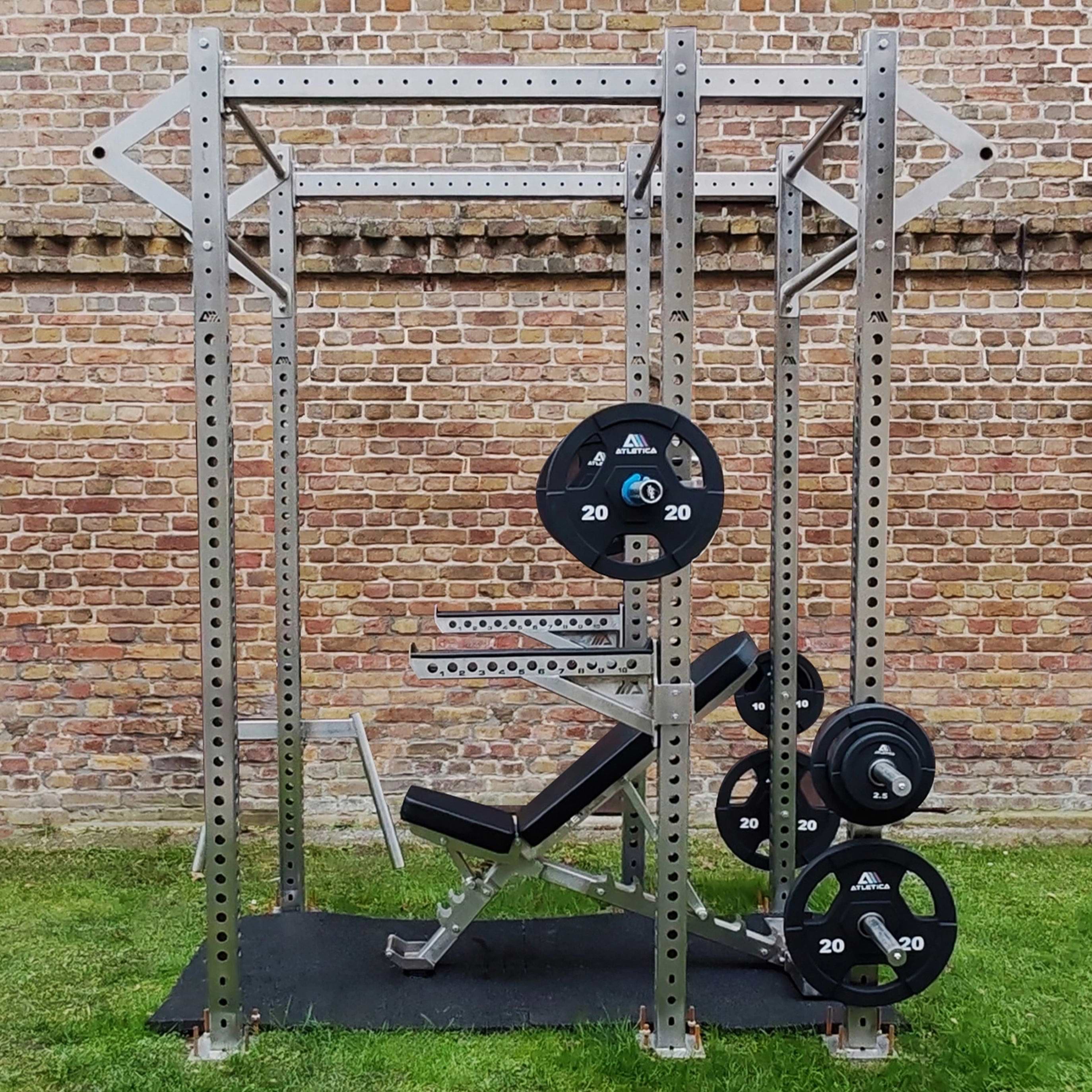
Modular systems with a standardized hole pattern (like the Atletica R8 series) are clearly superior to most cheap fixed racks, because they grow with you and hold their value far better.
The 8 most important buying criteria for 2026
1. Profile size and wall thickness (stability)
By far the most important criterion.
- Good: 70×70 mm or 75×75 mm with 2–3 mm wall thickness
- Very good: 75×75 mm with 3 mm (Atletica R8)
- Weak: 50×50 mm or thinner profiles
The thicker and stiffer the profile, the less the rack flexes under heavy squats and the safer it feels.
2. Hole pattern and pin diameter
A standardized hole pattern (usually 50 mm or 25 mm center spacing) decides how compatible the rack is with attachments.
Westside spacing or a tighter pattern in the bench zone is a big plus for precise settings.
3. Rack height
- Measure your ceiling height precisely.
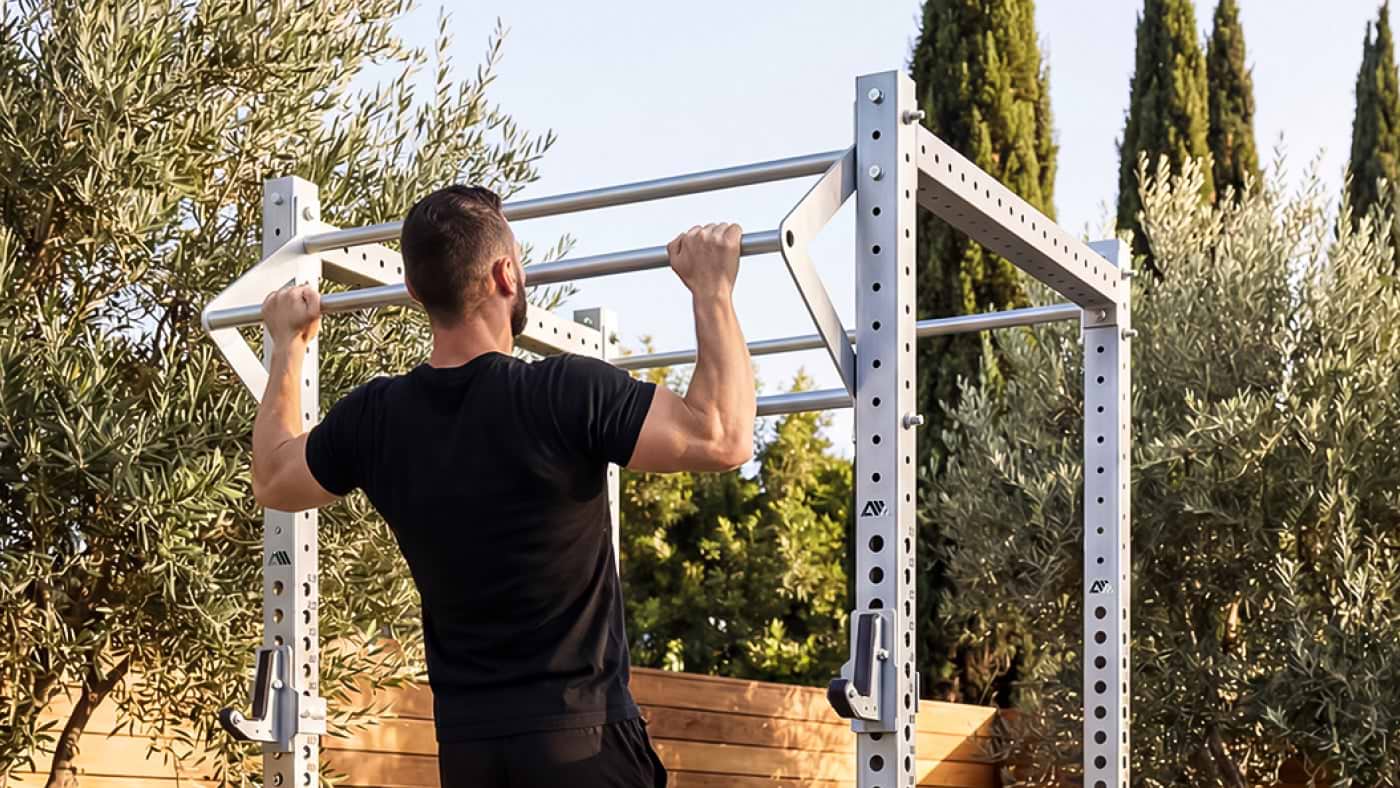
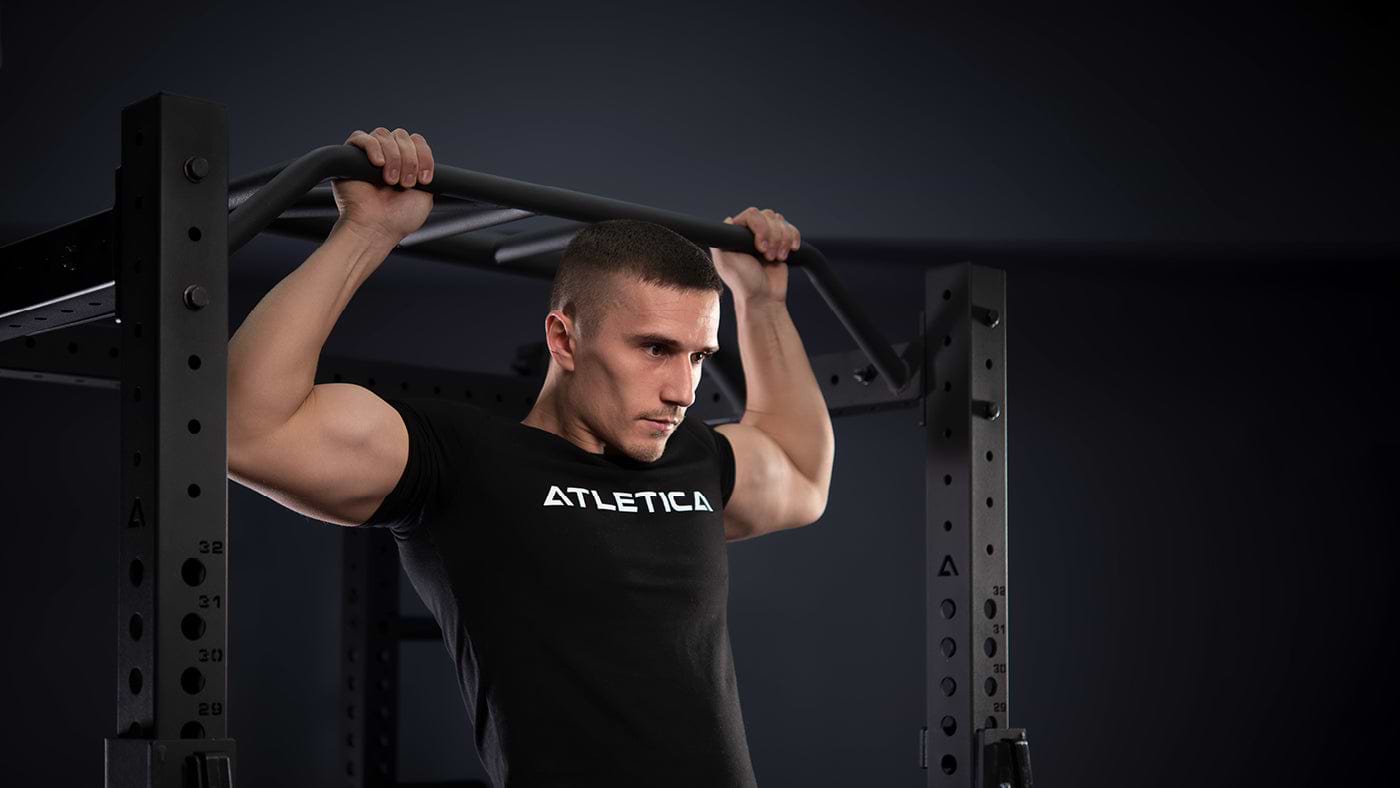
- For pull-ups you usually need at least 220–230 cm of total height.
- In rooms with a ceiling under 220 cm, lower models or half racks are often the better choice.
4. Footprint and floor space
Don't just look at the rack's own footprint — think about the movement space you need all around it. Plenty of people underestimate how much room bench press and deadlifts take up.
5. J-Hooks and Safety Spotter Arms
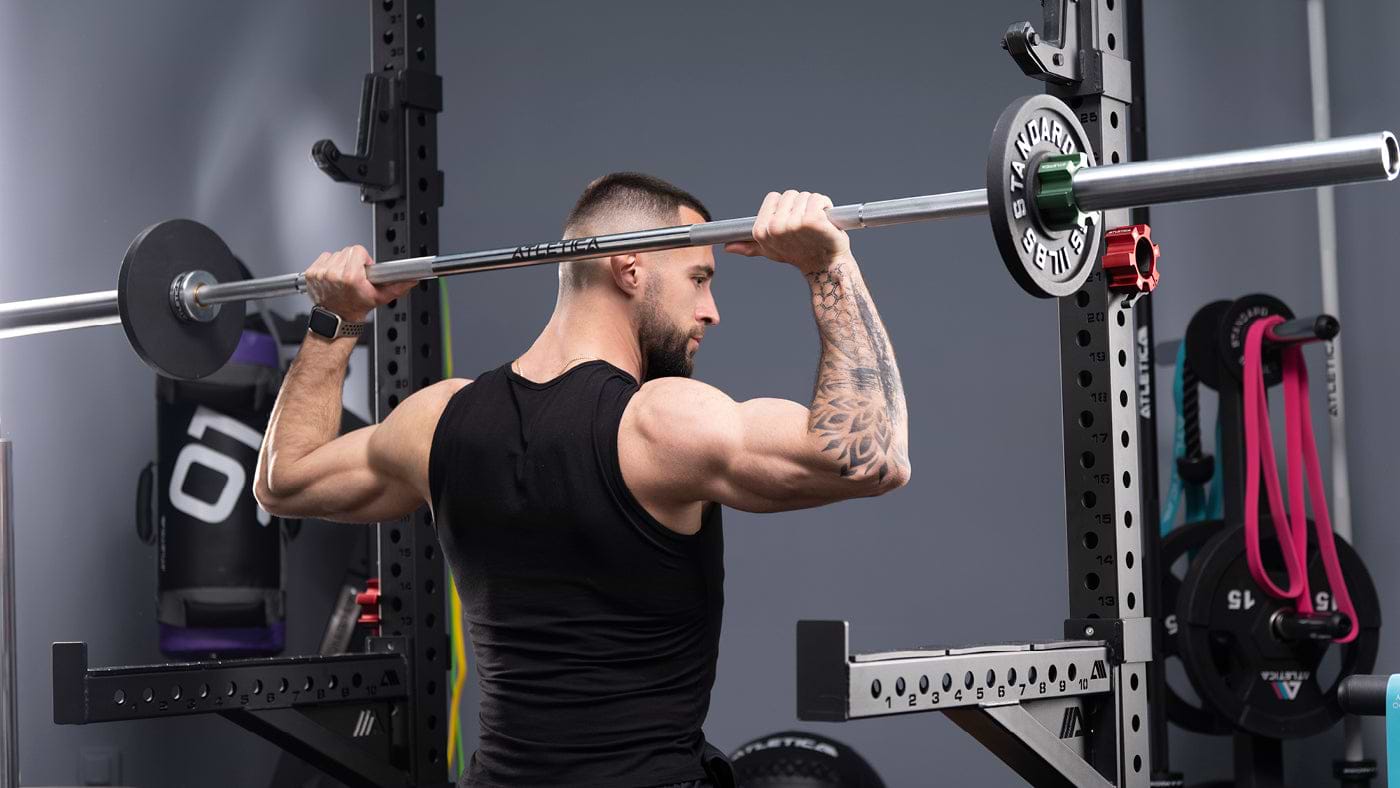
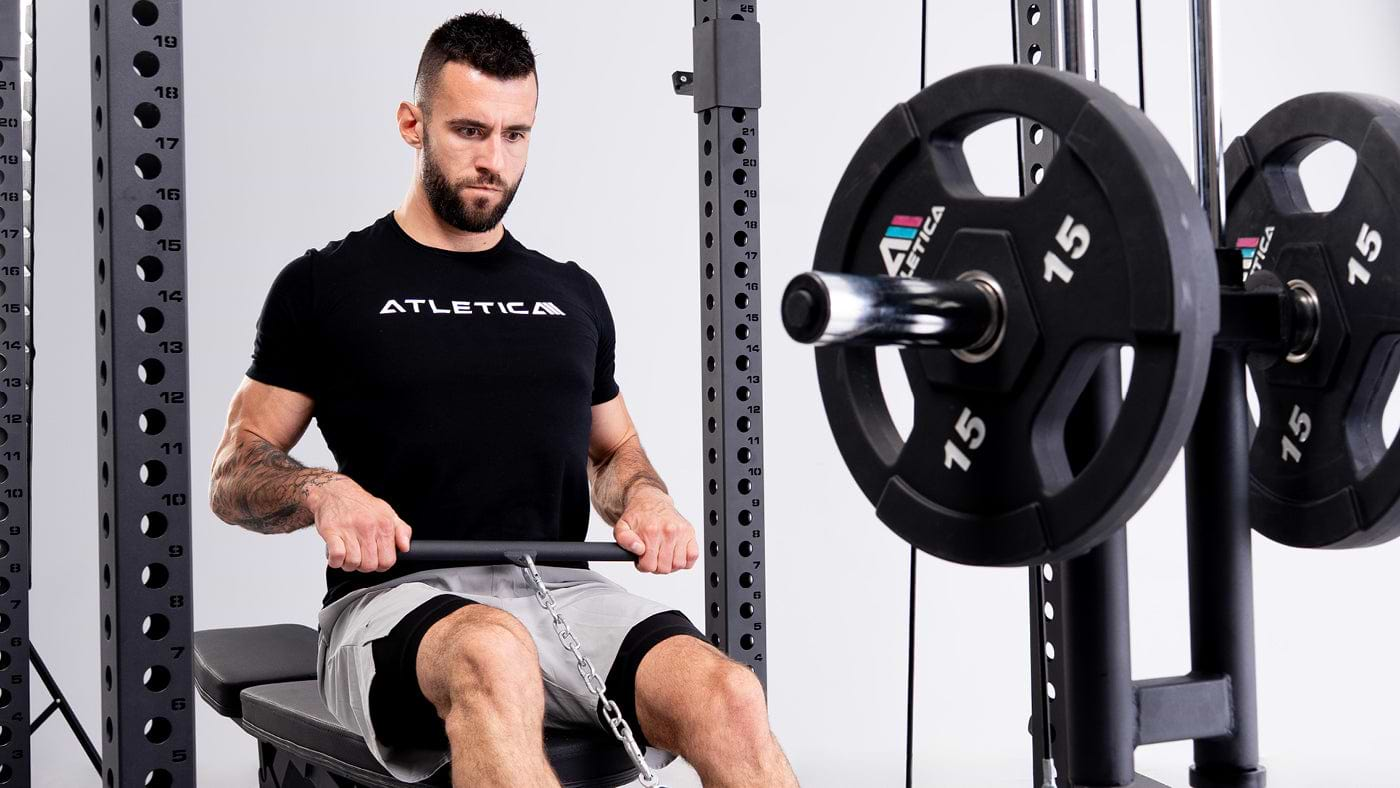
High-quality, thick-walled J-Hooks and adjustable Safety Spotter Arms are non-negotiable. Cheap thin hooks bend or slip.
6. Expandability (modularity)
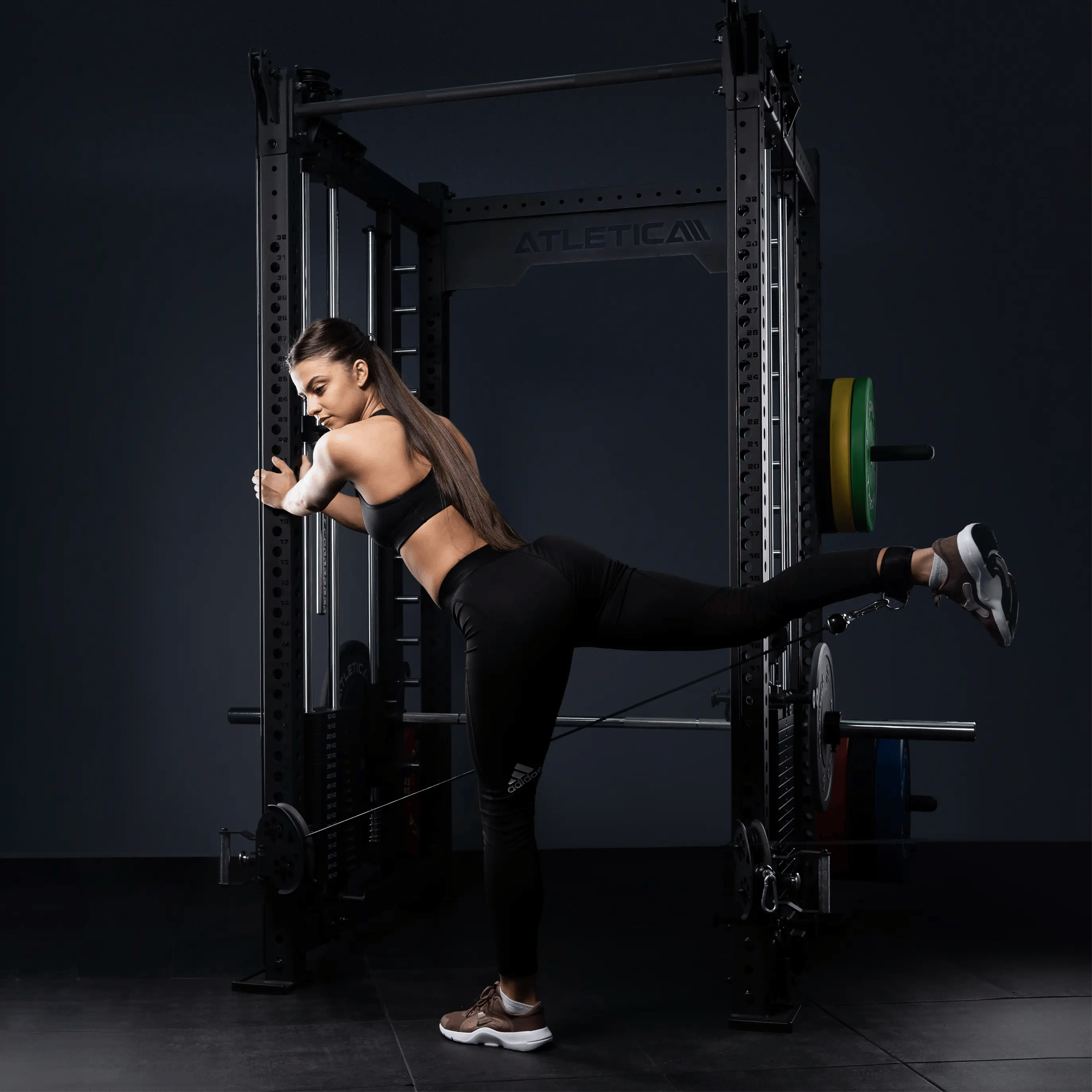
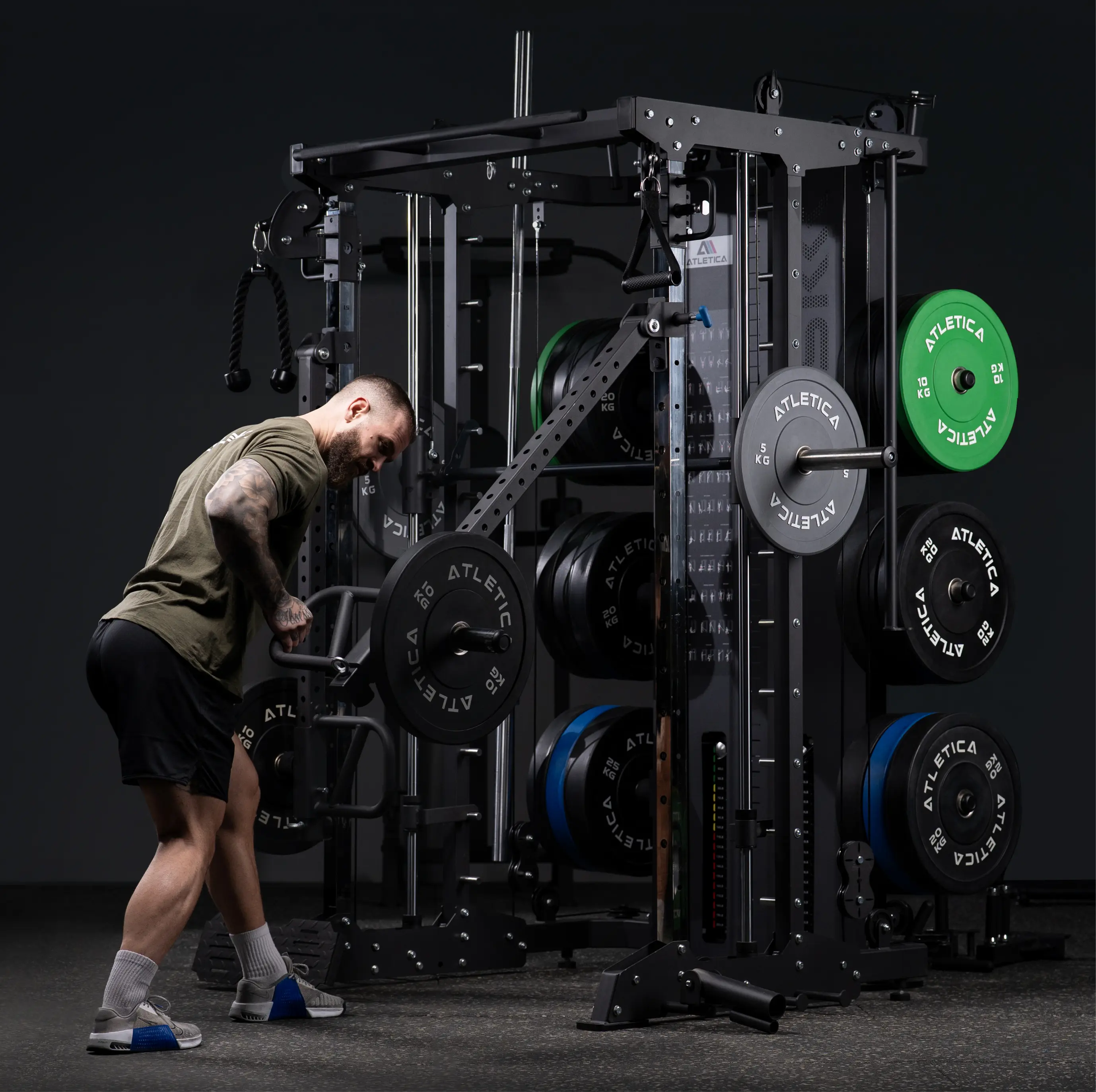
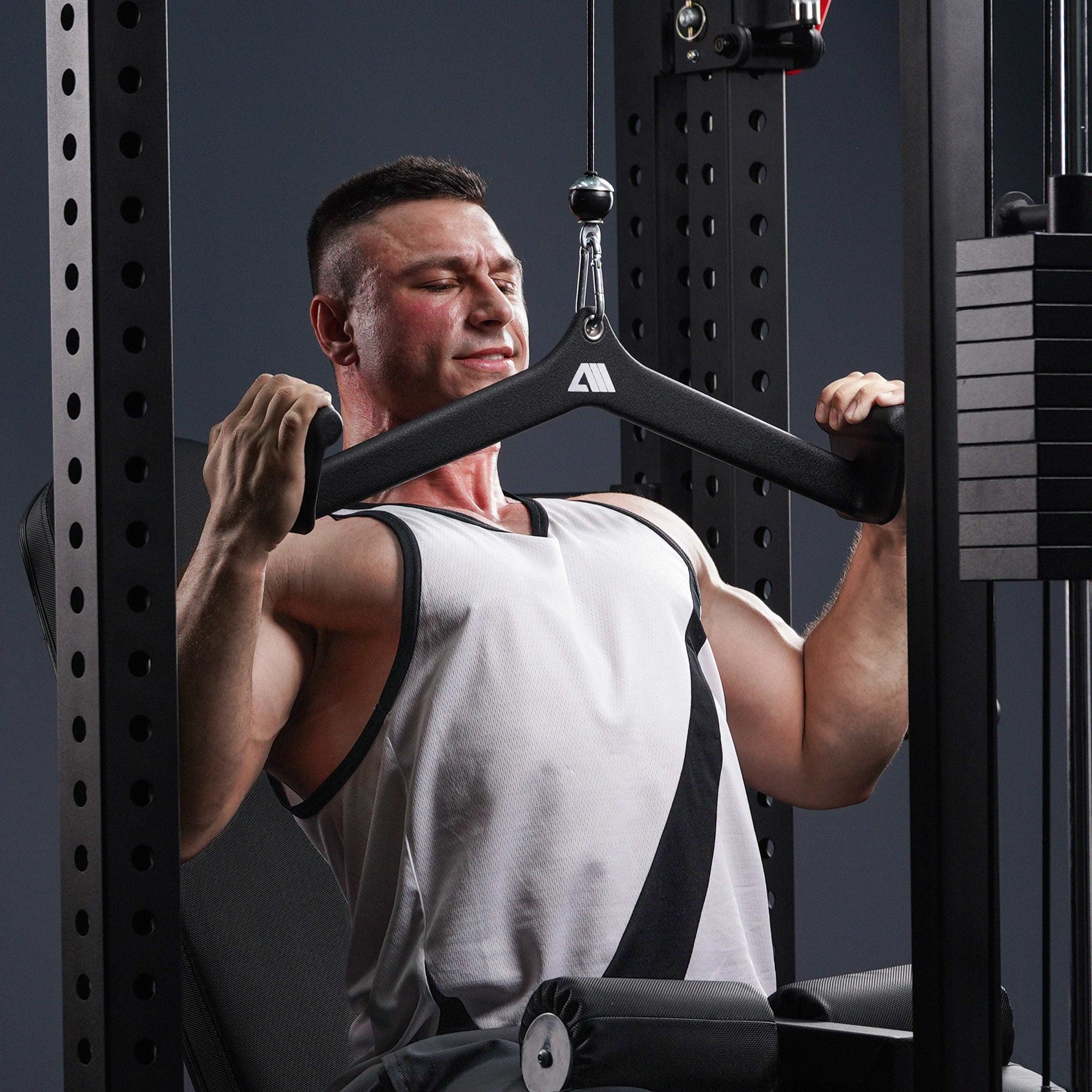
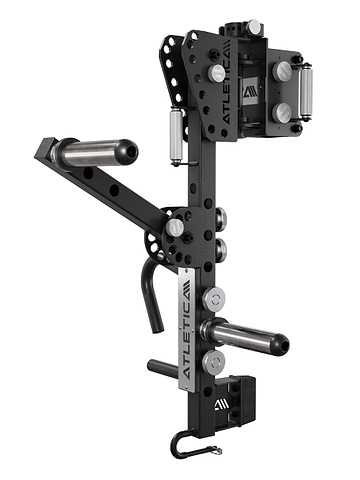
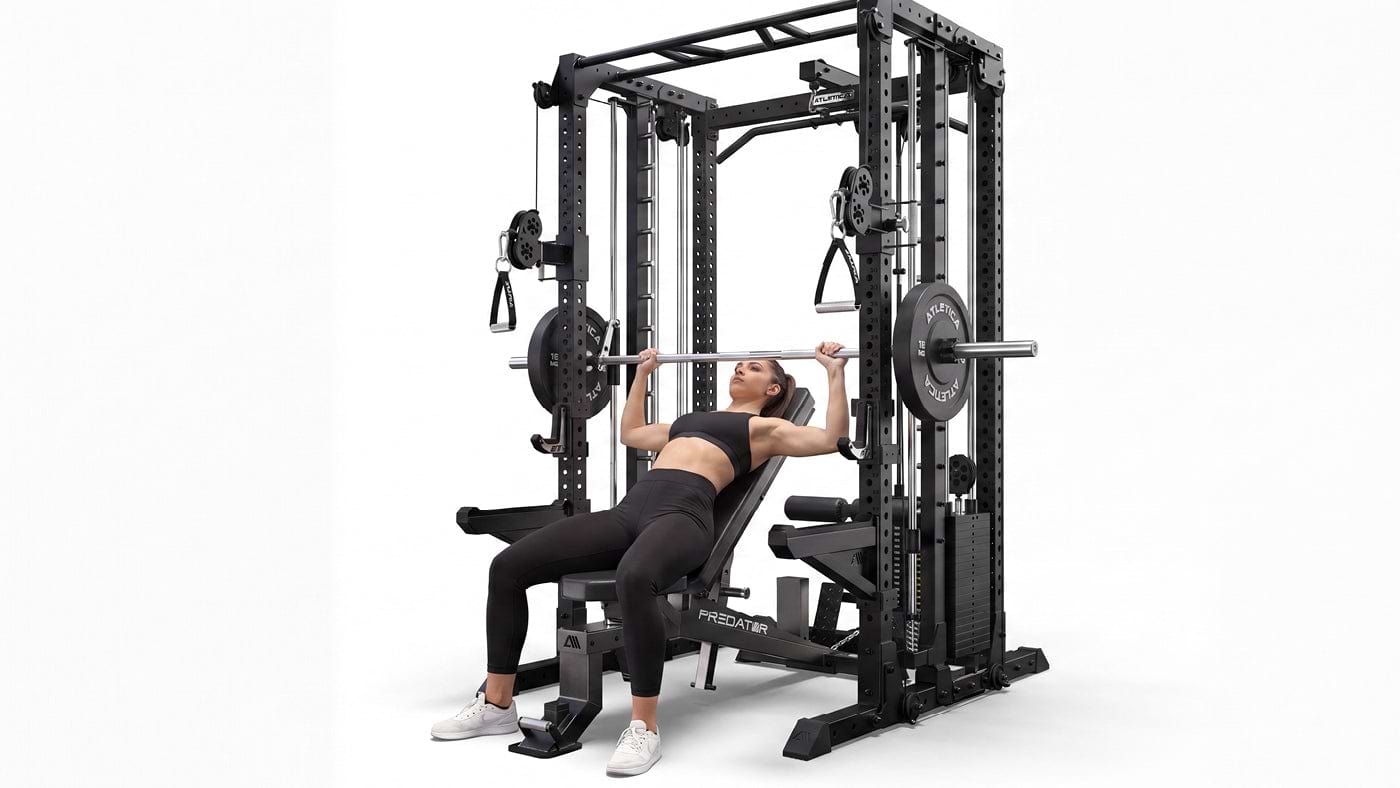
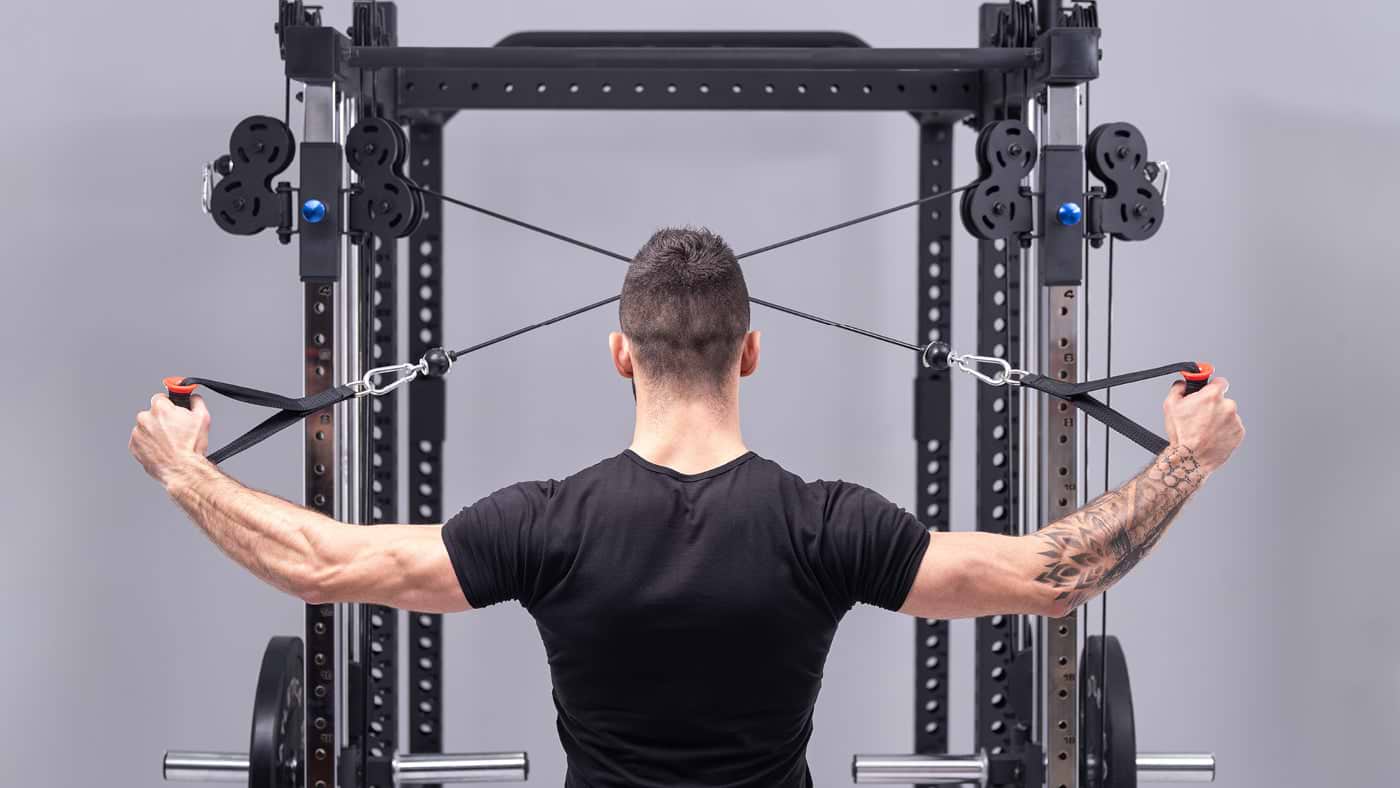
Can you add a Lat Pulldown, cable crossover, dip bar, landmine or weight storage later on?
Modular systems (the R8 in particular) keep their value and grow with your demands.
7. Surface finish and corrosion protection
Powder coating is the minimum. For outdoor use you need hot-dip galvanizing or stainless steel.
8. Warranty and load ratings
Serious manufacturers state realistic static and dynamic load values and offer long warranties on the frame (ideally lifetime).
The most common mistakes when buying a Power Rack
|
Mistake |
Why it's a problem |
Better solution |
|
Buying too thin a profile |
Wobbles and feels unsafe |
At least 70×70 mm / 2–3 mm |
|
Looking only at the price |
Expensive follow-up costs because attachments don't exist |
Prioritize modularity and quality |
|
Not measuring ceiling height |
Pull-ups impossible or the rack doesn't fit |
Measure precisely beforehand |
|
Not planning for Safety Spotter Arms |
Significantly higher risk of injury |
Always buy with good safeties |
|
Ignoring the hole pattern |
Attachments won't fit later |
Choose a standardized system |
|
A rack too small for your exercises |
Restricted freedom of movement |
Choose enough interior width and height |
|
A cheap no-name rack with no warranty |
Poor build quality and no support |
Brands with a long frame warranty |
Atletica R7 vs. R8 – a quick decision guide
- R7 series: Excellent value for money, stable enough for most ambitious athletes, a little cheaper.
- R8 series: Premium stability (75×75 mm / 3 mm), maximum modularity, the better long-term investment and higher load capacity.
For most people who want to train and expand over the long term, the R8 is clearly the better choice.
Extra tips for buying in 2026
- Factor attachments in from the start (especially the Lat Pulldown and weight storage).
- Check that the rack can be bolted to the floor, even if you don't do it right away.
- Find out whether J-Hooks and safeties are included or cost extra.
- Read current user reports on stability under heavy loads (from 150–200 kg upwards).
Frequently asked questions about buying a Power Rack
How much should a good Power Rack cost in 2026?
Solid entry-level models start at around €400–700. High-quality modular systems sit well above that, but they last a lifetime and can be expanded.
Do I really need a 75×75 mm rack?
Not necessarily, but once you're training seriously with higher loads you'll clearly notice the difference in stability and in how safe it feels.
Is a half rack enough?
For many people, yes – especially if space is tight. A full Power Rack does offer more safety and a wider range of exercises, though.
Can I upgrade a cheap rack later?
Usually only to a very limited extent. It's better to go for a modular system from the start.
How important is the warranty?
Very important. A lifetime frame warranty (as with Atletica) shows the manufacturer stands behind the stability of the product.
Key Takeaways
- Stability (profile size + wall thickness) is the single most important criterion.
- Modularity determines long-term usefulness and value.
- Measure your ceiling height and available space precisely before you buy.
- Don't skimp on J-Hooks and Safety Spotter Arms.
- The most common mistakes are profiles that are too thin, no room to expand and sloppy space measurement.
- For most ambitious users, a modular system like the R8 series is the smartest investment in 2026.
Your next step
Want to buy a Power Rack that won't annoy you in two years' time?
Compare the current Atletica R7 and R8 models against the 8 criteria above. With the lifetime steel warranty and the high level of modularity, you're laying a future-proof foundation.
Book a free consultation and have your ideal rack setup planned out, attachments included.