








This is one of the most common questions we get:
"Is a cheap power rack for €400–700 enough, or should I rather invest straight away in a premium model?"
The short and honest answer is:
For most people, a premium power rack is clearly more worthwhile in the medium to long term - above all for reasons of safety and durability. But there are also cases where a cheap model can be okay.
Here's the direct, no-frills comparison.
Cheap power rack vs. premium – A direct comparison
|
Criterion |
Cheap power rack (€300–800) |
Premium power rack (e.g. Atletica R8) |
Winner |
|
Steel thickness & stability |
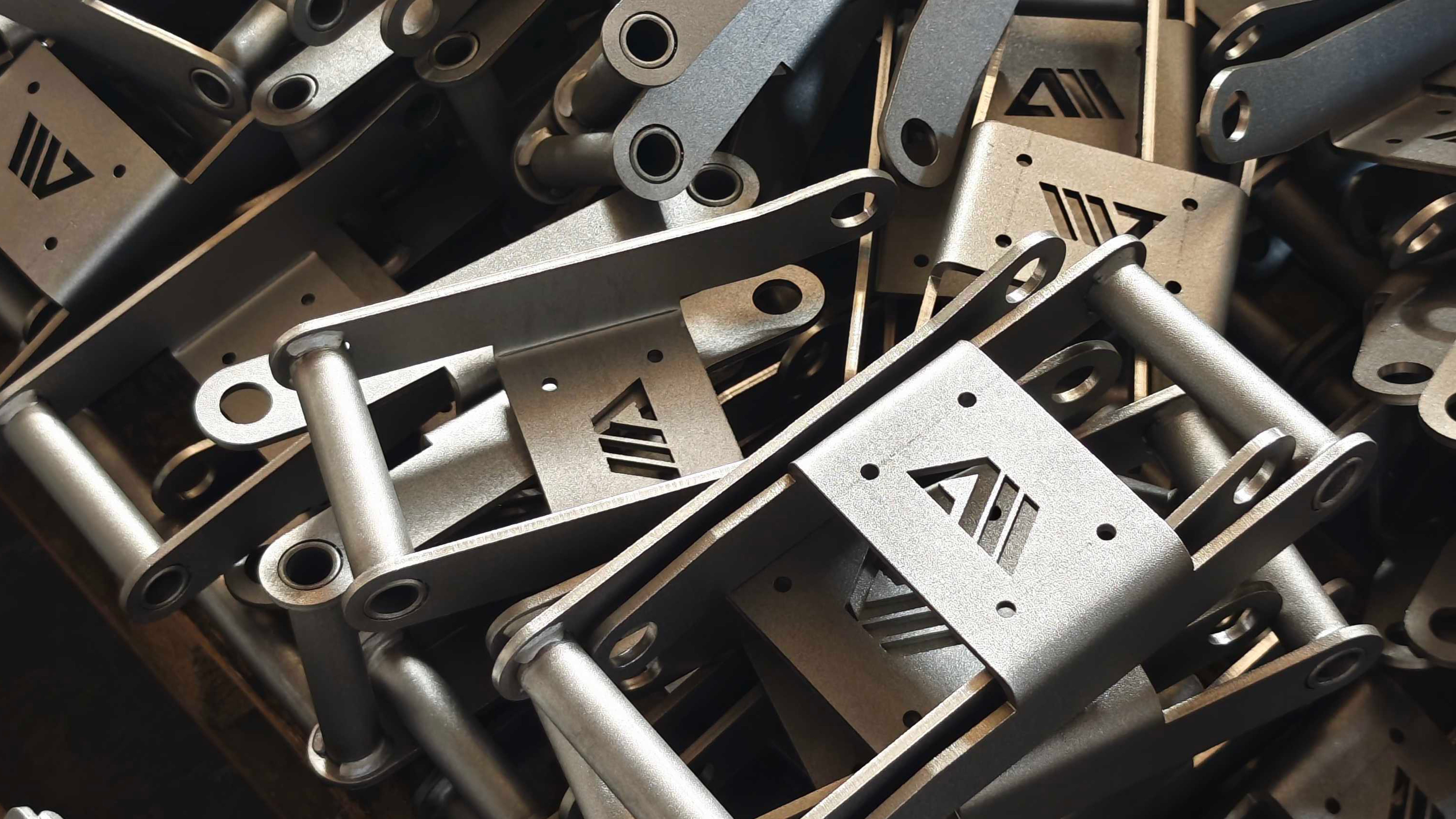
Usually 1.5–2 mm, often only 50×50 mm |
2–3 mm, 70–75 mm profiles |
Premium |
|
Safety (Spotter Arms) |
Often weak or poorly made |
Very sturdy and well thought out |
Premium |
|
Hole pattern & fit accuracy |
Imprecise, irregular |
Precise (usually 25 mm pins, 50 mm pattern) |
Premium |
|
Durability |
1–3 years with regular training |
8–15+ years |
Premium |
|
Expandability |
Usually little to none |
High (especially the R8 series) |
Premium |
|
Resale value |
Very low |
Good to very good |
Premium |
|
Assembly & build quality |
Often poorly welded, sharp edges |
Clean workmanship, good instructions |
Premium |
|
Price |
Significantly cheaper |
2–4× as expensive |
Cheap |
|
Safety risk with heavy weights |
High |
Very low |
Premium |
When a cheap power rack can make sense
A cheap model can be okay in the following cases:
- You're an absolute beginner and want to first test whether strength training is really for you.
- You train very lightly and irregularly (e.g. only 1–2× a week with light weights).
- You have an extremely tight budget and consciously accept the risk.
- You only want to use the rack for 1–2 years and plan to upgrade afterward anyway.
Important: Even with cheap models you should at least look for reasonable Spotter Arms and a load-bearing construction. Many no-name racks in the lower price segment already become wobbly or dangerous at 80–100 kg+ per side.
When you're better off investing directly in premium
You should rather go for a premium model (e.g. Atletica R8) if:
- You want to train seriously and regularly (longer than 1–2 years).
- You want to move heavy weights in the medium to long term.
- You train alone (safety is then especially important).
- You value durability and a good resale value.
- You want to retrofit accessories later (modular systems like R8 have a clear advantage here).
- You're building a home gym that should last longer than just a few years.
In these cases you often even save money in the long run, because you don't have to buy a new rack after 2–3 years.
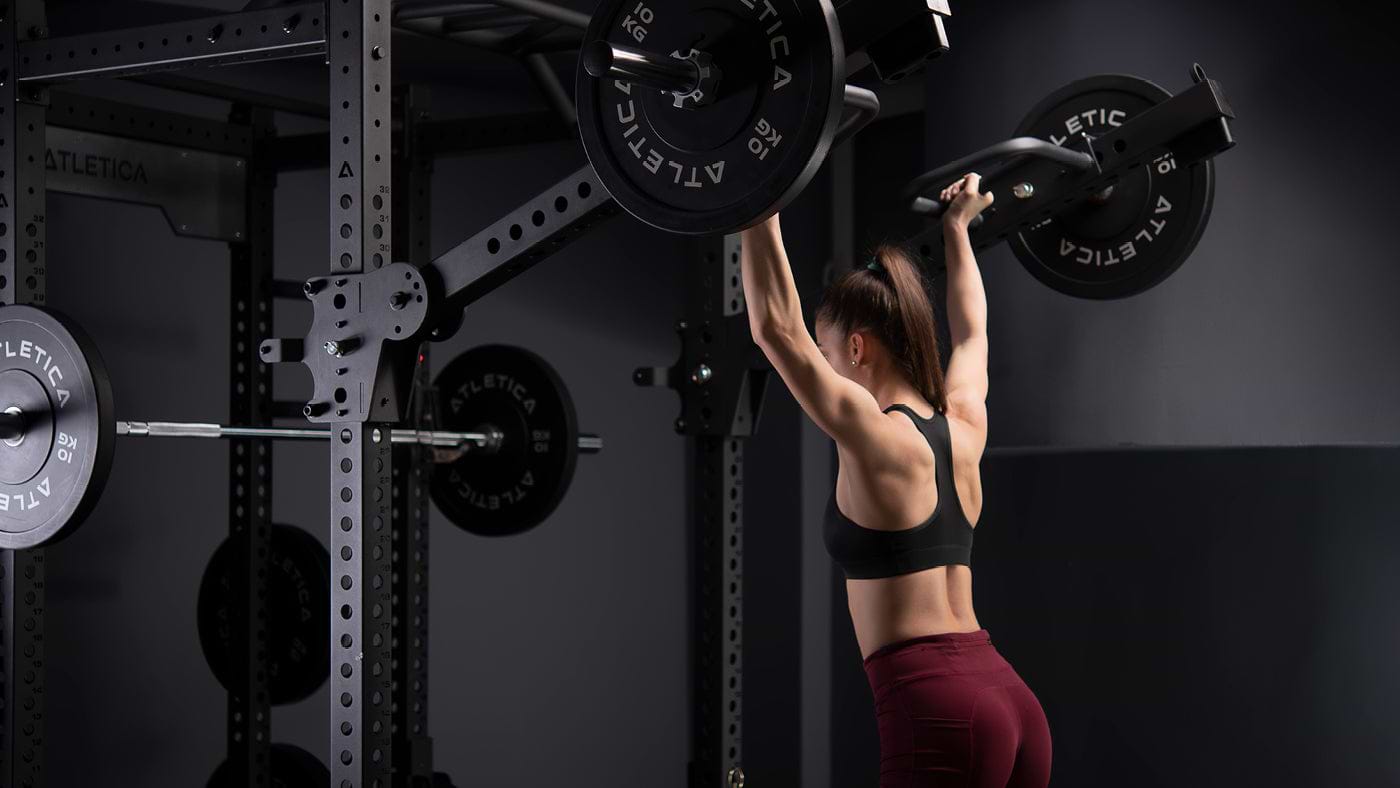
Atletica R8 vs. cheap no-name racks
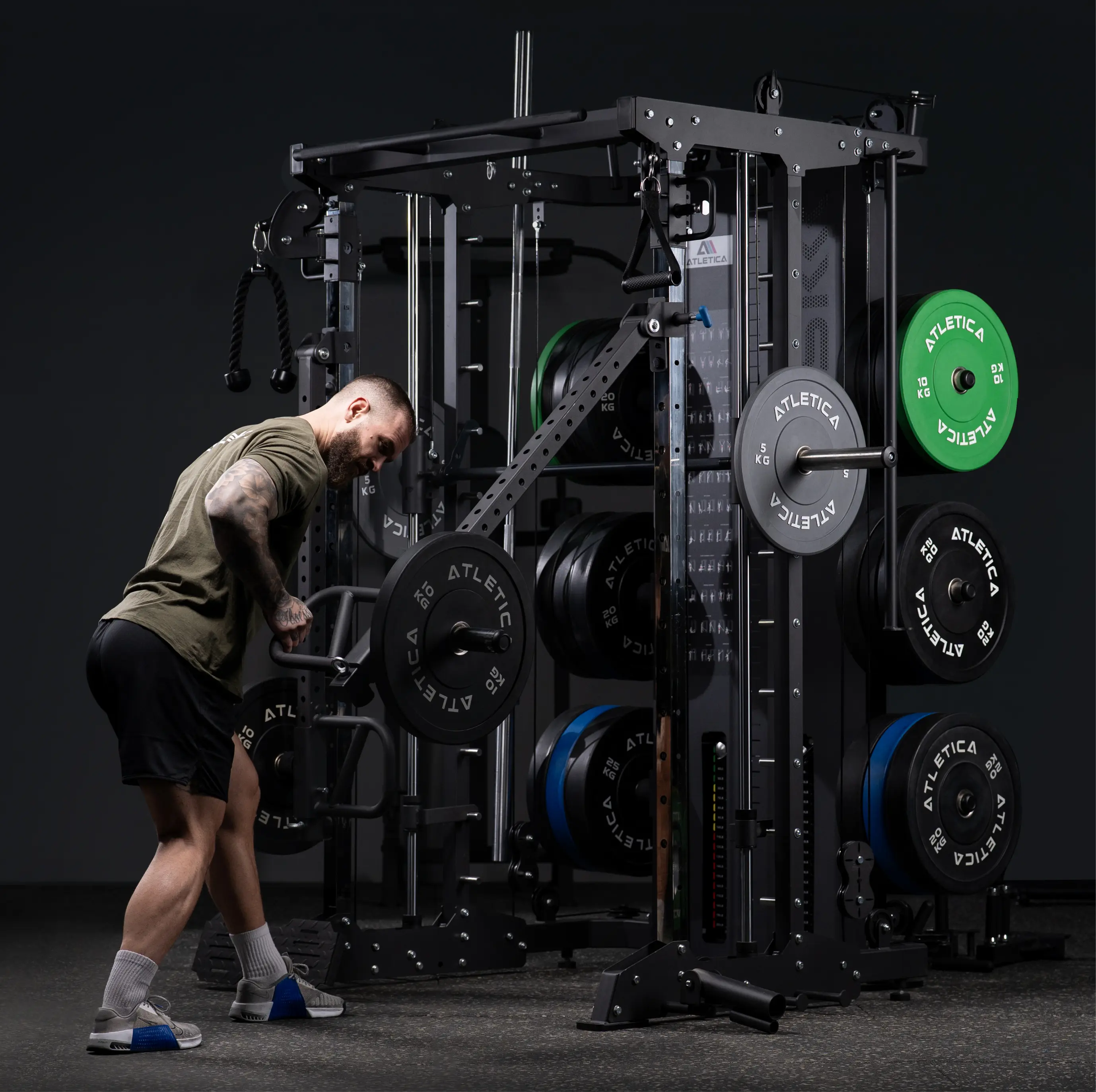
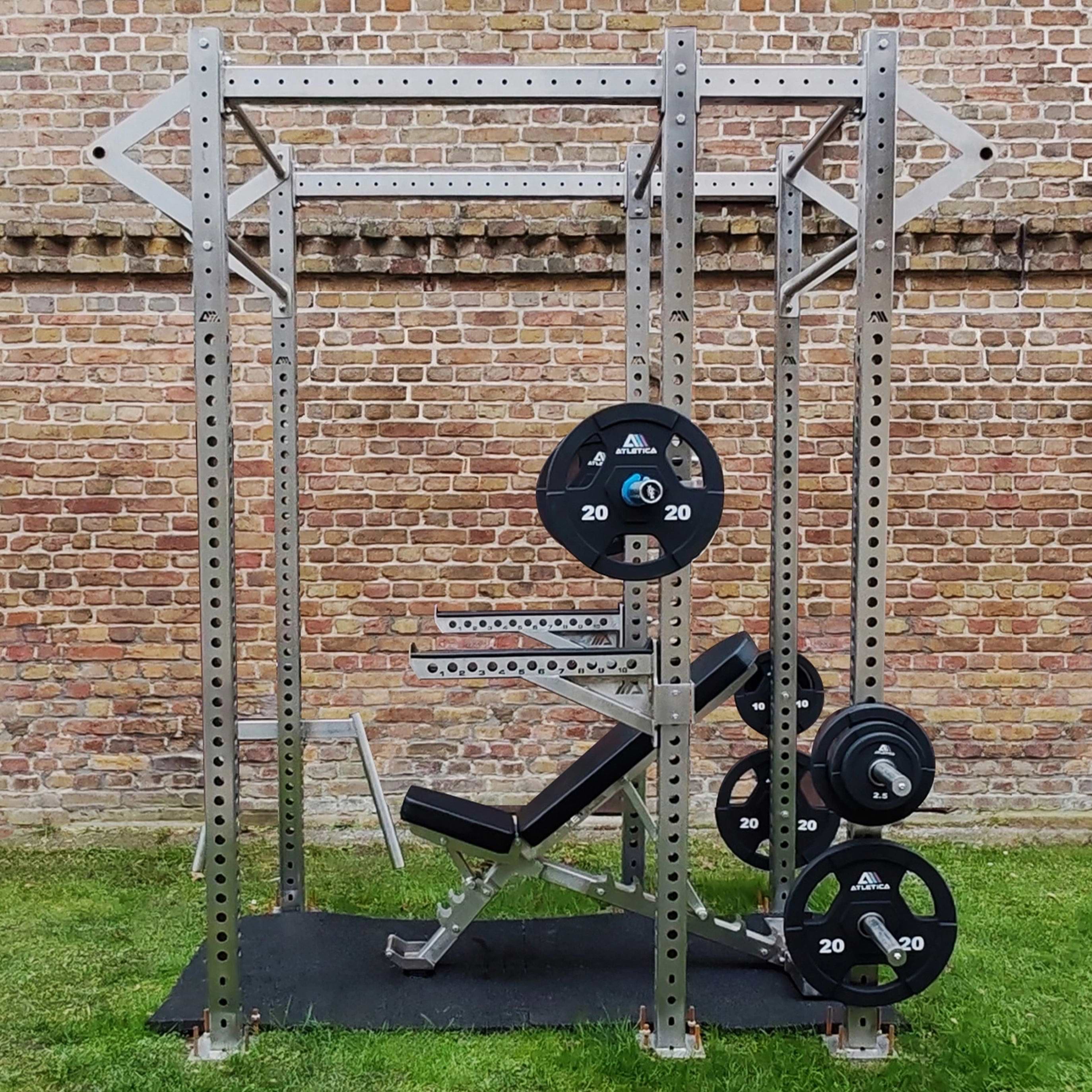
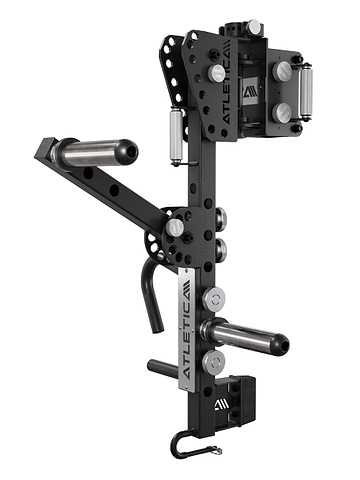
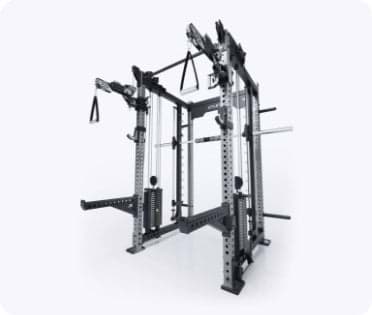
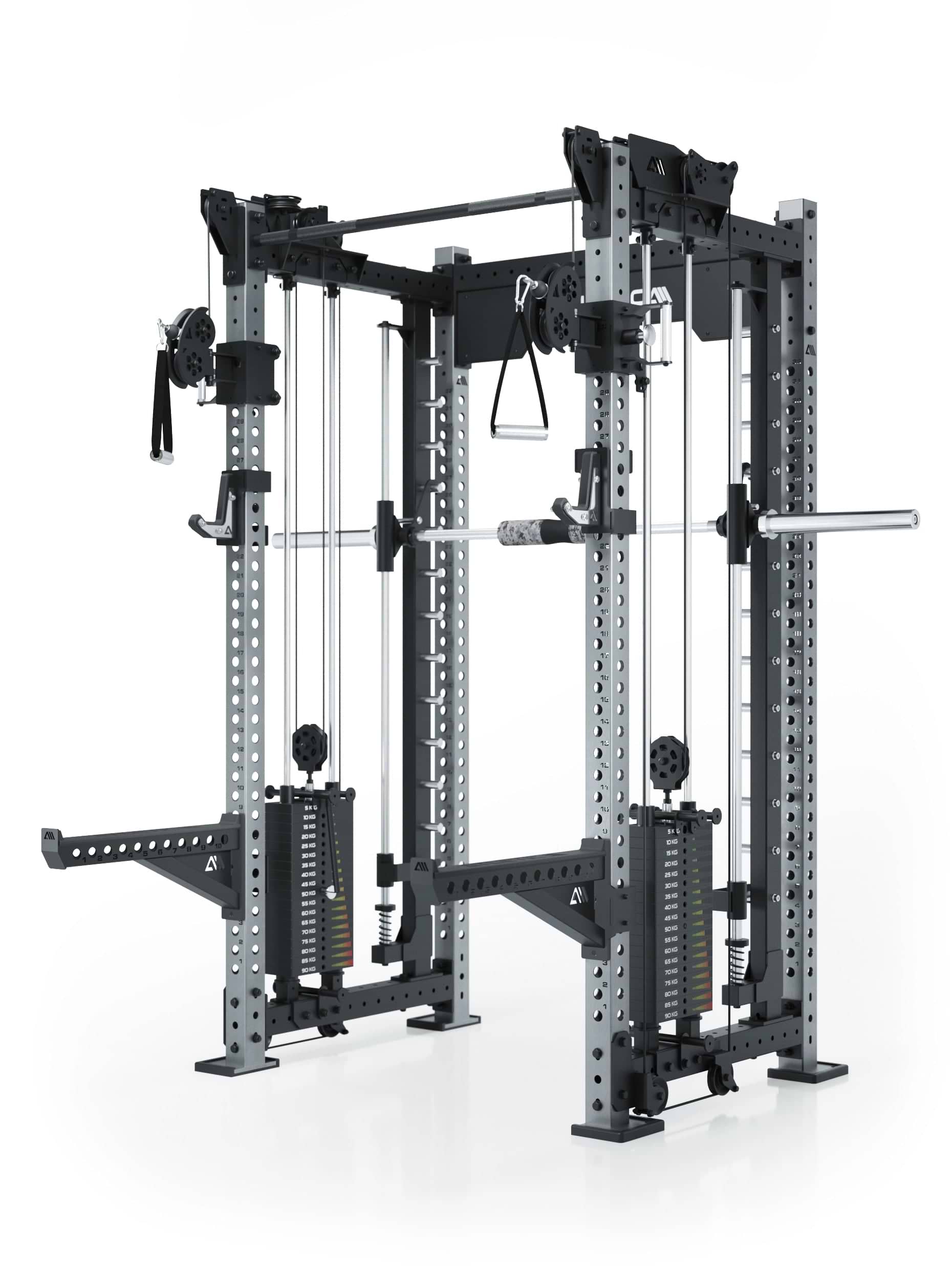
The R8 series (e.g. the R8 Blackhawk Power Rack or the R8 Bradley EXO Power Rack) sits in the upper mid-range to premium segment in terms of price. In return you get:
- 75 × 75 mm profiles with 3 mm steel
- A very precise hole pattern
- Strong, safe Spotter Arms
- Full modularity (you can retrofit almost anything later)
- Good workmanship and a long service life
- A solid resale value
Many cheap racks save on exactly these points - and you'll notice it at the latest when the weights go up or you want to resell the rack after a few years.
Our honest recommendation
|
Your situation |
Recommendation |
Reasoning |
|
Absolute beginner, unsure, very small budget |
Cheap model (short term) |
Okay for testing |
|
You want to train seriously for 2+ years |
Premium (e.g. R8 Blackhawk) |
Safety + durability |
|
You train alone |
Premium |
Significantly safer |
|
You want to retrofit lots of accessories later |
Premium (R8) |
Modular systems are clearly better here |
|
You have very little space |
Compact premium model |
Better quality in a small space |
Conclusion
A cheap power rack can be an acceptable solution for the first few months - if you really are just testing and training lightly.
But as soon as you want to train regularly and seriously , the extra cost of a premium model (like the Atletica R8 series) clearly pays off in most cases. You get more safety, significantly better durability and, in the long run, often even the cheaper solution.
Most people who had to upgrade after 1–2 years say in hindsight: "I should have gone for something better right away."
Not sure whether the extra cost is worth it for you?
Then book a free consultation. We'll look at your budget, your training level and your goals and tell you honestly whether a cheaper or a premium model makes more sense for you.