














Hardly any exercise is as well known – and at the same time as underrated – as the classic crunch. As a prime example of ab training, it has dominated gyms and living rooms for decades. But what do crunches really do? How do you perform them correctly? And where do the differences to other ab exercises like sit-ups or planks lie?
In this article, you'll learn everything important about the crunches exercise: how to do it, variations, common mistakes – and how to integrate them optimally into your training.
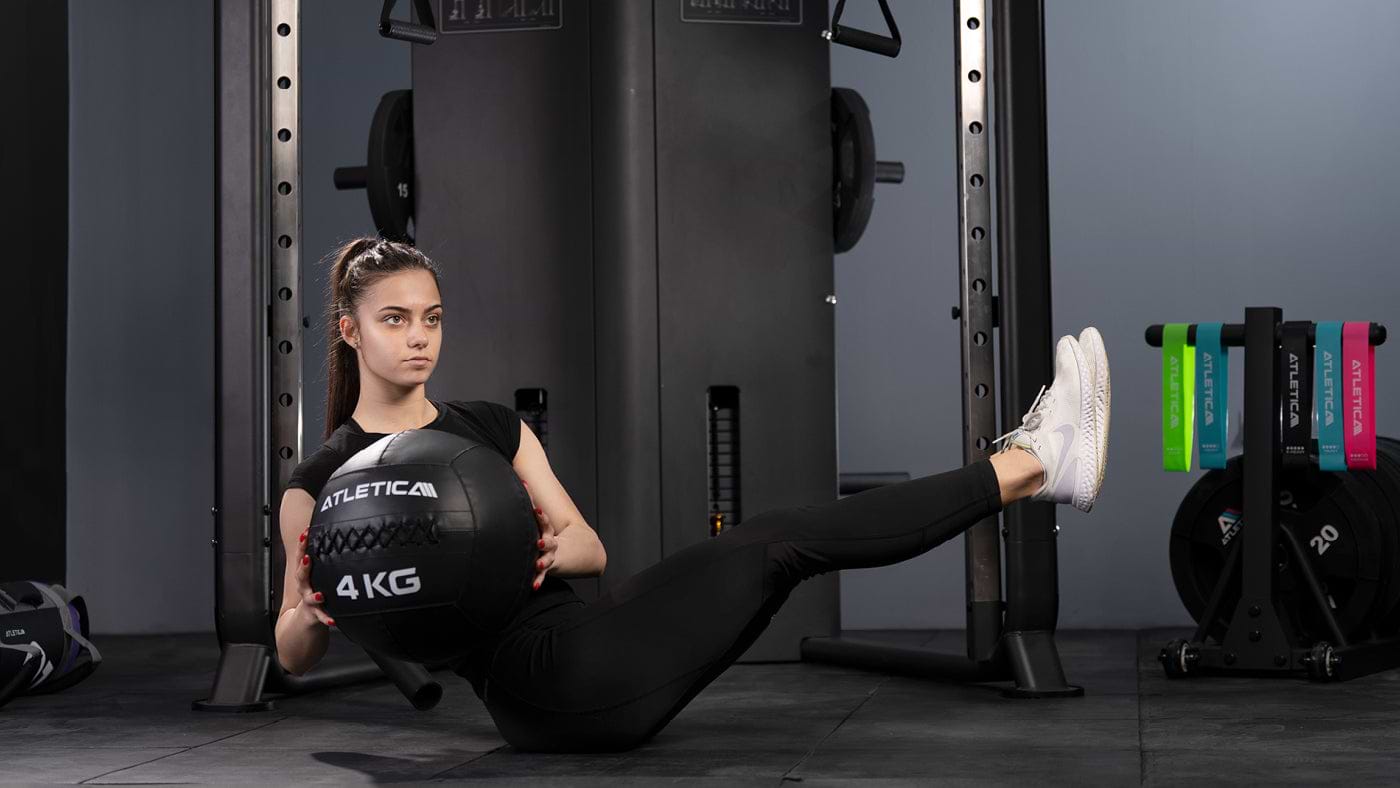
What are crunches?
Crunches are an isolated exercise for strengthening the straight abdominal muscle (Rectus abdominis) – exactly the muscle that becomes visible as a "six-pack" on a defined stomach.
Unlike sit-ups, crunches focus on movement in the upper back, while the pelvis stays on the floor. This puts less strain on the hip flexors and spine – and the training stimulus is more strongly concentrated on the core.
Which muscles do crunches train?
Primarily activated are:
- Rectus abdominis (straight abdominal muscle)
- Transversus abdominis (deep abdominal muscle)
- Obliquus externus (external oblique abdominal muscle – depending on the variation)
- Pelvic floor & hip stabilizers (supporting)
Important: Crunches do not train the lower abdominal muscles in isolation – because the abdominal muscle is functionally a single unit.
How to perform crunches correctly
Starting position:
- Lying on your back on a mat
- Legs bent, feet flat on the floor
- Hands resting loosely at your temples or crossed over your chest
- Chin slightly toward the chest (neutral neck)
Execution:
- Tense your abdominal muscles.
- Lift your upper body a few centimeters off the floor – without momentum.
- The lumbar spine stays in contact with the mat.
- Hold briefly at the top – then slowly return to the starting position.
Important: The movement is small and precise – no sitting all the way up like in a sit-up!
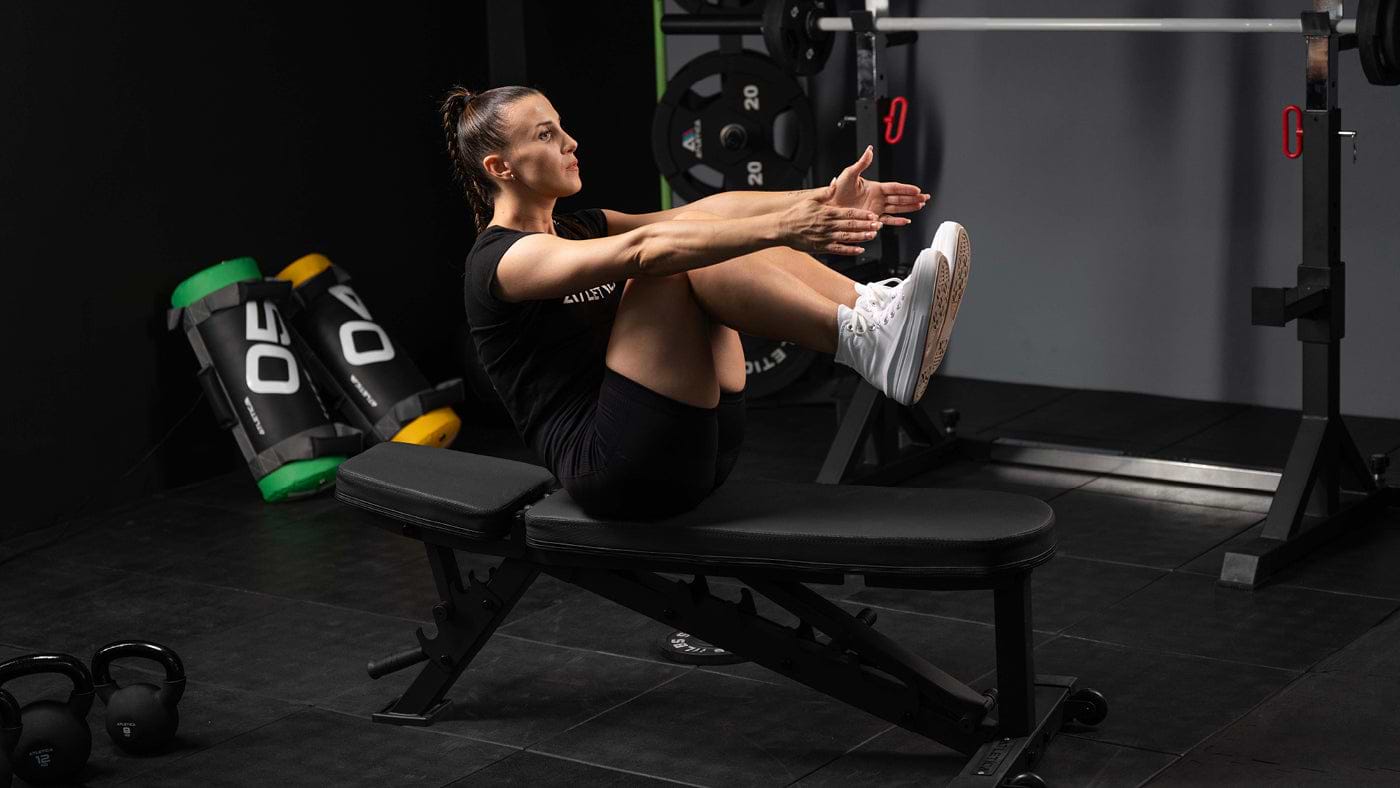
Crunches vs. sit-ups – the difference
|
Crunches |
Sit-ups |
|
Upper body lifts only slightly |
Upper body sits all the way up |
|
Focus on the upper abs |
Activates more hip flexors |
|
Joint-friendly |
Higher strain on the lumbar spine |
|
Better for beginners & those with back issues |
Requires advanced movement technique |
Conclusion: Crunches are ideal for controlled, safe ab training – sit-ups are more for advanced athletes with a stable core.
Variations of the crunches exercise
To make training varied and more effective, the following variations help:
1. Reverse crunches
Move your legs instead of your upper body:
- Lift your pelvis off the floor
- Ideal for the lower portion of the abdominal muscles
2. Crunches with weight
Hold a weight plate or dumbbell in front of your chest or overhead – for more resistance.
3. Bicycle crunches
Alternately bring your elbow to the opposite knee – this additionally activates the oblique abdominal muscles.
4. Crunches on the exercise ball
More range of motion and stronger activation of the stabilizing muscles.
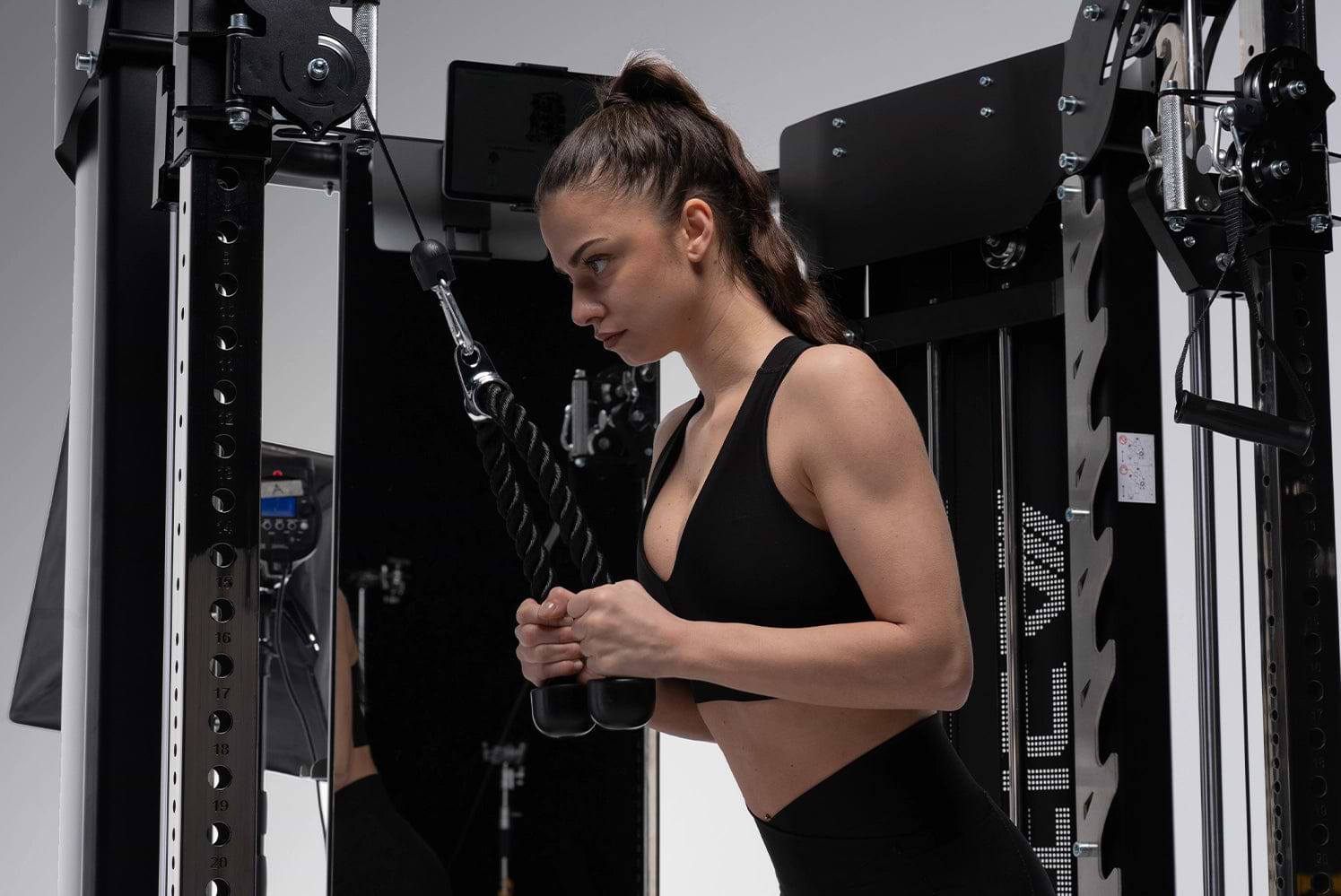
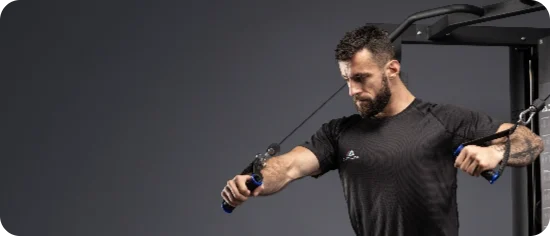
5. Cable crunches
Crunches kneeling at the cable pulley – especially intense and precisely adjustable.
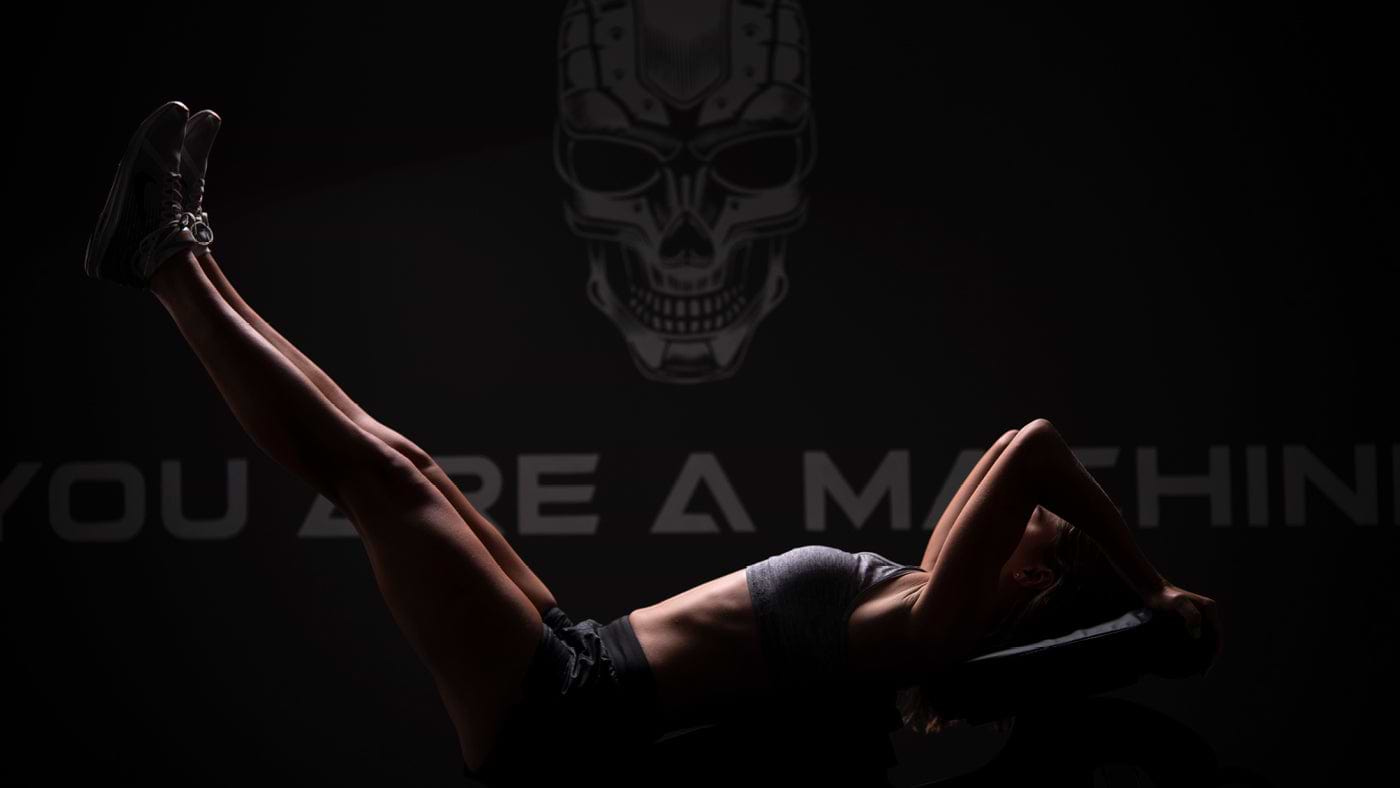
How many crunches make sense?
- Beginners: 2–3 sets of 12–15 reps
- Advanced: 3–4 sets of 15–20 reps or time-based sets (e.g. 30 seconds)
More important than high rep counts are clean technique and conscious muscle engagement. Anyone who simply "cranks through them" usually trains more momentum than abs.
Common mistakes with crunches – and how to avoid them
Mistake 1: Pulling on your head with your hands
This strains the neck and reduces muscle activation.
Solution: Rest your fingertips only loosely against your temples or cross your arms over your chest.
Mistake 2: Movements that are too large
Anyone who sits all the way up is doing sit-ups rather than crunches – and risks incorrect strain.
Solution: Lift only the upper back – the lower back stays on the mat.
Mistake 3: No tension in the core
Many people do the movement only mechanically – without ab tension.
Solution: Pull your belly button inward and hold the tension – even on the way down.

When should you avoid crunches?
- With acute back problems (especially the lumbar spine)
- After certain surgeries (e.g. cesarean section, inguinal hernia)
- With significant excess weight, where alternative core exercises (e.g. planks) are gentler on the joints
In such cases, functional core training under guidance is recommended – e.g. with a coach or physiotherapist.
How useful are crunches for the six-pack?
A common misconception: crunches alone don't create a visible six-pack. Visible abdominal muscles are primarily a question of body fat percentage – and that depends heavily on nutrition and overall activity.
That means:
- Crunches shape the muscle
- Nutrition + cardio + strength training bring the definition
So anyone who only does crunches but loves pizza and moves little will rarely get to see the six-pack – no matter how many reps.
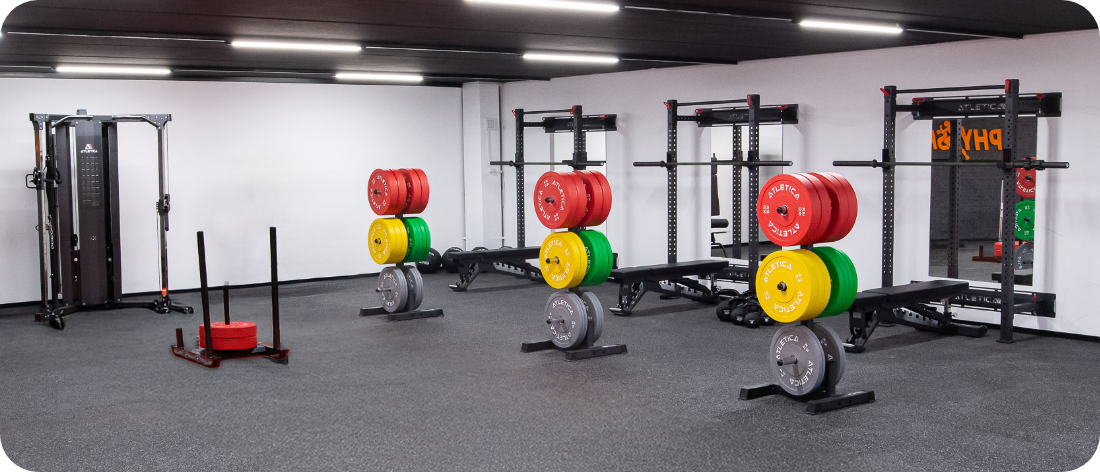
ATLETICA tip: The right equipment for effective crunches
Crunches work fine on the mat – but with the right equipment they become more efficient:
- Training mats with cushioning: protect your spine & pelvis
- Weight plates & medicine balls: for progressive training
- Exercise ball or balance pad: for unstable surfaces & more core activation
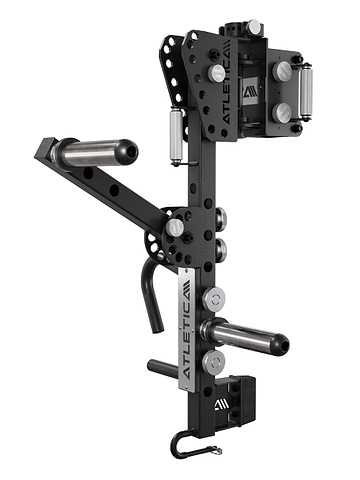
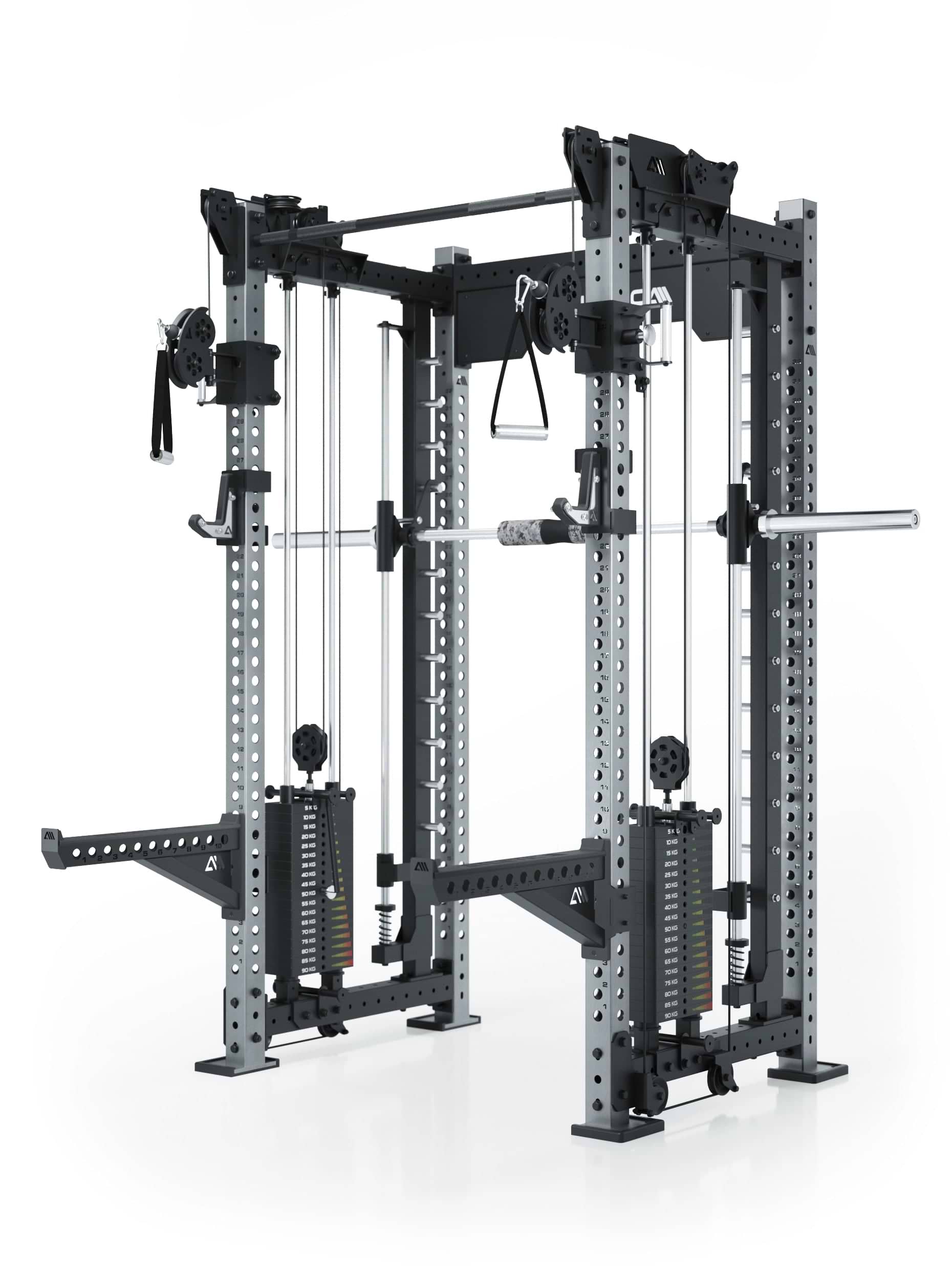
- Cable pulley machines: for precise resistance control during cable crunches
At ATLETICA you'll find high-quality accessories for your core training – whether you're a beginner, fitness fan, or pro.
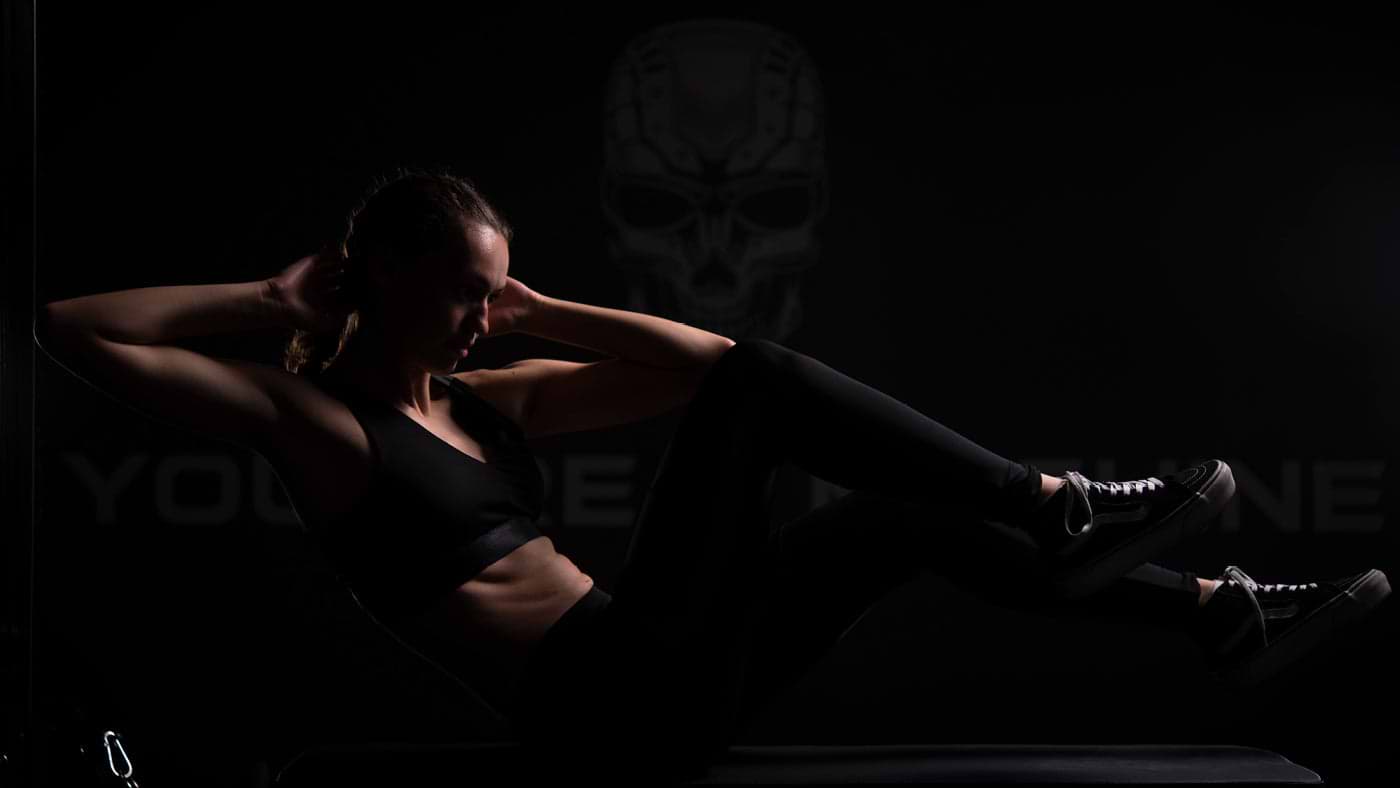
Conclusion: Crunches – simple, effective, and doable (almost) anywhere
The crunches exercise is a classic – and rightly so. Performed correctly, it specifically strengthens the abdominal muscles, improves your core stability, and forms the foundation for functional strength in everyday life and sports.
But as with any training, the rule is: quality beats quantity. Work precisely, with a focus on tension and breathing – and integrate crunches into a holistic training program.
For even more effect, motivation, and variety, the right equipment is key – available directly from ATLETICA.