













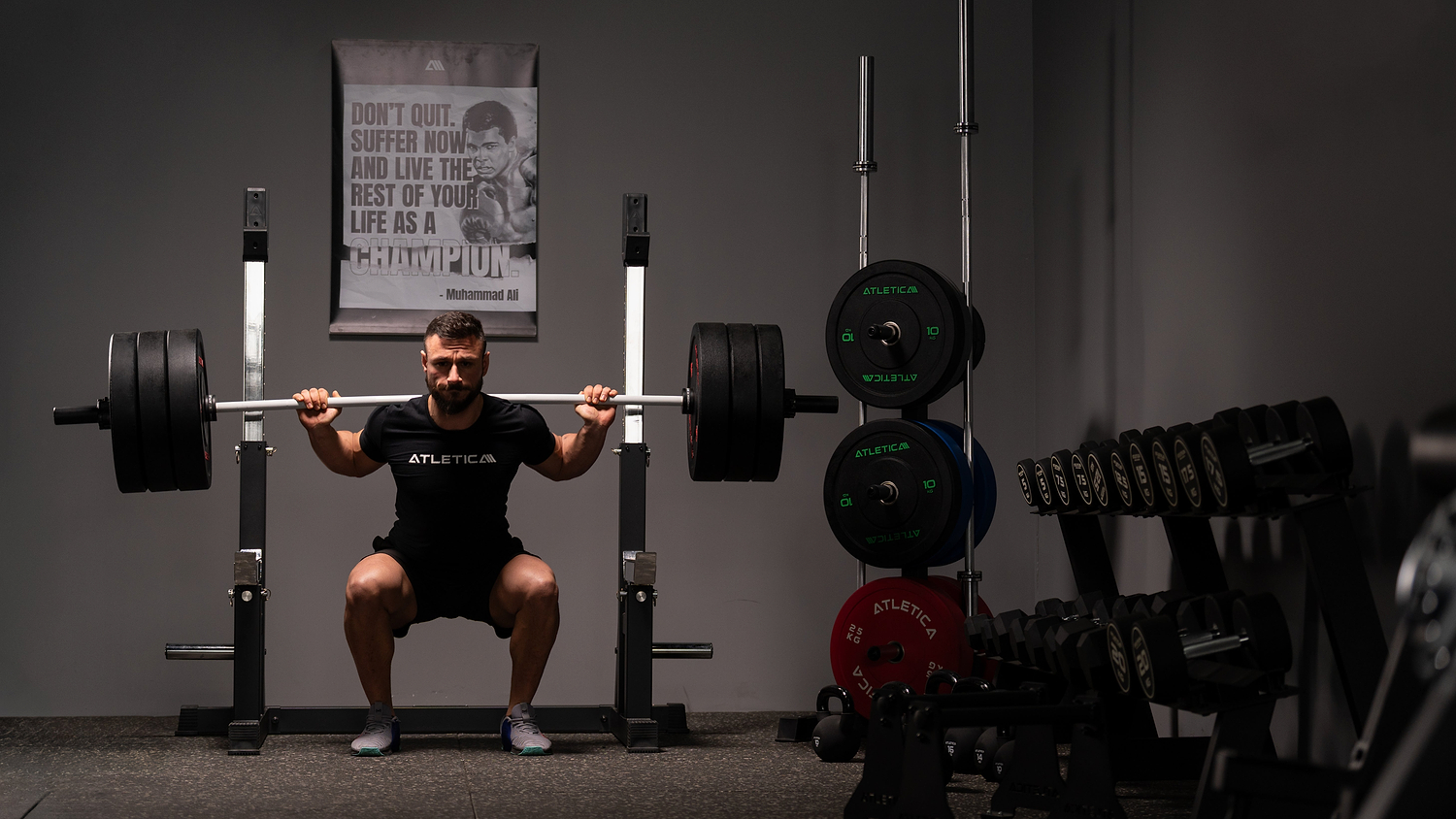
A good home gym isn't defined by the number of pieces of equipment but by how thoughtfully it's set up.
The Power Rack is the heart of it. If you position it correctly as the central training station and build the rest of the gym sensibly around it, you create a far more effective and pleasant training environment than with lots of individual machines.
In this guide I'll show you how to strategically design your home gym around a modular Power Rack.
Why the Power Rack is the ideal central station
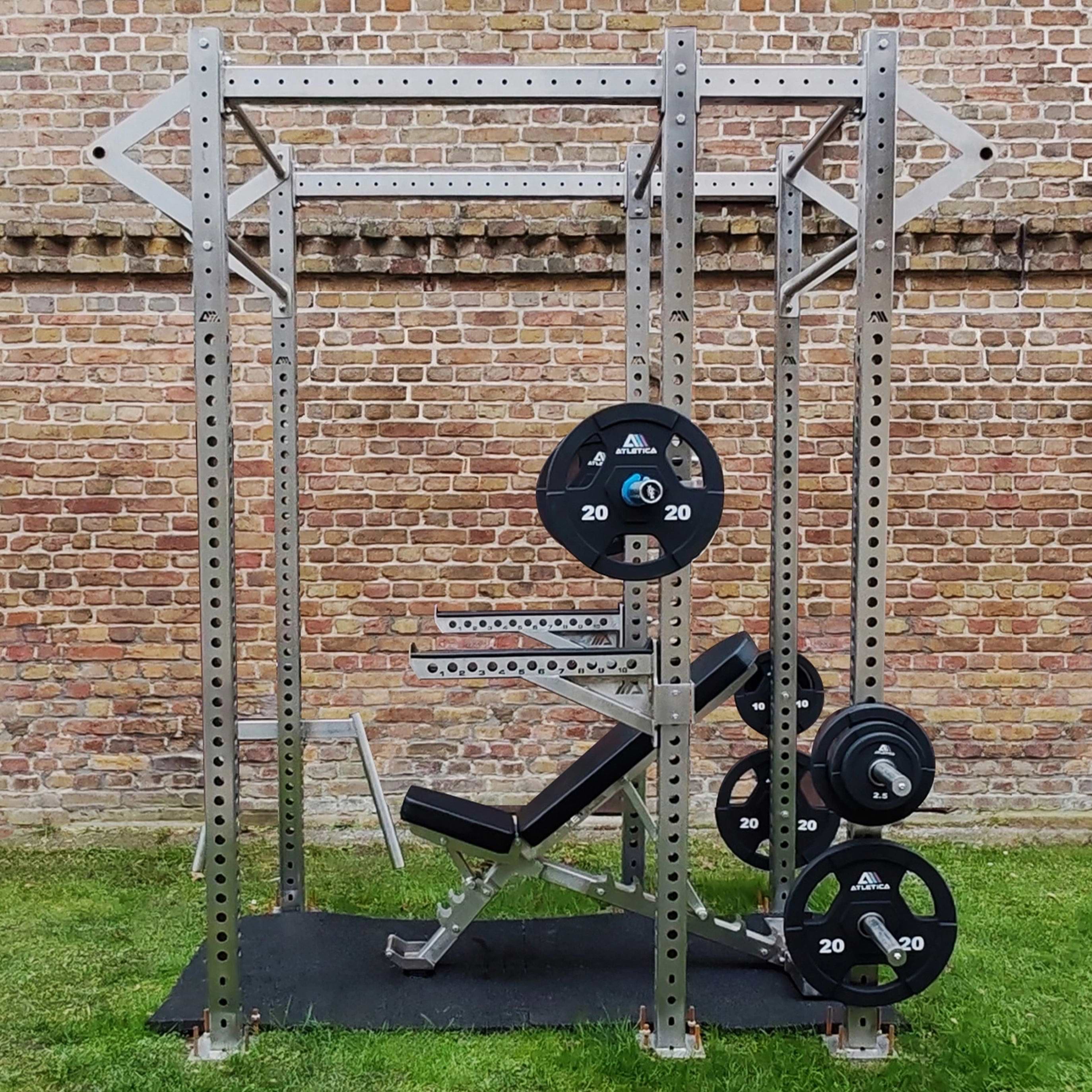
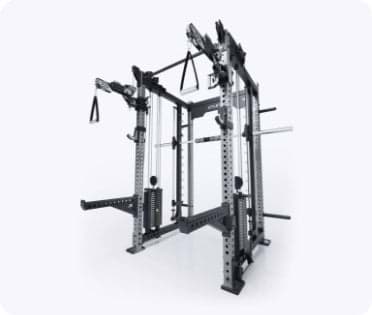
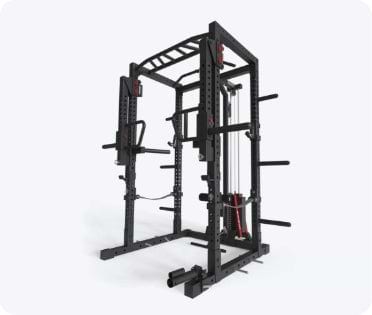
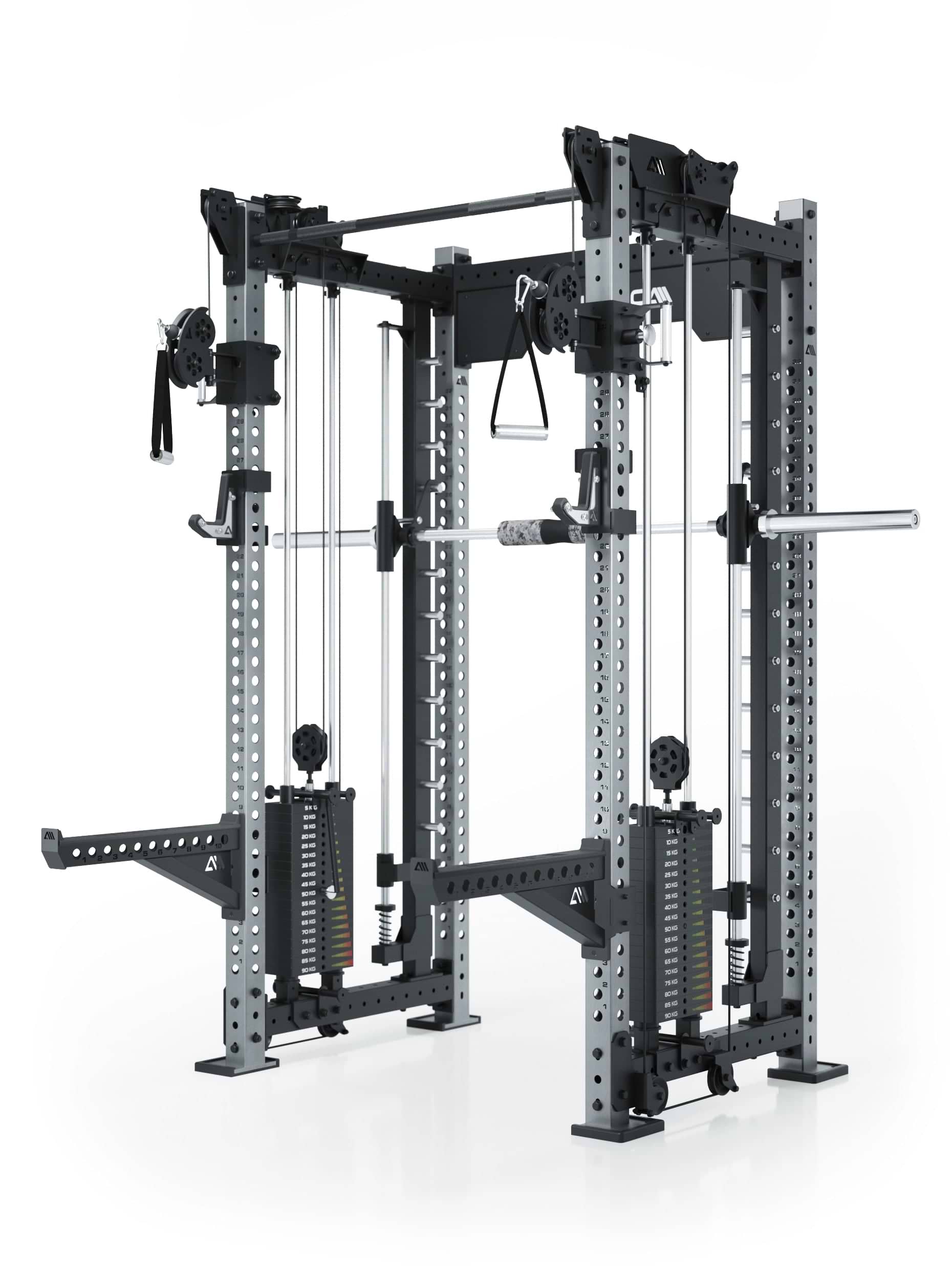
A modular Power Rack (especially from the R7 and R8 series) works excellently as the centrepiece because it:
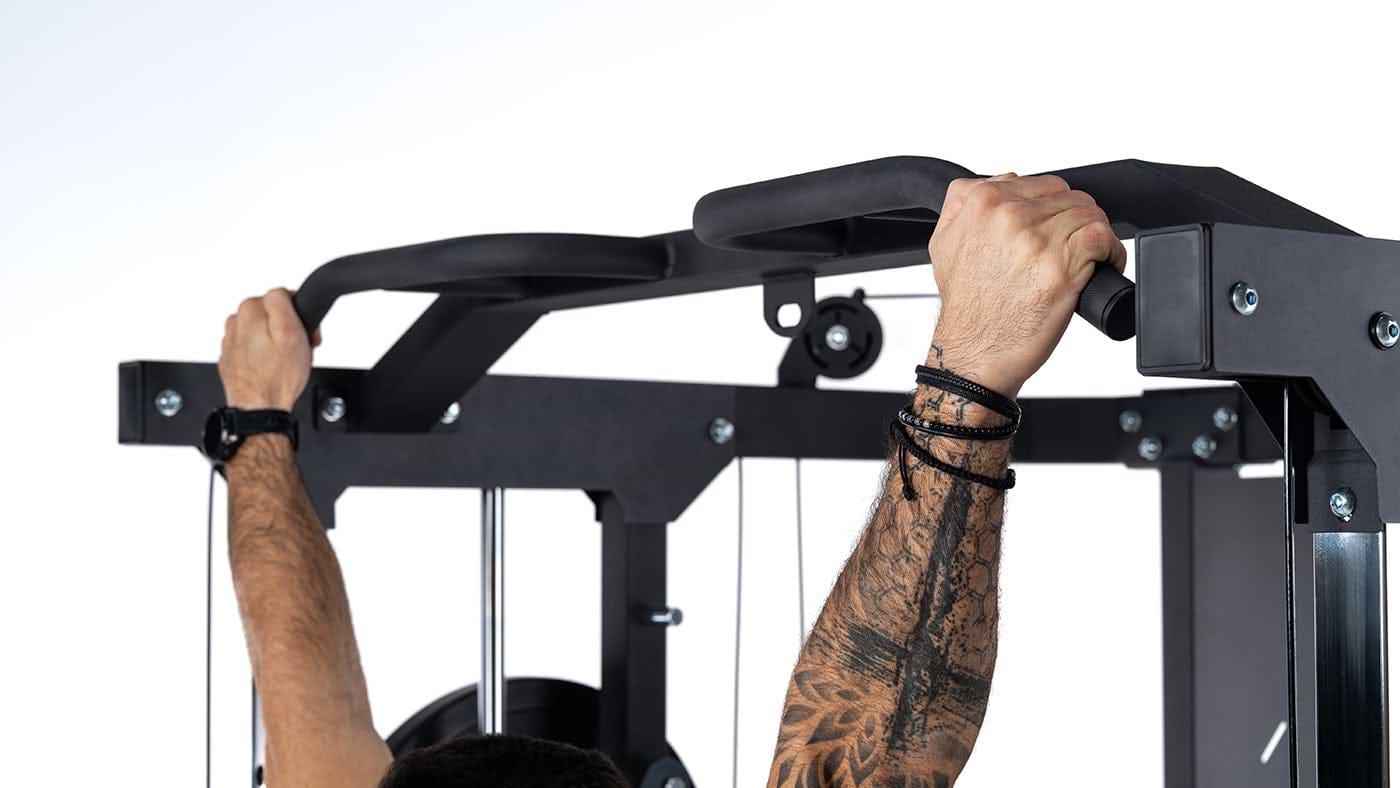
- Safely enables most of the basic lifts (squats, bench press, pull-ups, shoulder press, etc.)
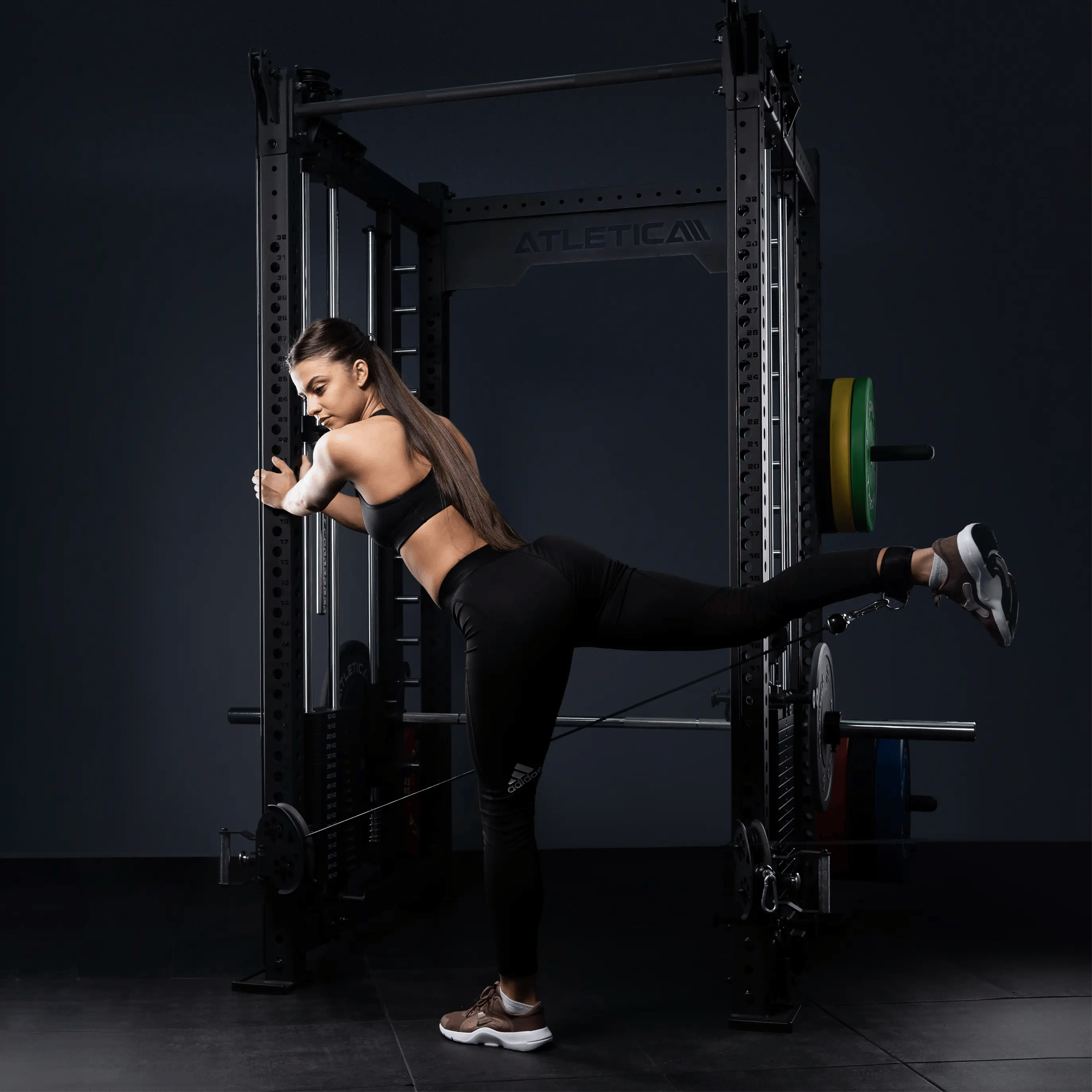
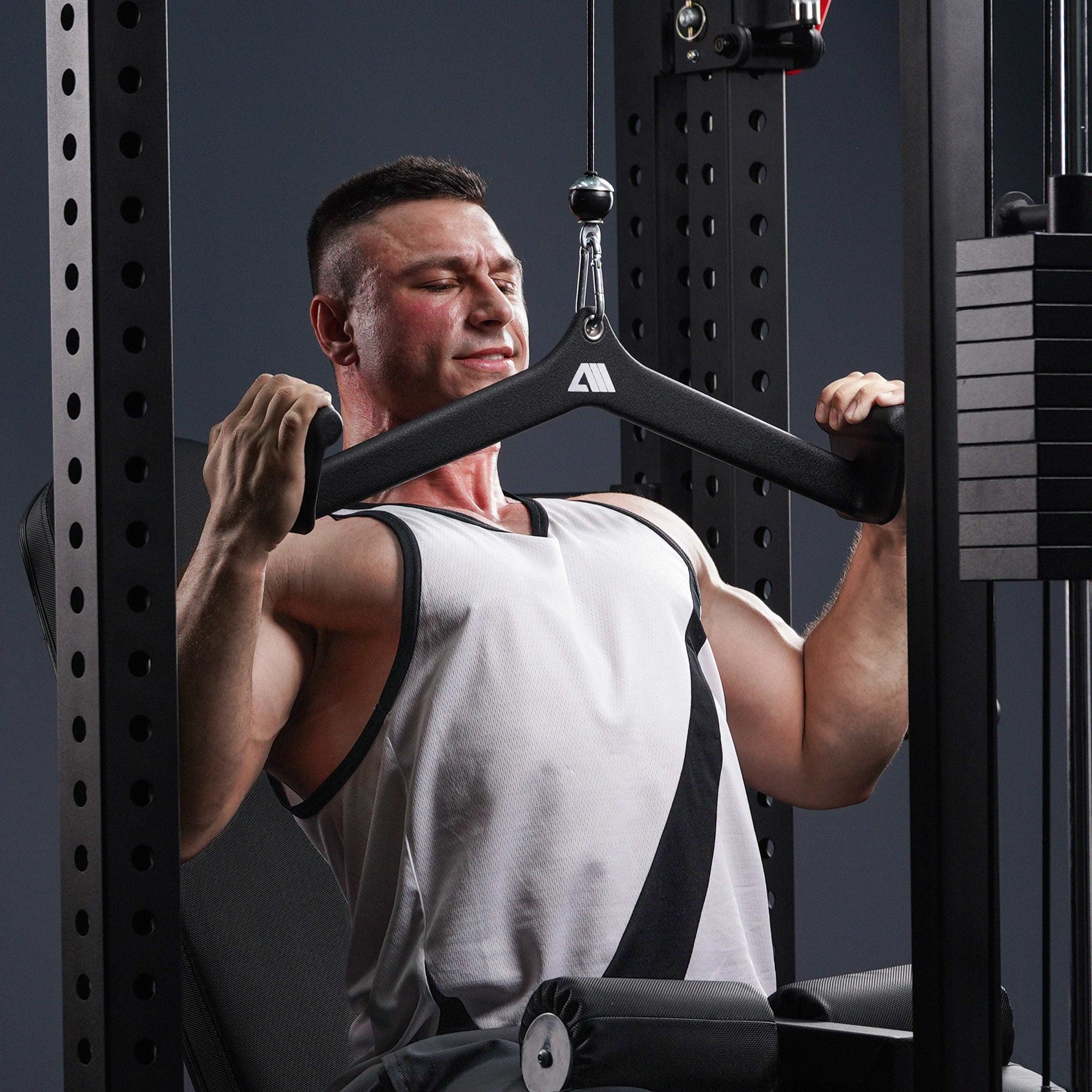
- Through expansions (cable pulley, lat pulldown, Smith machine, Jammer Arms, etc.) can take on more and more functions
- Serves as the physical and visual anchor point in the room
- Can replace or supplement most other equipment in the long run
Instead of spreading your budget across many separate machines, you first invest in a strong central station and then build the gym organically around it.
How to plan your home gym around the rack
1. The right positioning of the rack
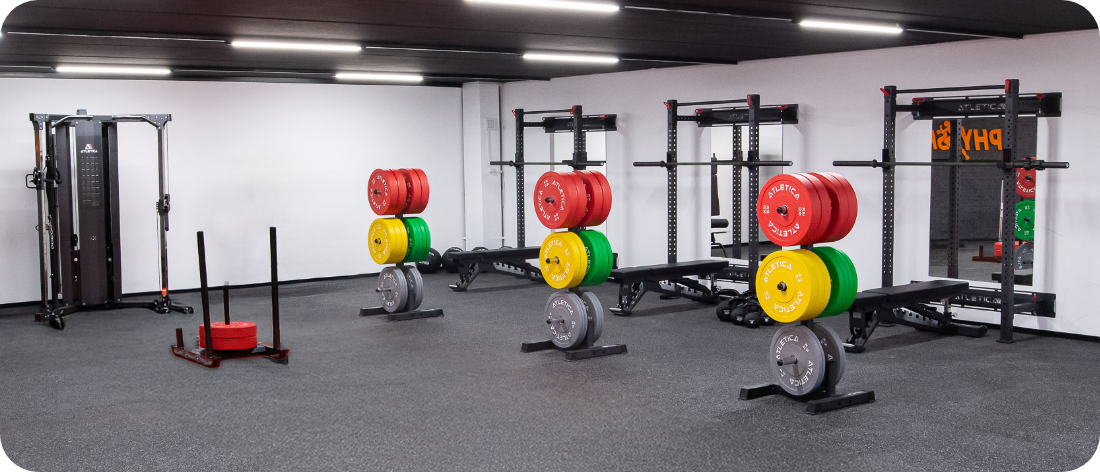
Don't just put the rack anywhere. The best position is usually:
- With enough space in front of and behind the rack (for safe movement and dodging)
- As central as possible or so that you can work well from several sides
- With good lighting and ideally near a wall (for storage and cable management)
2. The most important additions to the central station
Addition |
Why it matters |
Recommendation |
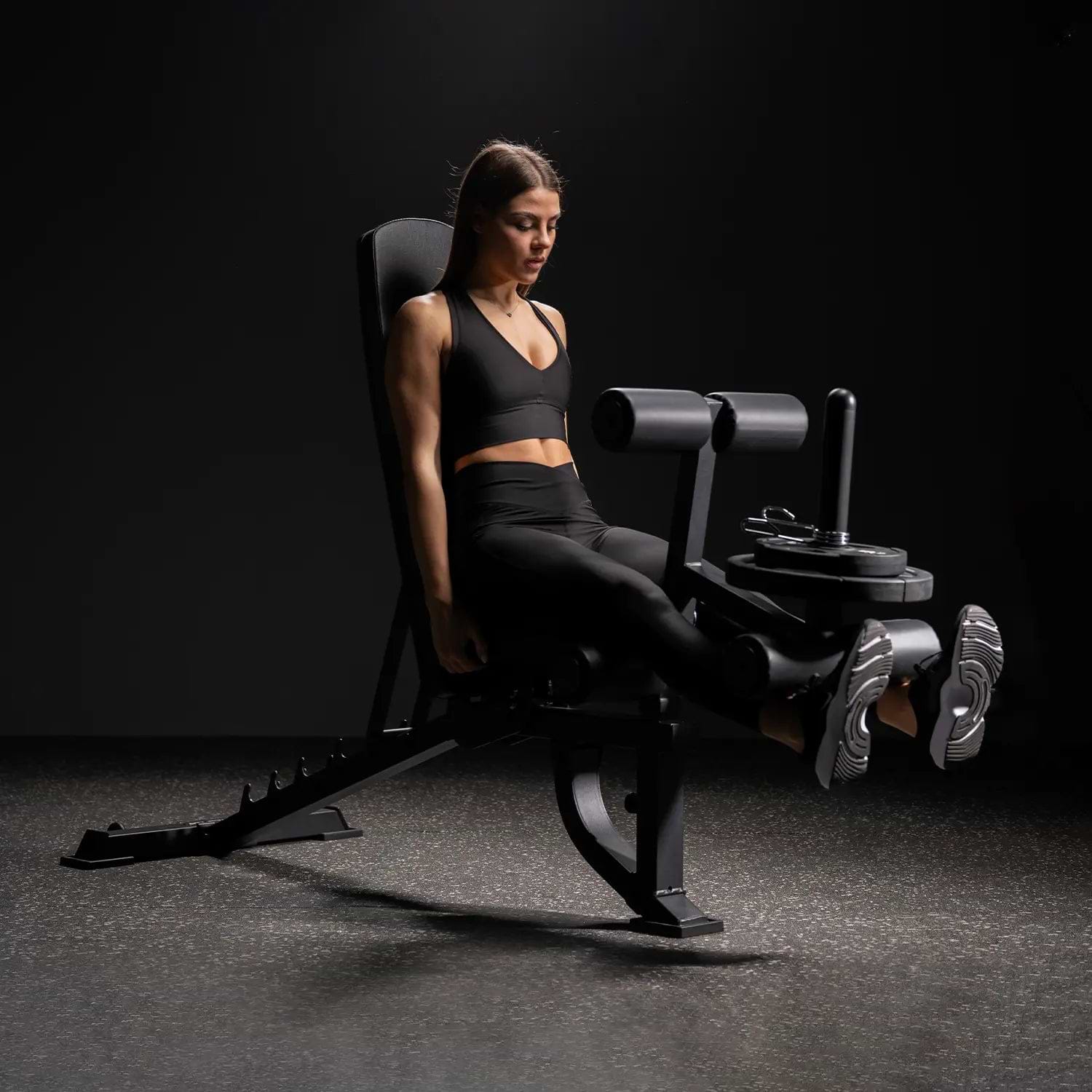
Adjustable bench |
Indispensable for bench press and many other exercises |
Good quality with solid adjustability |
Storage solutions |
Keep the space tidy and safe |
Best directly on or next to the rack |
Floor covering |
Protects the floor and gives good grip |
Rubber mats or special gym flooring |
Lighting |
Better visibility and motivation |
Bright, glare-free lighting over the rack |
Mirror (optional) |
Technique check and visually larger space |
Especially useful in small rooms |
Additional storage |
Barbells, dumbbells, resistance bands, etc. |
Wall shelves or mobile solutions |
3. Optimise the flow of movement
Plan paths around the rack. You should be able to move freely without constantly stepping over equipment. A good layout saves time and improves training quality.
4. Build up step by step
You don't need everything at once. Start with:
- Power Rack + bench + basic accessories
- Later: storage solutions
- Then: more attachments as needed (cable pulley, lat pulldown, etc.)
Modular expansions: how your central station keeps getting stronger
The big advantage of a modular system (like the Atletica R7 and R8 series) is that you can significantly build out your central station over time:
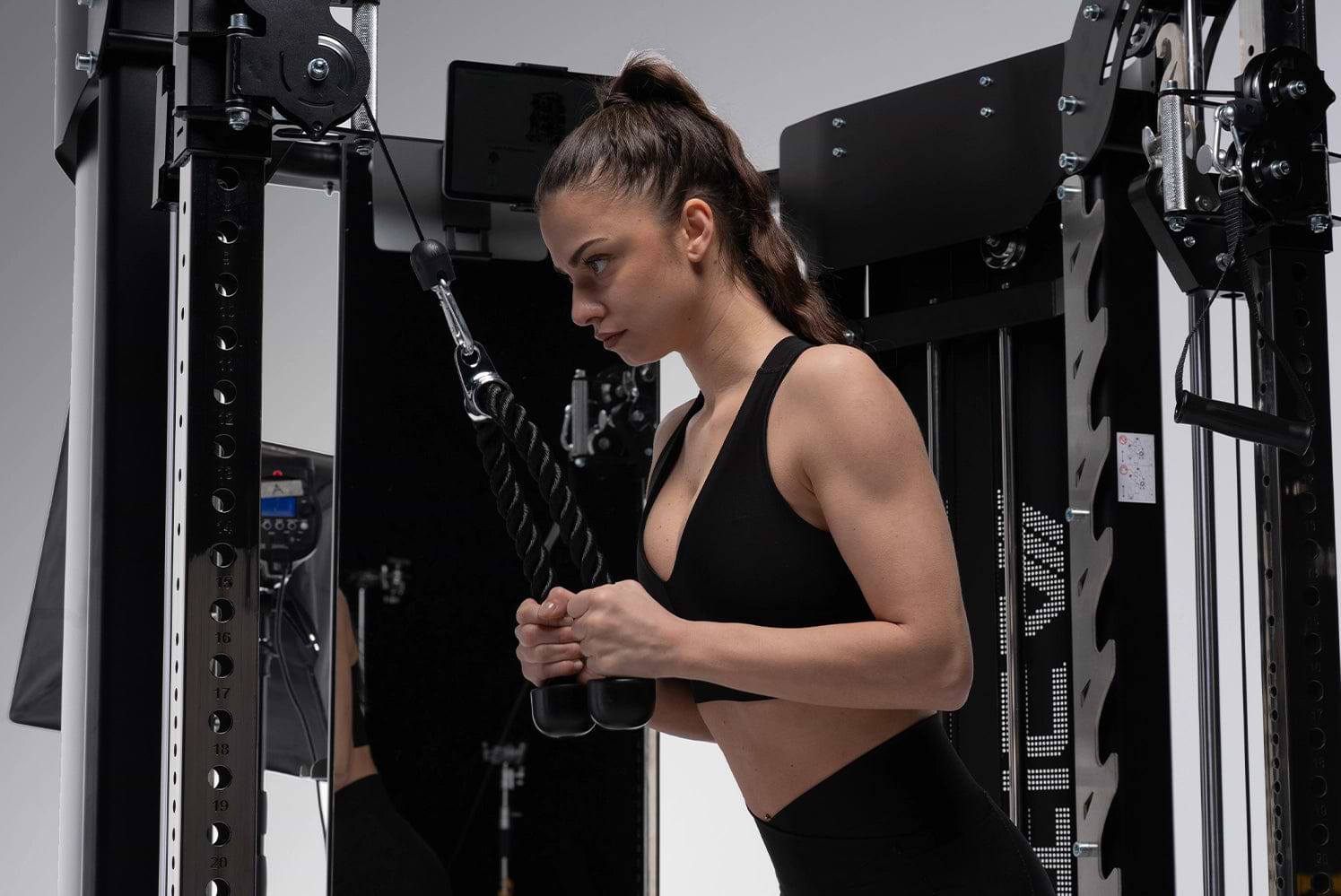
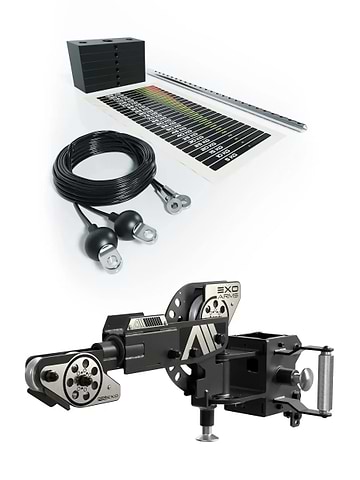
- A cable module turns the rack into a Multi-Station
- A lat pulldown option expands pulling exercises massively
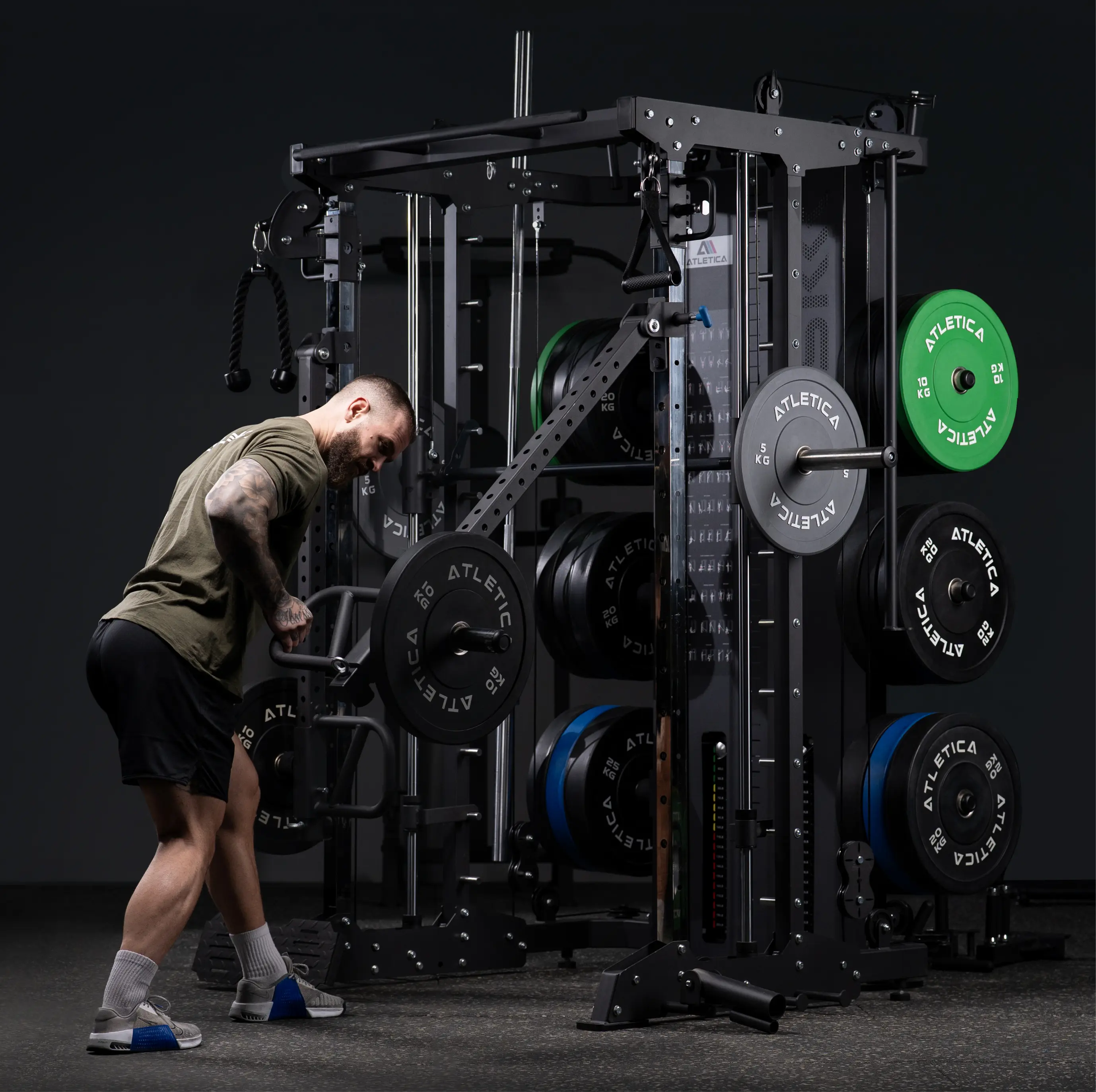
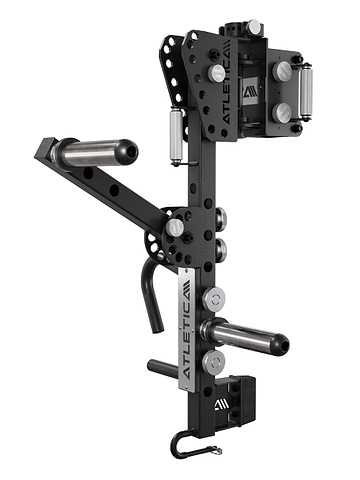
- Jammer Arms or a landmine make functional training possible
- Additional safety systems increase safety at heavier weights
This way a classic Power Rack gradually becomes a real All-in-One training station – without filling the room with more big machines.
Example layouts for different room sizes
Small home gym (6–10 m²):
Central R7 or compact R8 model + bench + wall shelf for dumbbells + good mat. Focus on the essential exercises.
Medium home gym (10–15 m²):
R7 or R8 as the centrepiece + bench + storage on the rack + cable module + additional wall shelf. Already very versatile.
Larger setup (from 15 m²):
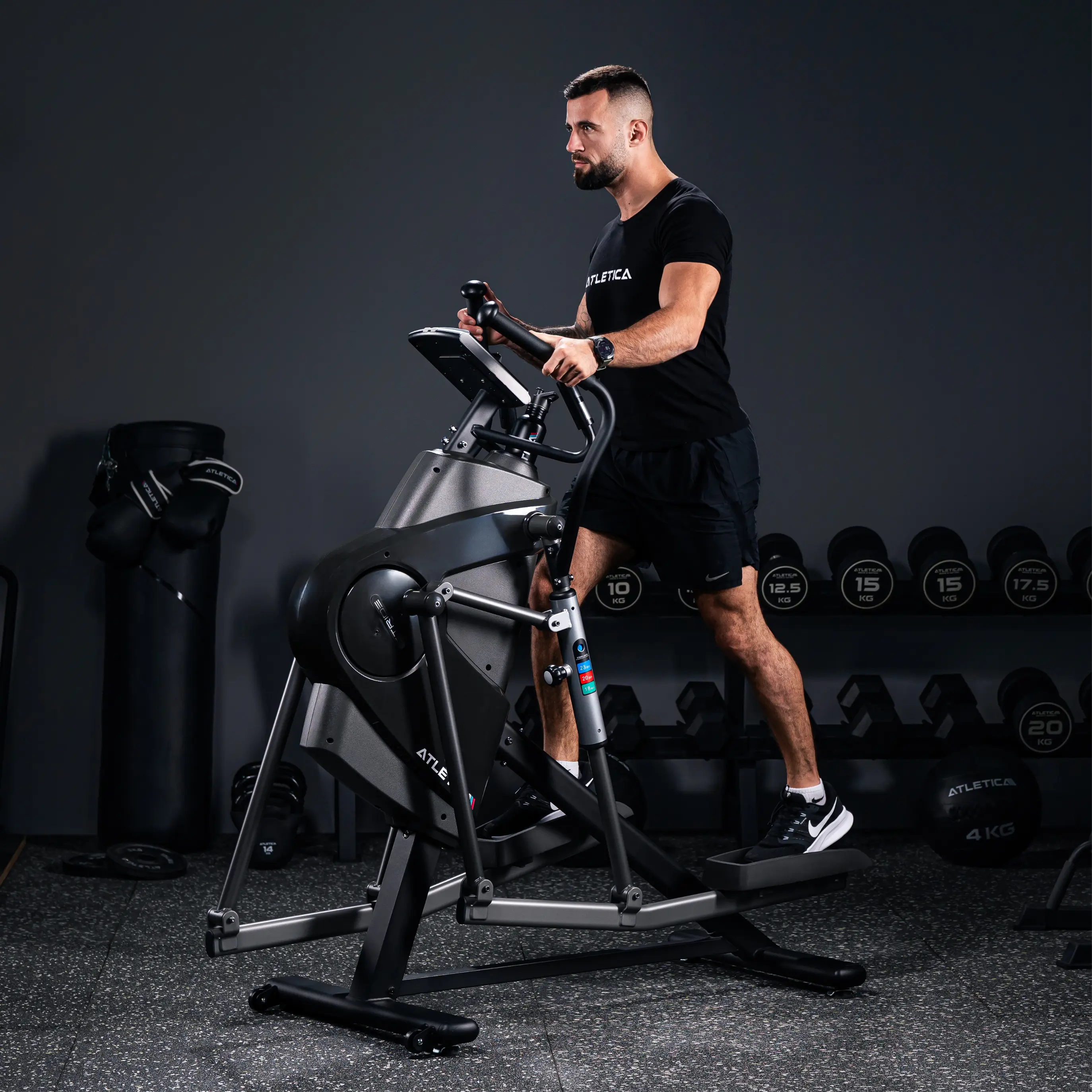
R8 series with several expansions (cable pulley, lat pulldown, storage) + bench + separate area for dumbbells or cardio. The rack still stays the heart of it.
Checklist: building your gym correctly around the Power Rack
- Position the Power Rack as the central station (good movement space)
- Get an adjustable bench as the first additional piece
- Plan storage solutions directly on or next to the rack
- Protect the floor with non-slip mats
- Optimise the lighting over the rack
- Test the movement flow (can you move freely?)
- Only add sensible expansions gradually
- If unsure: get professional advice
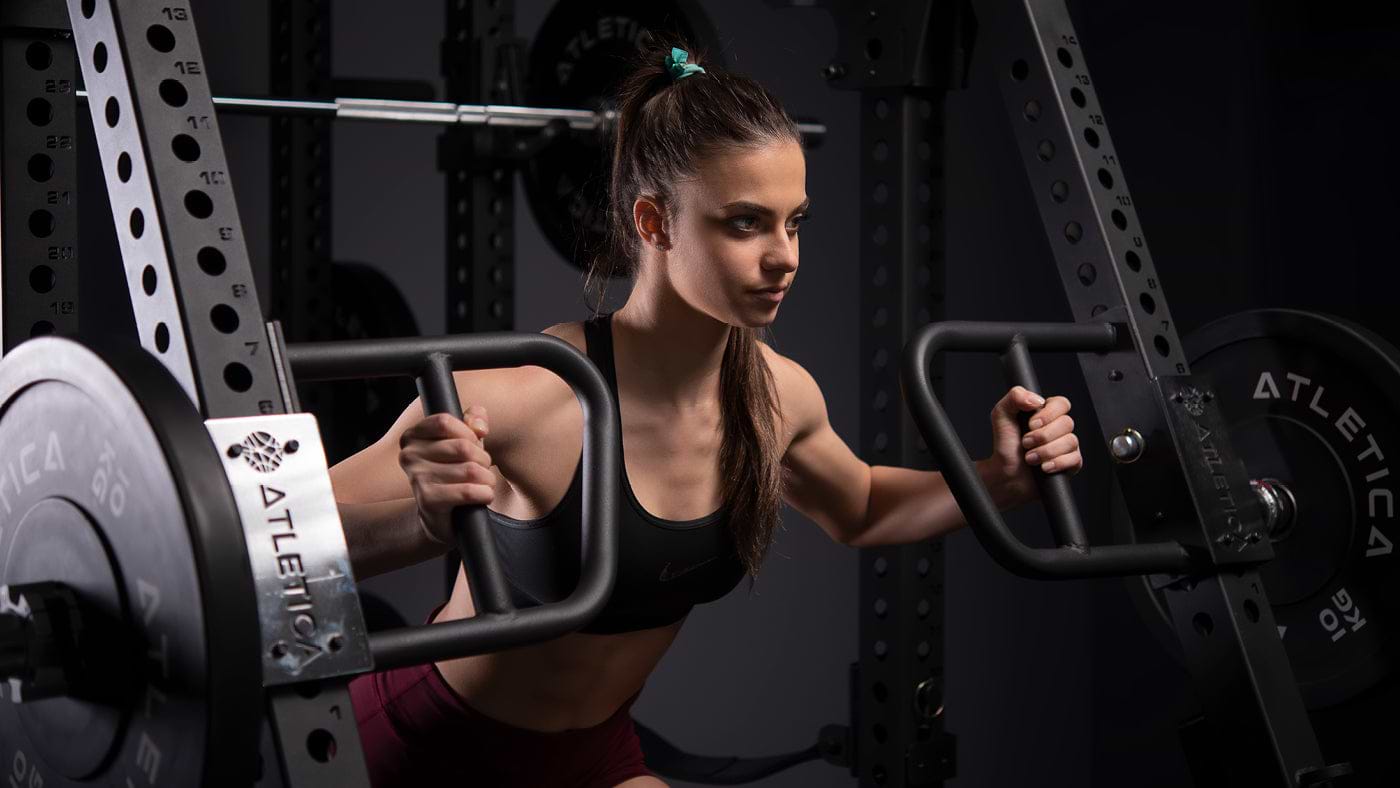
Conclusion: a strong centre beats many individual machines
The best home gym isn't the one with the most equipment but the one with the best structure.
If you choose a good modular Power Rack as the central training station and build the rest of the equipment sensibly around it, you get a flexible, tidy and highly functional gym – one that can grow with you.
That's exactly what systems like the Atletica R7 and R8 series were built for.
Want an individual concept for your home gym?
Then book a free consultation now. We analyse your space and your goals and put together a tailored setup around the right central station.
→ Book a free consultation now
Or explore the matching modular systems:
Frequently asked questions
Does the Power Rack really have to be at the centre?
Not necessarily in the geometric middle of the room, but it should take the central role. Most successful home gyms are set up exactly like that.
How many expansions do I actually need?
At the start, usually very few. Many start with rack + bench + basic accessories and only expand after 6–12 months.
Is a modular system overkill for a small gym?
No. Especially in a small space, modularity is often the decisive advantage, because you can achieve more with one machine than with several small ones.
Should I buy the rack first or other equipment first?
Almost always the Power Rack first. It's the base everything else builds on.